Transformative Applications of Generative AI in Healthcare

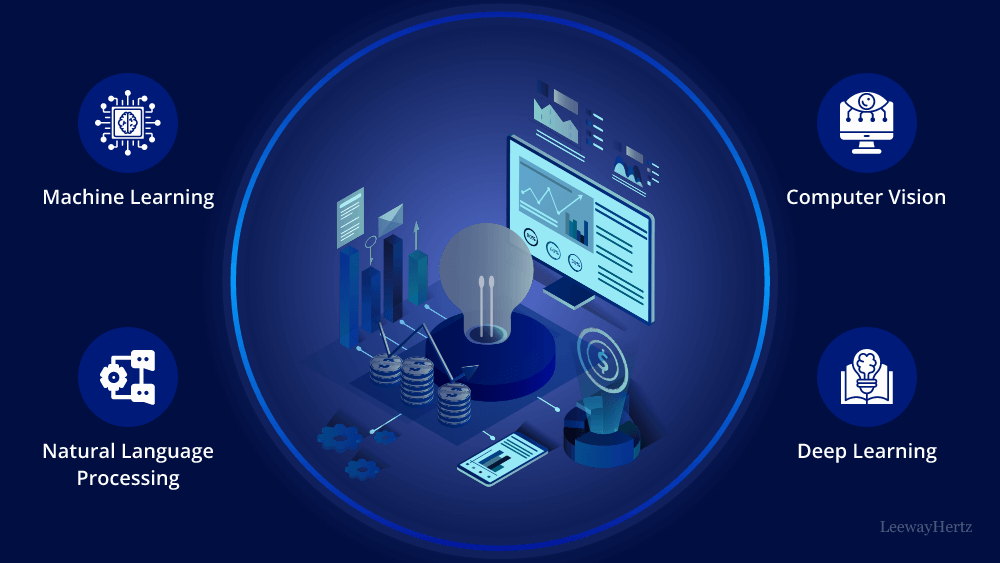
The realm of healthcare stands on the cusp of a technological revolution, with Generative Artificial Intelligence (AI) emerging as a pioneering force, revolutionizing various facets of the industry. Leveraging advanced machine learning techniques, Generative AI has ushered in a new era marked by innovation, precision, and enhanced patient care across diverse healthcare domains.

Medical Imaging and Diagnostics

Generative AI has significantly elevated the accuracy and efficiency of medical imaging and diagnostics. Through Generative Adversarial Networks (GANs) and other deep learning models, AI systems analyze vast repositories of medical images such as MRIs, CT scans, and X-rays, aiding in early detection and diagnosis of diseases. These models can generate high-resolution images, improve image quality, and assist radiologists in identifying minute anomalies, thereby augmenting diagnostic accuracy.

Drug Discovery and Development

In the realm of pharmaceuticals, Generative AI has expedited drug discovery and development processes. AI-powered algorithms assist researchers in simulating molecular structures, predicting potential drug-target interactions, and generating novel compounds with specific therapeutic properties. By significantly reducing the time and resources required for preclinical testing, these models pave the way for the rapid development of innovative drugs and treatments.

Personalized Medicine and Treatment Planning

The advent of Generative AI has paved the way for personalized medicine, tailoring treatments to individual patient profiles. Machine learning models analyze vast patient datasets, genetic information, and clinical records to create personalized treatment plans. These models predict patient responses to specific medications, optimize dosage regimens, and forecast disease progression, allowing healthcare providers to offer more targeted and effective therapies.

Natural Language Processing for Healthcare Records

Generative AI, particularly Natural Language Processing (NLP), has revolutionized the handling of healthcare records and documentation. NLP models comprehend and extract pertinent information from medical records, enabling efficient data management, automated coding, and improved interoperability across healthcare systems. This streamlines administrative processes, enhances accuracy, and facilitates better decision-making by healthcare professionals.

Virtual Health Assistants and Mental Health Support

Generative AI has transformed patient interactions through virtual health assistants and mental health support systems. AI-driven chatbots and virtual assistants engage with patients, providing information, scheduling appointments, and offering mental health support. These assistants employ natural language understanding and generation, delivering empathetic and responsive interactions, thereby augmenting patient engagement and access to care.

Ethical Considerations and Challenges

While the applications of Generative AI in healthcare are promising, ethical concerns regarding patient privacy, data security, and algorithm bias remain significant. Safeguarding sensitive patient information and ensuring unbiased AI-driven decisions are imperative for maintaining trust and integrity within healthcare systems.

Future Prospects

The trajectory of Generative AI in healthcare is poised for further advancements. Continued research and development will refine AI models, enhance predictive capabilities, and foster collaborations between AI technologies and healthcare professionals. The future holds promises of AI-driven innovations that could revolutionize disease prevention, treatment modalities, and healthcare delivery.

In conclusion, Generative AI stands as a transformative force in healthcare, revolutionizing diagnostics, drug discovery, personalized medicine, and patient care. While challenges persist, the collaborative efforts between AI innovators, healthcare practitioners, and regulatory bodies promise a future where AI technologies optimize healthcare outcomes, making quality care more accessible and tailored to individual needs.
Standard

Exploring the Transformative Role of Generative AI in Finance and Banking

In recent years, the GenAI financial industry has witnessed a seismic shift in the integration of cutting-edge technologies, with Generative Artificial Intelligence (AI) emerging as a transformative force. Generative AI, leveraging machine learning techniques like Generative Adversarial Networks (GANs) and autoregressive models, has sparked a revolution in how financial institutions operate, analyze data, and serve customers.

Redefining Data Analysis and Prediction

One of the pivotal areas where Generative AI has left a profound impact is data analysis. Financial institutions deal with colossal volumes of data, and making sense of this information is crucial for decision-making. Generative models can simulate and generate synthetic data that mimics real-world scenarios, aiding in risk assessment, fraud detection, and market trend analysis. This ability to generate synthetic data allows for more robust modeling and scenario testing, reducing the reliance solely on historical data.

Enhanced Customer Experience

In the realm of customer service, Generative AI has reshaped interactions. Natural Language Processing (NLP) models, a subset of generative AI, enable chatbots and virtual assistants to converse with customers naturally, providing round-the-clock support, personalized recommendations, and swift issue resolution. These AI-driven assistants are adept at understanding complex queries and delivering tailored responses, augmenting customer satisfaction and engagement.

Risk Management and Fraud Detection

Mitigating risks and combating fraud are perennial challenges in the financial sector. Generative AI models have bolstered these efforts by analyzing patterns in transactions, detecting anomalies, and flagging potentially fraudulent activities in real-time. Moreover, these models continuously learn from new data, refining their ability to identify and prevent fraudulent behavior, thus fortifying security measures within banking systems.

Algorithmic Trading and Investment Strategies

Generative AI has disrupted traditional investment strategies by introducing algorithmic trading systems that leverage advanced predictive models. These systems analyze vast amounts of market data, identify patterns, and execute trades autonomously at speeds impossible for human traders. Additionally, generative models aid in creating innovative investment strategies, optimizing portfolios, and predicting market movements with greater accuracy.

Ethical Considerations and Challenges

While the potential of Generative AI in finance and banking is immense, ethical considerations and challenges persist. The generation of synthetic data raises concerns regarding privacy and security. Moreover, biases encoded in training data could inadvertently seep into generated outcomes, leading to skewed decisions. Regulatory frameworks and robust ethical guidelines are crucial to ensure responsible use and deployment of Generative AI in the financial domain.

Future Outlook

The trajectory of Generative AI in finance and banking is poised for further evolution. Advancements in deep learning architectures, reinforcement learning, and hybrid AI models will continue to refine predictive capabilities, enhance decision-making processes, and drive innovation across various financial services.

In conclusion, Generative AI stands as a game-changer in the finance and banking sectors, revolutionizing data analysis, customer experiences, risk management, and investment strategies. However, its integration necessitates a delicate balance between innovation and ethical considerations, urging stakeholders to navigate these advancements responsibly.

As financial institutions embrace the potential of Generative AI, a future where data-driven decision-making, personalized services, and robust security measures converge seems increasingly promising.

Standard

The Evolution of AI in Architecture: Designing Tomorrow’s Spaces

In an era of technological advancement, artificial intelligence (AI) has become an indispensable tool across various industries, and architecture stands at the forefront of this transformative wave. The integration of AI in architecture has redefined the way buildings are designed, constructed, and even experienced, ushering in a new era of innovation and efficiency.

AI, with its ability to analyze vast amounts of data and perform complex tasks, has revolutionized the architectural landscape in numerous ways. One of the most significant impacts lies in the design phase. Traditionally, architects relied on their expertise and creativity to draft blueprints. However, AI-powered software has augmented their capabilities, allowing for more intricate designs and faster iterations. Machine learning algorithms can process immense datasets and generate design options based on parameters such as building materials, environmental factors, and structural integrity, enabling architects to explore a wider range of possibilities and optimize designs for functionality and sustainability.

Moreover, AI facilitates the optimization of building performance. Energy efficiency has become a paramount concern in architecture, and AI plays a pivotal role in this aspect. Through predictive analytics and simulations, AI algorithms can model a building’s behavior under various conditions, predicting energy consumption and identifying areas for improvement. This not only reduces environmental impact but also lowers operational costs for building owners.

Another area where AI shines in architecture is in construction management. Project delays and cost overruns are common challenges in construction, but AI-driven project management systems can mitigate these issues. These systems utilize data analytics to streamline workflows, manage resources efficiently, and even predict potential bottlenecks, allowing for better project scheduling and budgeting.

Furthermore, AI has revolutionized the concept of smart buildings. These structures are equipped with sensors and AI systems that continuously collect and analyze data on occupancy, temperature, lighting, and more. This real-time analysis enables buildings to adapt to occupants’ needs, optimizing comfort and resource usage. For instance, AI-powered HVAC systems can adjust temperature settings based on occupancy patterns, significantly reducing energy waste.

While the integration of AI in architecture offers remarkable benefits, it also poses certain challenges and ethical considerations. Issues related to data privacy, algorithm bias, and the dependency on technology require careful navigation and ethical guidelines to ensure responsible and equitable use of AI in architecture.

Looking ahead, the future of AI in architecture appears promising. As AI technology continues to advance, architects and designers will harness its power to push the boundaries of creativity and functionality. Collaborations between architects and AI systems will lead to unprecedented designs that seamlessly blend aesthetics, sustainability, and technological innovation.

In conclusion, the incorporation of AI in architecture has transcended traditional practices, empowering architects to envision, design, and construct structures that are not only aesthetically pleasing but also sustainable, efficient, and responsive to human needs. As this partnership between human creativity and technological prowess evolves, the architectural landscape stands on the cusp of a transformative era driven by AI.

Standard

Demystifying the Construction of GPT Models: Unveiling the Complexities

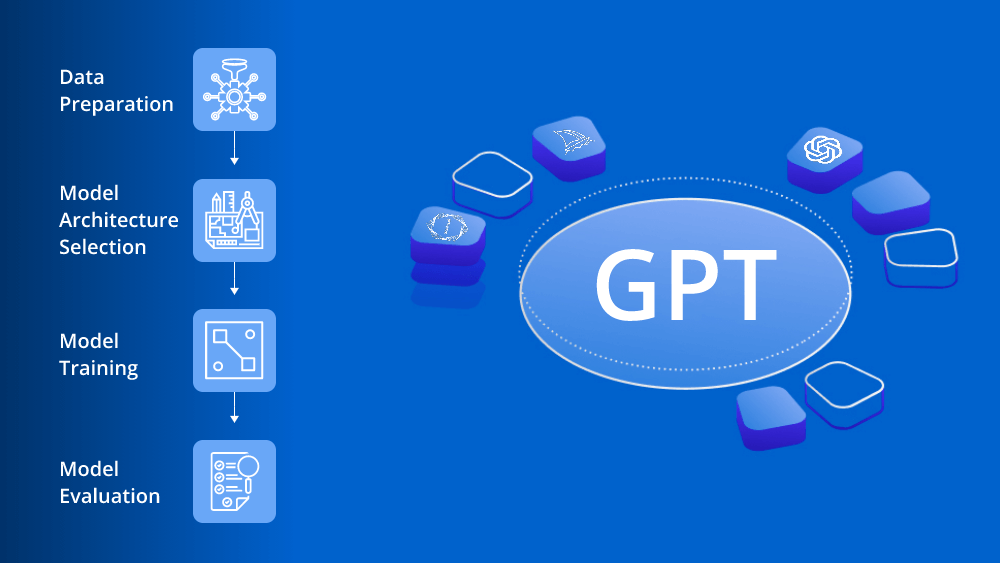
Building a GPT (Generative Pre-trained Transformer) model: a feat at the forefront of artificial intelligence and natural language processing. This intricate process combines cutting-edge technology, colossal datasets, and computational prowess to fashion a model capable of remarkable feats in understanding and generating human-like text.

The Data Journey: From Collection to Preprocessing

At the heart of a GPT model lies a vast reservoir of text data drawn from an array of sources spanning books, articles, websites, and more. This data, collected in copious amounts, undergoes meticulous preprocessing. It’s cleaned, tokenized, and formatted, readying it for the model’s voracious appetite for learning.

Architecting Intelligence: Training the GPT Model

The architecture of a GPT model is meticulously crafted, determining the intricate web of layers, attention mechanisms, and parameters. Training this mammoth model demands an exorbitant amount of computational muscle—GPU and TPU clusters bear the weight of this Herculean task. Iteratively adjusting millions of parameters, the model learns the nuances of language, predicting the next word in a sequence with uncanny accuracy.

Refinement and Customization: Fine-Tuning and Optimization

Once the foundation is laid, fine-tuning beckons. This stage involves training the model on domain-specific or task-specific data, tailoring its capabilities for specialized use cases. An ongoing pursuit of optimization refines the model’s performance, striving for efficiency and excellence.

The Crucible of Evaluation: Assessing GPT’s Prowess

The model’s mettle is tested and measured through stringent evaluations. Metrics like perplexity gauge its ability to predict text fluently, while qualitative assessments discern the quality of generated text. The model is put through its paces on unseen data, ensuring its adaptability and reliability.

Deploying Power: From Development to Real-World Use

A triumphant model is primed for deployment in diverse applications. However, this is merely the beginning—continuous monitoring, updates, and enhancements are crucial to maintain its prowess amidst ever-evolving language patterns and user needs.

Navigating the Challenges: Pioneering the Future of GPT Models

Yet, the journey isn’t without obstacles. Enormous computational demands pose accessibility barriers, while ensuring data quality and mitigating biases remain ongoing challenges. Ethical considerations surrounding responsible use and potential misuse cast a critical eye on these AI marvels.

In Conclusion: GPT Models as Harbingers of AI Evolution

The construction of a GPT model orchestrates a symphony of technological prowess and data finesse. Despite its complexities, it stands as a testament to humanity’s strides in AI and natural language processing. As these models continue to evolve, they promise unparalleled advancements and applications across industries, reshaping the very fabric of human-AI interaction.

Standard

The Transformative Power of AI for Enterprises: Revolutionizing Operations and Innovation

In the era of rapid technological advancements, Artificial Intelligence (AI) stands out as a game-changer for enterprises across industries. From optimizing operations to revolutionizing customer experiences, AI for enterprises has become an indispensable tool driving efficiency, innovation, and competitiveness.

Driving Operational Efficiency

Enterprises face the constant challenge of maximizing efficiency while minimizing costs. AI has emerged as a solution by automating repetitive tasks, streamlining processes, and enabling predictive analytics.

For instance, in manufacturing, AI-powered predictive maintenance systems can anticipate equipment failures, reducing downtime and enhancing productivity. In logistics, AI algorithms optimize route planning, minimizing delivery times and fuel consumption. These implementations not only save costs but also improve overall operational effectiveness.

Enhancing Customer Experiences

In today’s customer-centric market, delivering exceptional experiences is key to success. AI empowers enterprises to understand and cater to individual customer needs at scale. Through data analysis and machine learning, AI predicts customer preferences, allowing for personalized recommendations and targeted marketing campaigns.

Chatbots and virtual assistants, fueled by AI, provide instantaneous and personalized support, enhancing customer satisfaction while reducing the burden on human resources. Natural Language Processing (NLP) enables sentiment analysis, allowing companies to gauge customer feedback and sentiments in real-time.

Facilitating Innovation and Decision-Making

AI facilitates innovation by augmenting human capabilities. Through advanced analytics and machine learning algorithms, enterprises gain deeper insights into market trends, enabling data-driven decision-making. AI-powered tools aid in product development, optimizing designs and functionalities based on user feedback and data analysis.

Moreover, AI fosters creativity by automating repetitive tasks, freeing up human resources to focus on more strategic and inventive initiatives. This synergy between AI and human creativity drives innovation, fostering a culture of continuous improvement within enterprises.

Challenges and Ethical Considerations

Despite its transformative potential, AI adoption in enterprises is not without challenges. Data privacy concerns, ethical considerations, and the need for responsible AI deployment remain paramount. Ensuring transparency, fairness, and accountability in AI algorithms is crucial to maintain trust among customers and stakeholders.

Additionally, there is a growing need for upskilling the workforce to leverage AI effectively. Enterprises must invest in training programs to enable employees to work collaboratively with AI systems, fostering a symbiotic relationship between human intelligence and AI capabilities.

Conclusion

Artificial Intelligence has become a cornerstone of enterprise transformation, revolutionizing operations, innovation, and customer experiences. Embracing AI not only enhances efficiency and productivity but also unlocks new realms of creativity and innovation.

As enterprises navigate the evolving landscape, responsible AI adoption coupled with continuous upskilling will be imperative. The synergy between human expertise and AI capabilities will shape a future where enterprises thrive in a data-driven, innovative ecosystem.

In essence, AI isn’t just a technological advancement; it’s a catalyst for the evolution of enterprises, enabling them to adapt, innovate, and thrive in an ever-changing business landscape.

Standard

AI-Driven Development: Transforming the Future of Software Engineering

In the ever-evolving landscape of technology, the integration of Artificial Intelligence (AI) has heralded a new era in software development. AI-driven development, an innovative approach that leverages machine intelligence throughout the software development lifecycle, has redefined the way applications are conceptualized, built, and deployed. This paradigm shift promises not only increased efficiency but also fosters a culture of innovation and agility within the software engineering domain.

Redefining Development Processes

AI-driven development fundamentally alters traditional development processes by infusing intelligence into every stage of the software lifecycle. From ideation and planning to coding, testing, deployment, and maintenance, AI plays a pivotal role, optimizing workflows and empowering developers to deliver high-quality software faster than ever before.

Streamlining Software Development

One of the key aspects of AI-driven development is its ability to automate repetitive and time-consuming tasks. AI algorithms assist developers in various ways, from automatically generating code snippets to identifying bugs and suggesting optimizations. This automation not only accelerates the development process but also minimizes human errors, leading to more robust and reliable software.

Intelligent Decision-Making

AI augments decision-making by providing data-driven insights and predictive analytics. By analyzing vast amounts of data, AI algorithms assist in making informed decisions related to feature prioritization, resource allocation, and project timelines. This data-driven approach enhances project management, enabling teams to make smarter choices throughout the development cycle.

Enhancing User Experience

AI-driven development places a strong emphasis on understanding user behavior and preferences. By leveraging AI-powered analytics and user data, developers gain valuable insights into user interactions, enabling them to tailor applications to meet user expectations effectively. This personalized approach fosters enhanced user experiences, leading to higher user satisfaction and engagement.

Continuous Improvement and Adaptability

The integration of AI facilitates continuous improvement through feedback loops and iterative development. AI algorithms analyze user feedback, performance metrics, and usage patterns to suggest enhancements or updates, allowing applications to evolve and adapt to changing user needs and technological advancements.

Challenges and Ethical Considerations

While AI-driven development holds immense promise, it also presents challenges and ethical considerations. Issues surrounding data privacy, algorithm biases, and the ethical use of AI in decision-making processes must be addressed to ensure responsible and equitable development practices.

The Future of AI-Driven Development

As AI technologies continue to advance, the future of AI-driven development appears to be dynamic and transformative. More sophisticated AI models, improved natural language processing, and enhanced predictive capabilities will further revolutionize software engineering, enabling the creation of more intelligent, adaptive, and context-aware applications.

Conclusion

AI-driven development represents a paradigm shift in software engineering, empowering developers to create smarter, more efficient, and user-centric applications. By harnessing the power of AI across the development lifecycle, organizations can drive innovation, improve productivity, and deliver software solutions that truly resonate with users in an increasingly digital world. Embracing AI-driven development is not just an evolution but a revolution in the way software is conceived, developed, and delivered.

Standard

The Evolution of Programming: AI-Assisted Coding

In the ever-evolving landscape of technology, the role of Artificial Intelligence (AI) has transcended its traditional boundaries, reaching into the very heart of programming itself. AI-assisted coding, an innovation poised to revolutionize the way developers write, understand, and optimize code, stands as a testament to the transformative power of AI in the realm of software development.

  • AI-assisted coding involves the use of machine learning algorithms, natural language processing, and predictive analytics to assist programmers in various stages of the development process.
  • This technology is designed to enhance efficiency, accuracy, and overall productivity in software development tasks, empowering both seasoned developers and novices alike.
  • One of the most significant advantages of AI-assisted coding is its ability to augment human capabilities. These AI tools can analyze vast repositories of code, identifying patterns, suggesting optimizations, and even generating code snippets to expedite development.
  • By leveraging historical data and best practices, these systems help programmers make informed decisions and write higher quality code.
  • One of the key applications of AI in coding is code completion. AI-powered autocomplete tools, integrated into popular Integrated Development Environments (IDEs), offer predictive suggestions as developers type, reducing keystrokes and potential errors.

These tools, trained on extensive codebases, learn from context and provide tailored recommendations, significantly speeding up the coding process.

Additionally, AI-assisted debugging has emerged as a valuable asset for developers. By analyzing runtime behavior and error patterns, AI can pinpoint potential bugs, suggesting solutions or highlighting problematic code sections. This proactive approach to debugging streamlines the troubleshooting process, leading to more robust and reliable software.

Moreover, AI-driven code reviews have become instrumental in ensuring code quality and adherence to best practices. These systems analyze code against established guidelines, identifying potential vulnerabilities, performance issues, or compliance concerns. By automating this process, developers receive timely feedback, enabling them to rectify issues early in the development cycle.

Furthermore, AI is making strides in enabling natural language interfaces for programming. Through conversational AI interfaces, developers can interact with code in a more intuitive manner, expressing their intent in plain language and receiving suggestions or code transformations in response. This bridges the gap for individuals with varying levels of programming expertise, democratizing access to software development.

However, while AI-assisted coding brings numerous benefits, it is not without challenges. Concerns about biases in training data, over-reliance on AI suggestions, and the need for continuous learning and adaptation persist. Developers must exercise caution and critical thinking when incorporating AI-generated code or suggestions into their projects, ensuring the integrity and security of their software.

Conclusion

AI-assisted coding represents a paradigm shift in software development, empowering developers with tools to enhance productivity, code quality, and collaboration. As AI continues to evolve, its integration into the coding workflow will likely become more seamless and indispensable, ushering in an era of innovation and efficiency in programming. Embracing this technology while being mindful of its limitations will pave the way for a future where humans and machines collaborate harmoniously to create exceptional software solutions.

Standard

Exploring the Diverse Landscape: An In-Depth Look at Types of Data Integration

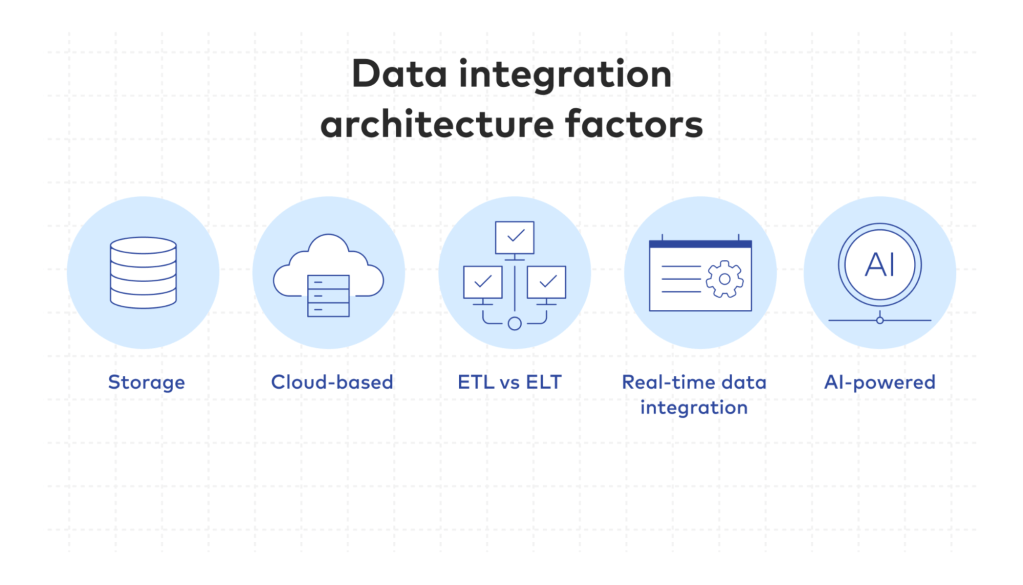
Data integration, a fundamental process in modern businesses, encompasses various methodologies and approaches tailored to the complexities of merging diverse data sources. Understanding the different types of data integration is crucial for organizations seeking to harness the power of unified data. This comprehensive guide navigates through the landscape of data integration, exploring its types, methodologies, and the significance each holds in today’s data-driven world.

1. Traditional Batch Data Integration

This method involves periodic extraction, transformation, and loading (ETL) of data from multiple sources into a centralized repository or data warehouse. Batch processing occurs at scheduled intervals, allowing for large volumes of data to be integrated in batches. It’s effective for structured data and is ideal for historical analysis and reporting purposes.

2. Real-Time Data Integration

In contrast to batch processing, real-time data integration focuses on immediate and continuous data delivery. It ensures that changes made in source systems are reflected instantaneously in the target systems or data warehouses. This approach enables organizations to access up-to-the-moment data for critical decision-making, often employed in scenarios requiring real-time analytics and operational insights.

3. Data Federation or Virtual Integration

Data federation creates a virtual view of disparate data sources without physically moving or replicating the data. It enables unified access to distributed data in real-time, allowing users to query and access information seamlessly across various sources. This approach minimizes data duplication and latency, offering agility and flexibility in accessing heterogeneous data.

4. Enterprise Application Integration (EAI)

EAI integrates disparate applications within an organization, ensuring seamless communication and data exchange between different software systems. It involves middleware technologies and interfaces to enable data flow between systems, enabling functionalities like messaging, event-driven architecture, and service-oriented architectures (SOA).

5. Cloud-Based Data Integration

With the proliferation of cloud computing, this type of integration focuses on integrating data residing in cloud-based applications, platforms, or services. It involves leveraging cloud-based tools and services to connect and synchronize data across various cloud environments or between on-premises and cloud systems.

6. Bi-Directional Data Integration

Bi-directional integration facilitates the exchange of data between systems in both directions—allowing data updates or changes made in one system to be reflected in another and vice versa. This type of integration ensures data consistency across multiple systems and enables synchronization between them.

7. Data Warehousing

Data warehousing involves integrating data from multiple sources into a centralized repository optimized for analytics, reporting, and business intelligence purposes. It focuses on structuring and storing data in a format conducive to analysis and decision-making.

Choosing the Right Data Integration Approach

  1. Data Volume and Frequency: Consider the volume of data and the required frequency of updates or access—batch processing suits large volumes while real-time integration is suitable for immediate needs.
  2. Data Variety and Complexity: Evaluate the complexity and variety of data sources—structured, unstructured, or semi-structured data—and choose an approach that accommodates diverse formats.
  3. Business Objectives: Align integration strategies with specific business objectives—whether it’s real-time analytics, operational efficiency, or improving customer experience.
  4. Infrastructure and Technology Stack: Assess the existing infrastructure and technology stack to determine compatibility and select an approach that integrates seamlessly.

The Impact of Data Integration

Efficient data integration brings forth a multitude of benefits:

  1. Improved Decision-Making: Access to unified and timely data empowers organizations to make informed decisions swiftly.
  2. Enhanced Efficiency: Streamlining data access and integration processes boosts operational efficiency and agility.
  3. Better Customer Insights: Integrated customer data enables personalized experiences, leading to improved customer satisfaction and loyalty.
  4. Competitive Advantage: Leveraging integrated data fosters innovation and positions businesses ahead in a competitive landscape.

Conclusion

The world of data integration is multifaceted, offering a spectrum of methodologies to suit diverse business needs. Selecting the right type of integration involves a strategic assessment of data requirements, technology capabilities, and business objectives. As organizations continue to leverage data as a strategic asset, embracing the appropriate data integration approach becomes integral in unlocking the full potential of disparate data sources, driving innovation, and ensuring a competitive edge in the digital era.

Standard

Understanding the Essence of Data Integration: A Comprehensive Overview

In today’s data-driven world, the abundance of information generated from disparate sources has become both a boon and a challenge for organizations. Amidst this wealth of data, the need to extract meaningful insights and drive informed decision-making has led to the emergence of data integration as a critical process. This comprehensive guide aims to unravel the essence of data integration, exploring its significance, methodologies, and the transformative impact it has on businesses.

Defining Data Integration

Data integration refers to the process of combining, transforming, and harmonizing data from various sources into a unified and coherent view. It involves merging data from disparate systems, databases, applications, or sources—irrespective of their format, structure, or location—into a single, cohesive dataset that can be analyzed, interpreted, and utilized effectively.

The Significance of Data Integration

  1. Holistic View of Information: Integrating data from diverse sources provides a comprehensive and holistic view of an organization’s operations, customers, and processes, enabling better insights and informed decision-making.
  2. Enhanced Data Accuracy and Consistency: By consolidating data, discrepancies and redundancies are minimized, leading to improved accuracy, consistency, and reliability of information.
  3. Improved Business Intelligence and Analytics: Integrated data serves as a foundation for robust business intelligence (BI) and analytics, enabling organizations to derive actionable insights and make data-driven decisions.
  4. Streamlined Operations and Efficiency: Access to integrated data streamlines processes, enhances collaboration, and boosts operational efficiency by providing a unified view across departments.
  5. Facilitating Innovation and Agility: Integrated data fosters innovation by empowering organizations to respond quickly to changing market trends, customer demands, and emerging opportunities.

Methodologies and Approaches to Data Integration

  1. ETL (Extract, Transform, Load): This approach involves extracting data from multiple sources, transforming it into a standardized format, and loading it into a target system or data warehouse.
  2. ELT (Extract, Load, Transform): In ELT, data is extracted and loaded into a target system first, and transformation occurs within the destination system or data warehouse. This approach is often used for big data processing.
  3. Data Virtualization: This technique creates a virtualized view of data from disparate sources without physically moving or replicating it. It enables real-time access to data and minimizes data duplication.
  4. API Integration: Application Programming Interfaces (APIs) facilitate direct connections between systems, allowing data to be exchanged and integrated in real time.

Challenges and Considerations in Data Integration

  1. Data Quality and Consistency: Maintaining data quality and consistency across diverse sources remains a challenge, requiring data cleansing and standardization processes.
  2. Data Security and Privacy: Integrating sensitive data raises concerns regarding security, compliance with regulations, and ensuring data privacy throughout the integration process.
  3. Complexity and Scalability: As data volumes and sources increase, managing the complexity of integration and ensuring scalability becomes a crucial consideration.
  4. Technological Heterogeneity: Dealing with different data formats, structures, and systems requires compatibility and interoperability between diverse technologies.

Impact of Data Integration on Businesses

  1. Improved Decision-Making: Access to integrated data empowers businesses to make informed decisions swiftly, based on accurate, real-time insights.
  2. Enhanced Customer Experience: A unified view of customer data allows for personalized and seamless experiences across various touchpoints.
  3. Operational Efficiency and Cost Savings: Streamlined processes and access to consolidated data contribute to operational efficiency and cost savings by eliminating redundancies and inefficiencies.
  4. Innovation and Competitive Edge: Harnessing integrated data fuels innovation, enabling businesses to stay agile, adapt to market changes, and maintain a competitive edge.

Conclusion

Data integration stands as a cornerstone in today’s data-centric landscape, bridging the gap between disparate data sources and unlocking the full potential of information. The ability to seamlessly merge, transform, and utilize data from various sources is pivotal in empowering organizations to thrive in a rapidly evolving business environment.

As businesses continue to recognize the transformative power of integrated data, the strategic implementation of robust data integration processes becomes imperative. Leveraging advanced methodologies, technologies, and a meticulous approach to handling challenges can empower organizations to harness the true value of their data, driving growth, innovation, and success in the digital age.

Standard

Navigating Innovation: The Comprehensive Guide to Custom Blockchain Software Development Processes

Blockchain technology has transcended its initial association with cryptocurrencies to emerge as a transformative force across industries. As businesses seek to leverage the potential of blockchain, the demand for custom blockchain software solutions tailored to specific needs has surged. Understanding the intricacies of the custom blockchain software development process is pivotal in navigating this innovative landscape. In this comprehensive guide, we delve into the essential stages and considerations that define the creation of bespoke blockchain solutions.

Understanding Custom Blockchain Software Development

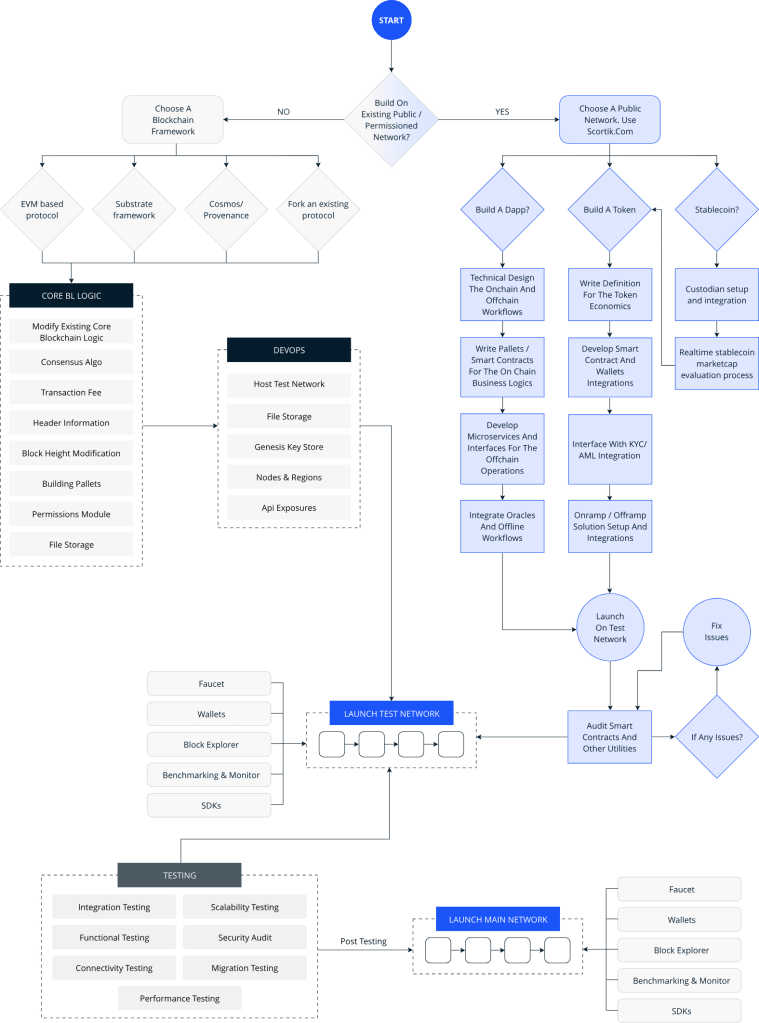
Custom blockchain software development involves the creation of tailored solutions leveraging blockchain technology to address specific business challenges or capitalize on opportunities. These solutions can range from decentralized applications (dApps) to custom blockchain networks, smart contracts, and more, designed to meet the unique requirements of diverse industries.

Key Stages in Custom Blockchain Software Development

  1. Discovery and Requirement Analysis: This initial phase involves understanding the client’s business objectives, challenges, and identifying the specific use case for blockchain. Detailed requirements are gathered to define the project scope.
  2. Design and Architecture: In this stage, the development team designs the architecture of the blockchain solution. Decisions regarding the type of blockchain (public, private, or consortium), consensus mechanisms, data structure, and user interface are made.
  3. Development and Prototyping: Skilled developers begin coding the solution according to the outlined architecture. Prototypes or minimum viable products (MVPs) may be created to validate concepts and functionalities.
  4. Testing and Quality Assurance: Rigorous testing of the developed solution is conducted to ensure its functionality, security, performance, and compliance with predefined requirements. Any issues or bugs are identified and addressed.
  5. Deployment and Integration: Once the solution passes testing, it is deployed either on-premises or on a cloud-based infrastructure. Integration with existing systems or applications may also occur during this phase.
  6. Maintenance and Support: Post-deployment, ongoing maintenance and support are provided to ensure the solution operates smoothly. Updates, enhancements, and troubleshooting are part of this continuous support process.

Considerations and Best Practices

  1. Blockchain Platform Selection: Choose the most suitable blockchain platform (Ethereum, Hyperledger, Corda, etc.) based on scalability, consensus mechanisms, smart contract capabilities, and industry relevance.
  2. Security Measures: Implement robust security protocols, encryption standards, and consensus mechanisms to safeguard data integrity and protect against potential threats.
  3. Scalability and Performance Optimization: Anticipate future scalability requirements and design the solution to handle increasing transaction volumes without compromising performance.
  4. Regulatory Compliance: Ensure adherence to relevant regulatory frameworks and industry standards, especially in sectors like finance, healthcare, and supply chain.
  5. User Experience (UX): Design an intuitive and user-friendly interface to enhance user adoption and acceptance of the blockchain solution.

Benefits of Custom Blockchain Software Development

  1. Tailored Solutions: Address specific business needs and challenges with bespoke blockchain solutions that align precisely with organizational goals.
  2. Enhanced Security: Utilize blockchain’s immutable and decentralized nature to secure data and transactions, reducing the risk of fraud or tampering.
  3. Increased Efficiency: Streamline processes, eliminate intermediaries, and automate tasks, leading to improved operational efficiency and cost savings.
  4. Transparency and Trust: Foster transparency through immutable records and decentralized consensus, enhancing trust among stakeholders.

Conclusion

Custom blockchain software development represents a pathway to innovation and competitive advantage for businesses across diverse sectors. By embracing tailored solutions that leverage blockchain technology, organizations can unlock new opportunities, streamline operations, and establish a foundation for a decentralized future.

Navigating the complexities of this process requires a deep understanding of business requirements, meticulous planning, technical expertise, and a commitment to continuous improvement. As industries continue to evolve, the strategic adoption of custom blockchain software development processes stands as a testament to an organization’s readiness to embrace the future of technology and innovation.

Standard