Revolutionizing Customer Engagement: Leading Enterprise AI Chatbot Development Companies

Artificial Intelligence (AI) chatbots have become invaluable tools for businesses seeking to enhance customer engagement, streamline support services, and provide immediate responses to queries. Enterprise AI chatbot development companies are at the forefront of this technological revolution, creating chatbot solutions tailored to the specific needs of organizations. In this article, we explore the significance of enterprise AI chatbot development companies, their expertise, applications, and the impact they have on various industries.

Understanding Enterprise AI Chatbot Development Companies

Enterprise AI chatbot development companies specialize in creating custom chatbot solutions that leverage AI and natural language processing (NLP) to provide automated and intelligent conversational experiences. These companies employ AI experts, data scientists, and developers who design, build, and deploy chatbots capable of interacting with customers or employees in a human-like manner. Their services cover the entire chatbot development cycle, from design and training to integration and ongoing support.

Key Services Offered by Enterprise AI Chatbot Development Companies

Enterprise AI chatbot development companies offer a wide range of services to meet the unique requirements of their clients. Some of the key services they provide include:

  1. Custom Chatbot Development: Designing and building custom chatbots tailored to specific business use cases, such as customer support, sales, or internal communications.
  2. Natural Language Processing (NLP): Implementing NLP algorithms to enable chatbots to understand and respond to natural language queries and user intents.
  3. Data Collection and Analysis: Collecting and analyzing chat data to improve chatbot performance, enhance customer interactions, and provide actionable insights to businesses.
  4. Integration and Deployment: Ensuring seamless integration of chatbots into existing systems, applications, or websites, allowing them to work effectively within the organization’s infrastructure.
  5. Continuous Training and Improvement: Ongoing support and maintenance to ensure chatbots remain efficient, adaptable, and up to date with changing user needs and market trends.

Leading Enterprise AI Chatbot Development Companies

  1. IBM Watson: IBM’s Watson platform provides AI chatbot development services, with a focus on natural language understanding, conversation flow design, and integration with IBM’s cloud services.
  2. Microsoft Azure: Microsoft offers a wide range of AI services, including Azure Bot Service, which allows businesses to create and deploy intelligent chatbots for various applications.
  3. Google Cloud: Google Cloud’s Dialogflow platform enables businesses to build and deploy chatbots with Google’s powerful AI and NLP capabilities.
  4. AWS Lex: Amazon Web Services (AWS) provides AWS Lex, a service for building conversational interfaces, including chatbots, using NLP and speech recognition.
  5. Chatfuel: Chatfuel is a chatbot development platform that offers a no-code approach for businesses to create AI chatbots for messaging platforms like Facebook Messenger and WhatsApp.

Significance of Enterprise AI Chatbot Development Companies

Enterprise AI chatbot development companies play a pivotal role in improving customer engagement, streamlining support services, and providing immediate responses to inquiries. Their expertise empowers organizations to:

  1. Enhance Customer Service: AI chatbots are available 24/7 to provide instant support, answer frequently asked questions, and assist customers, leading to improved customer satisfaction.
  2. Streamline Operations: Chatbots can automate routine tasks, such as appointment scheduling or order tracking, reducing the workload on human agents and increasing operational efficiency.
  3. Improve Sales and Marketing: Chatbots can engage potential customers, recommend products, and provide information about services, leading to increased lead generation and conversion.
  4. Enhance Internal Communications: Enterprise chatbots can assist employees with HR-related queries, provide internal information, and streamline internal communication processes.
  5. Boost E-commerce: AI-powered chatbots offer personalized product recommendations, assist with the shopping process, and provide order status updates, increasing user engagement and conversion rates.
  6. Expand Accessibility: Chatbots democratize customer engagement by making support and information accessible to a broader range of people, improving accessibility and inclusivity.

Applications of Enterprise AI Chatbot Development Companies

AI chatbot development companies have a wide range of applications across various industries, transforming how businesses interact with customers, employees, and stakeholders:

  1. Customer Support: AI chatbots assist customers with inquiries, troubleshooting, and frequently asked questions, reducing the workload of human agents and providing immediate responses.
  2. Sales and Marketing: Chatbots engage potential customers, recommend products, and provide information about services, aiding in lead generation and conversion.
  3. HR and Recruitment: Chatbots assist with the recruitment process by screening candidates, scheduling interviews, and answering job-related queries.
  4. Internal Support: Enterprise chatbots assist employees by providing information on company policies, IT support, and other internal matters.
  5. E-commerce: AI-powered chatbots offer personalized product recommendations, assist with the shopping process, and provide order status updates.
  6. Healthcare: AI chatbots can schedule medical appointments, provide basic medical advice, and remind patients about medications.
  7. Financial Services: Chatbots assist with account inquiries, fund transfers, and financial advice, enhancing the customer banking experience.

Enterprise AI chatbot development companies are transforming customer engagement and streamlining operations by creating intelligent and adaptable chatbot solutions. Their specialized expertise empowers organizations to provide instant customer support, streamline internal communication, and enhance sales and marketing efforts. As AI technologies continue to advance, enterprise AI chatbot development companies will remain essential partners for organizations seeking to navigate the dynamic landscape of artificial intelligence. With the potential to improve customer satisfaction, increase efficiency, and boost accessibility, chatbot development companies are at the forefront of the ongoing AI revolution.

Leading the Way: Enterprise AI Development Companies Shaping the Future

In today’s rapidly evolving business landscape, the adoption of artificial intelligence (AI) is no longer a luxury but a strategic imperative. Enterprise AI development companies are at the forefront of this digital transformation, enabling businesses to harness the power of AI to improve operations, enhance decision-making, and gain a competitive edge. This article explores the significance of enterprise AI development companies, their expertise, applications, and the impact they have on industries across the globe.

Understanding Enterprise AI Development Companies

Enterprise AI development companies are specialized organizations that focus on creating AI solutions, services, and products tailored to meet the unique needs of businesses. These companies employ teams of AI experts, data scientists, machine learning engineers, and software developers who collaborate to design, build, and deploy AI applications customized to address specific business challenges. Their services encompass the entire AI development lifecycle, from strategy and design to deployment and ongoing support.

Key Services Offered by Enterprise AI Development Companies

Enterprise AI development companies offer a wide range of services to meet the unique requirements of their clients. Some of the key services they provide include:

  1. AI Strategy and Consulting: These companies assist organizations in defining their AI objectives, aligning them with business goals, and creating a roadmap for AI integration.
  2. Custom AI Model Development: Specializing in designing, building, and training AI and machine learning models that address specific business challenges, from predictive analytics to natural language processing.
  3. Data Analysis and Insights: Using AI to harness data, these companies provide actionable insights, enabling data-driven decision-making and more effective strategies.
  4. Integration and Deployment: Ensuring seamless integration of AI solutions into existing systems, applications, or websites, allowing them to work effectively within the organization’s infrastructure.
  5. Continuous Training and Improvement: Ongoing support and maintenance to ensure AI solutions remain efficient, adaptable, and up to date with changing business needs.

Leading Enterprise AI Development Companies

  1. Accenture: A global leader in consulting and professional services, Accenture has a dedicated AI practice that helps organizations transform their businesses through AI strategy, development, and implementation.
  2. IBM Global Business Services: IBM offers AI consulting and development services, leveraging their extensive experience in AI research and development to help clients integrate AI into their operations.
  3. Deloitte: Deloitte’s AI practice assists clients with AI strategy, implementation, and data analysis, enabling businesses to make data-driven decisions and improve operations.
  4. PwC (PricewaterhouseCoopers): PwC’s AI consulting services focus on helping organizations navigate the complex world of AI and machine learning, from strategy development to implementation.
  5. Cognizant: Cognizant provides AI consulting and advisory services to guide businesses in their AI journey, with a focus on data-driven insights and digital transformation.

Significance of Enterprise AI Development Companies

Enterprise AI development companies play a pivotal role in the AI ecosystem and have a significant impact on businesses and industries. Their expertise helps organizations:

  1. Stay Competitive: AI development companies provide businesses with access to cutting-edge AI technologies, enabling them to remain competitive in an ever-changing market.
  2. Optimize Operations: AI development companies identify areas where AI can automate tasks, improve efficiency, and streamline operations, leading to cost savings and enhanced productivity.
  3. Make Informed Decisions: Data-driven insights provided by AI applications help businesses make informed, data-backed decisions, reducing uncertainty in their strategies.
  4. Navigate Complexity: The AI landscape is complex, and AI development companies help organizations navigate the intricacies of AI adoption, ensuring a smooth transition.
  5. Enhance Customer Experiences: AI development companies enable businesses to develop AI-powered solutions that provide personalized customer experiences, increasing satisfaction and loyalty.

Applications of Enterprise AI Development Companies

AI development companies have a wide range of applications across various industries, transforming how businesses operate and make decisions:

  1. Customer Support: AI-driven chatbots assist customers with inquiries, troubleshooting, and frequently asked questions, reducing the workload of human agents and providing immediate responses.
  2. Sales and Marketing: AI models engage potential customers, recommend products, and provide information about services, aiding in lead generation and conversion.
  3. HR and Recruitment: AI helps streamline the recruitment process by screening candidates, scheduling interviews, and answering job-related queries.
  4. Internal Support: Enterprise chatbots assist employees by providing information on company policies, IT support, and other internal matters.
  5. E-commerce: AI-powered recommendation engines offer personalized product recommendations, assist with the shopping process, and provide order status updates.
  6. Healthcare: AI models can schedule medical appointments, provide basic medical advice, and remind patients about medications.
  7. Financial Services: AI solutions assist with account inquiries, fund transfers, and financial advice, enhancing the customer banking experience.

Enterprise AI development companies are pivotal in helping organizations unlock the full potential of AI. These specialized firms and experts provide guidance on AI strategy, custom model development, data analysis, integration, and ongoing support. With their extensive experience and expertise, AI development companies empower businesses to harness AI’s transformative capabilities, stay competitive, optimize operations, make informed decisions, and enhance customer experiences.

As AI technologies continue to advance, enterprise AI development companies will remain essential partners for organizations seeking to navigate the dynamic landscape of artificial intelligence. With the potential

Pioneering AI Chatbot Developers: Shaping the Future of Conversational AI

Conversational AI, powered by chatbots, has become an integral part of modern business operations, enhancing customer service, automating routine tasks, and enabling businesses to engage with users 24/7. AI chatbot developers are at the forefront of this transformation, creating intelligent chatbot solutions that revolutionize how organizations interact with customers, employees, and stakeholders. This article explores the significance of AI chatbot developers, their expertise, applications, and the impact they have on various industries.

Understanding AI Chatbot Developers

AI chatbot developers are skilled professionals who specialize in designing, building, and deploying chatbots powered by artificial intelligence and natural language processing (NLP). They play a crucial role in creating chatbots that can engage in meaningful and intelligent conversations with users, providing instant responses and automating various tasks. These developers have expertise in AI technologies, programming languages, and chatbot frameworks, allowing them to create tailored chatbot solutions for a wide range of applications.

Key Services Offered by AI Chatbot Developers

AI chatbot developers offer a spectrum of services to meet the unique requirements of their clients. Some of the key services they provide include:

  1. Chatbot Development: Designing and building chatbots tailored to specific business needs, whether for customer support, sales, internal communication, or other use cases.
  2. Natural Language Processing (NLP): Implementing NLP algorithms to enable chatbots to understand user intents, context, and natural language queries, ensuring more human-like interactions.
  3. Integration and Deployment: Ensuring seamless integration of chatbots into websites, applications, messaging platforms, and other systems, making them readily available to users.
  4. Data Analysis and Insights: Leveraging chatbot data to gain insights into user behavior, preferences, and areas for improvement, enabling businesses to make data-driven decisions.
  5. Continuous Improvement: Providing ongoing support and maintenance to keep chatbots up-to-date, optimize performance, and adapt to evolving user needs and market trends.

Leading AI Chatbot Developers

  1. Microsoft Bot Framework: Microsoft’s Bot Framework offers a comprehensive set of tools for chatbot development, allowing developers to create AI-driven chatbots for various platforms.
  2. Google Dialogflow: Google’s Dialogflow is a popular NLP-based chatbot development platform that leverages Google’s AI and NLP capabilities.
  3. IBM Watson Assistant: IBM’s Watson Assistant empowers developers to build AI chatbots and virtual assistants using natural language understanding and conversation flow design.
  4. Rasa: Rasa is an open-source chatbot development platform that provides developers with the tools to create highly customizable chatbots.
  5. Chatfuel: Chatfuel is a no-code chatbot development platform that enables businesses to create AI chatbots for messaging platforms like Facebook Messenger.

Significance of AI Chatbot Developers

AI chatbot developers are pivotal in enabling businesses to improve customer engagement, streamline operations, and automate routine tasks. Their expertise empowers organizations to:

  1. Enhance Customer Service: AI chatbots offer 24/7 support, answering queries, resolving issues, and providing immediate assistance, leading to improved customer satisfaction.
  2. Automate Operations: Chatbots can automate repetitive tasks such as appointment scheduling, order tracking, and information retrieval, reducing the workload on human agents and increasing efficiency.
  3. Improve Sales and Marketing: Chatbots engage potential customers, recommend products or services, and provide information, contributing to lead generation and increased conversion rates.
  4. Enhance Internal Communications: Enterprise chatbots assist employees with HR-related queries, policy information, and internal communication processes, leading to smoother operations.
  5. Boost E-commerce: AI-powered chatbots offer personalized product recommendations, assist with the shopping process, and provide order status updates, increasing user engagement and conversion rates.

Applications of AI Chatbot Developers

AI chatbot developers enable organizations to employ chatbots across various industries, transforming how businesses interact with customers and employees:

  1. Customer Support: Chatbots provide instant support, resolving issues and answering questions on various topics, reducing the need for human agents.
  2. Sales and Marketing: Chatbots engage potential customers, recommend products, and provide information about services, aiding in lead generation and conversion.
  3. HR and Recruitment: Chatbots streamline recruitment by screening candidates, scheduling interviews, and answering job-related queries.
  4. Internal Support: Enterprise chatbots assist employees with HR inquiries, policy information, and internal communication processes.
  5. E-commerce: AI chatbots offer personalized product recommendations, assist with the shopping process, and provide order status updates, improving user experiences.
  6. Healthcare: Chatbots assist with scheduling medical appointments, provide basic medical advice, and remind patients about medications.
  7. Financial Services: Chatbots help with account inquiries, fund transfers, and financial advice, enhancing the customer banking experience.

AI chatbot developers are essential in creating intelligent chatbot solutions that revolutionize customer engagement, streamline operations, and enhance user experiences. Their expertise empowers organizations to provide instant support, automate routine tasks, and improve internal and external communication. As AI technologies continue to advance, AI chatbot developers remain vital partners for organizations seeking to navigate the dynamic landscape of artificial intelligence. With the potential to improve customer satisfaction, increase efficiency, and boost accessibility, chatbot developers are at the forefront of shaping the future of conversational AI.

Mastering Creativity: Leading Generative AI Consulting Companies

Generative Artificial Intelligence (AI) has emerged as a transformative force in technology, enabling machines to generate creative content, art, and more. Generative AI consulting companies are at the forefront of this revolution, harnessing the power of AI to provide guidance, services, and expertise in the field of generative AI. This article explores the significance of generative AI consulting companies, their expertise, applications, and their impact on industries that rely on creative content, such as art, marketing, and entertainment.
Understanding Generative AI Consulting Companies

Generative AI consulting companies are specialized organizations that focus on providing consulting services, solutions, and expertise in generative AI. They employ data scientists, machine learning engineers, and AI experts who work to develop and implement generative AI models, applications, and strategies for their clients. Their services encompass the entire generative AI spectrum, from design and development to integration and continuous support.

Key Services Offered by Generative AI Consulting Companies

Generative AI consulting companies offer a wide range of services tailored to the unique needs of their clients. Some of the key services they provide include:

  1. Custom Model Development: Designing and training custom generative AI models that are fine-tuned for specific creative tasks, such as art generation, text writing, or music composition.
  2. Data Analysis and Preparation: Collecting, cleaning, and curating datasets to ensure generative AI models have access to relevant, accurate, and high-quality data.
  3. Integration and Deployment: Ensuring seamless integration of generative AI solutions into existing systems, applications, or websites to ensure they work effectively within the client’s infrastructure.
  4. Continuous Training and Improvement: Providing ongoing support and maintenance to keep generative AI models effective, innovative, and adaptable to changing needs and expectations.

Leading Generative AI Consulting Companies

  1. OpenAI: OpenAI is a trailblazer in the generative AI field, known for its development of the GPT-3 model, which has applications in natural language generation, content creation, and more.
  2. Adobe: Adobe has integrated generative AI features into its creative software, such as Photoshop and Illustrator, to assist designers and artists in their creative endeavors.
  3. DeepMind: A subsidiary of Alphabet, DeepMind has developed AI models for creative tasks, including art generation, music composition, and more.
  4. NVIDIA: NVIDIA’s AI research has led to innovations in generative AI, including AI-driven art, style transfer, and content generation.
  5. IBM Watson: IBM’s Watson platform offers generative AI capabilities that extend into content creation, chatbots, and language generation.

Significance of Generative AI Consulting Companies

Generative AI consulting companies play a crucial role in unlocking the creative potential of AI. Their expertise empowers businesses and individuals to:

  1. Enhance Creativity: Generative AI consulting companies provide creators with the tools and knowledge to expand their creativity and push the boundaries of what is possible.
  2. Boost Productivity: AI models developed by these consulting firms can assist professionals in generating content quickly, efficiently, and consistently, significantly improving productivity in creative industries.
  3. Facilitate Innovation: Generative AI solutions allow businesses to experiment with new ideas, develop innovative products, and stay at the forefront of creativity and innovation.
  4. Enable Personalization: Generative AI can be used to create personalized content and experiences, enhancing user engagement and customer satisfaction.
  5. Expand Accessibility: Generative AI democratizes creativity, making it accessible to a broader range of people, regardless of their creative background, and opening doors to new talent and opportunities.

Applications of Generative AI Consulting Companies

Generative AI consulting companies have a wide range of applications across various industries, transforming creativity, content generation, and innovation:

  1. Art and Design: Generative AI is used to create art, generate design elements, and assist artists and designers in their creative processes.
  2. Media and Entertainment: Generative AI is used to produce content such as music, video, and written scripts, captivating and engaging audiences in the media and entertainment industry.
  3. Marketing and Advertising: Generative AI assists in content creation, ad copy generation, and personalization for marketing campaigns, enhancing audience engagement.
  4. Gaming: The gaming industry uses generative AI to create in-game content, such as environments, characters, and storylines.
  5. Education: Generative AI consulting companies develop solutions for educational content generation, including automated curriculum development, quiz creation, and language learning.

Challenges in Implementing Generative AI

While the potential of generative AI is immense, there are several challenges to overcome in its widespread adoption:

  1. Data Quality: The quality of data used to train generative AI models significantly influences their output. Ensuring that data is accurate and unbiased is crucial.
  2. Ethical Concerns: Generative AI models can sometimes produce controversial, offensive, or inappropriate content. Ensuring ethical guidelines and oversight is essential.
  3. Integration Complexity: Integrating generative AI solutions into existing systems and applications can be complex and require expertise.
  4. Interpretability: Some generative AI models, especially deep learning models, can be challenging to interpret and understand how they generate their output.
  5. Regulatory Compliance: Certain industries, such as healthcare and finance, are highly regulated. Compliance with regulations while using generative AI is a significant challenge.

Generative AI consulting companies are key players in the creative AI landscape, offering guidance, expertise, and innovative solutions to businesses and individuals looking to unlock the creative potential of AI. As generative AI technologies continue to advance, these companies remain at the forefront of the ongoing creative AI revolution. Their impact spans across industries, making creativity and innovation more accessible, efficient, and personalized, while also raising ethical and regulatory considerations. With the potential to transform creative industries and inspire new talent and opportunities, generative AI consulting companies are pioneers in the creative AI revolution.

Driving Innovation: Leading AI Development Companies

Artificial Intelligence (AI) is rapidly reshaping industries, from healthcare to finance and beyond. At the heart of this transformation are AI development companies, which specialize in creating custom AI solutions that empower businesses to streamline operations, enhance decision-making, and gain a competitive edge. In this article, we will explore the significance of AI development companies, their services, expertise, and their impact on a wide range of industries.
Understanding AI Development Companies

AI development companies are dedicated organizations that focus on the research, design, development, and implementation of AI solutions. They assemble teams of skilled data scientists, machine learning engineers, and software developers who collaborate to create AI applications tailored to address specific business challenges. Their services encompass the entire AI development cycle, from initial strategy and design to seamless integration and continuous support.

Key Services Offered by AI Development Companies

AI development companies provide a broad spectrum of services to meet the unique needs of their clients. Some of the key services they offer include:

  1. AI Strategy and Consulting: Assisting organizations in defining their AI objectives, aligning them with business goals, and creating a roadmap for successful AI integration.
  2. Custom AI Model Development: Designing, building, and training custom AI and machine learning models that address specific business challenges, from predictive analytics to natural language processing.
  3. Data Analysis and Insights: Utilizing AI to extract valuable insights from data, enabling data-driven decision-making and more effective strategies.
  4. Integration and Deployment: Ensuring smooth integration of AI solutions into existing systems, applications, and websites, optimizing their performance within the client’s infrastructure.
  5. Ongoing Support and Maintenance: Providing continuous support and maintenance to keep AI solutions efficient, up-to-date, and aligned with evolving business needs.

Leading AI Development Companies

  1. Accenture: A global leader in consulting and professional services, Accenture offers a dedicated AI practice that assists organizations in transforming their businesses through AI strategy, development, and implementation.
  2. IBM Global Business Services: IBM provides AI consulting and development services, leveraging their extensive experience in AI research and development to help clients integrate AI into their operations.
  3. Deloitte: Deloitte’s AI practice assists clients with AI strategy, implementation, and data analysis, enabling businesses to make data-driven decisions and improve their operations.
  4. PwC (PricewaterhouseCoopers): PwC’s AI consulting services focus on helping organizations navigate the complex world of AI and machine learning, from strategy development to implementation.
  5. Cognizant: Cognizant provides AI consulting and advisory services to guide businesses on their AI journey, with a focus on data-driven insights and digital transformation.

Significance of AI Development Companies

AI development companies play a pivotal role in the AI ecosystem and have a significant impact on businesses and industries. Their expertise helps organizations:

  1. Stay Competitive: AI development companies provide businesses with access to cutting-edge AI technologies, enabling them to remain competitive in a constantly evolving market.
  2. Optimize Operations: AI development companies identify areas where AI can automate tasks, improve efficiency, and streamline operations, leading to cost savings and enhanced productivity.
  3. Make Informed Decisions: Data-driven insights provided by AI applications help businesses make informed, data-backed decisions, reducing uncertainty in their strategies.
  4. Navigate Complexity: The AI landscape is complex, and AI development companies help organizations navigate the intricacies of AI adoption, ensuring a smooth transition.
  5. Enhance Customer Experiences: AI development companies enable businesses to develop AI-powered solutions that provide personalized customer experiences, increasing satisfaction and loyalty.

Applications of AI Development Companies

AI development companies have a wide range of applications across various industries, transforming how businesses operate and make decisions:

  1. Customer Support: AI-driven chatbots assist customers with inquiries, troubleshooting, and frequently asked questions, reducing the workload of human agents and providing immediate responses.
  2. Sales and Marketing: AI models engage potential customers, recommend products, and provide information about services, aiding in lead generation and conversion.
  3. HR and Recruitment: AI helps streamline the recruitment process by screening candidates, scheduling interviews, and answering job-related queries.
  4. Internal Support: Enterprise chatbots assist employees by providing information on company policies, IT support, and other internal matters.
  5. E-commerce: AI-powered recommendation engines offer personalized product recommendations, assist with the shopping process, and provide order status updates.
  6. Healthcare: AI models can schedule medical appointments, provide basic medical advice, and remind patients about medications.
  7. Financial Services: AI solutions assist with account inquiries, fund transfers, and financial advice, enhancing the customer banking experience.

Conclusion

AI development companies are instrumental in helping organizations unlock the full potential of AI. These specialized firms and experts provide guidance on AI strategy, custom model development, data analysis, integration, and ongoing support. With their extensive experience and expertise, AI development companies empower businesses to harness AI’s transformative capabilities, stay competitive, optimize operations, make informed decisions, and enhance customer experiences.

As AI technologies continue to advance, AI development companies will remain essential partners for organizations seeking to navigate the dynamic landscape of artificial intelligence. With the potential to improve products, services, and operations across various industries, AI development companies are pioneers in the ongoing AI revolution.

Standard

AI Use Cases in Legal Businesses: Transforming the Legal Landscape

The legal industry, often associated with tradition and a reliance on time-tested practices, has witnessed a significant transformation in recent years. This transformation is driven by the adoption of Artificial Intelligence (AI) technologies that are reshaping the way legal professionals work. AI is not here to replace lawyers, but to enhance their capabilities and streamline their operations. In this article, we will delve into the fascinating world of AI use cases in legal businesses, exploring how these technologies are revolutionizing the practice of law.

The Legal Landscape in the Age of AI

Traditionally, the practice of law involved labor-intensive tasks, extensive research, and the careful analysis of vast amounts of legal documents. This is where AI is making its mark, offering legal professionals tools and solutions that boost efficiency, accuracy, and cost-effectiveness.

  1. Document Review and Due Diligence

AI has had a profound impact on document review and due diligence processes. Legal professionals often need to review extensive volumes of documents, contracts, and case files, which can be a time-consuming and error-prone task. AI-powered document review tools, using techniques like Natural Language Processing (NLP) and machine learning, can rapidly analyze and categorize documents, helping lawyers identify relevant information. This not only saves an incredible amount of time but also significantly reduces the risk of human error in the review process.

  1. Legal Research and Analysis

AI’s ability to quickly process and analyze vast datasets is a game-changer for legal research. AI-driven algorithms can extract and organize relevant case laws, statutes, and regulations, providing lawyers with a comprehensive understanding of the legal landscape related to specific issues. This technology not only accelerates the research process but also allows legal professionals to uncover insights that might have been otherwise missed.

  1. Predictive Analytics for Case Outcomes

One of the most exciting developments in AI for legal businesses is predictive analytics. By analyzing historical case data, AI can provide insights into the likely outcomes of cases. Legal professionals can use this information to assess the strength of their legal arguments, make informed decisions, and even advise clients on the potential risks and benefits of pursuing a particular legal strategy. This predictive capability is revolutionizing the way lawyers approach their cases and make recommendations.

  1. Contract Analysis and Management

Contract management is another area where AI is having a significant impact. AI-driven contract analysis tools can extract, classify, and summarize information from contracts, making it easier for legal professionals to review and manage extensive contract portfolios. This enhances the management of contractual relationships, compliance, and risk assessment.

  1. E-Discovery Process

AI has streamlined the electronic discovery (e-discovery) process, which is a crucial element in litigation cases. E-discovery involves identifying relevant electronic documents and emails during legal investigations. AI algorithms can quickly and accurately identify relevant documents, saving an enormous amount of time and cost. This is particularly beneficial in cases involving large volumes of electronic data, such as corporate litigation or regulatory investigations.

  1. Legal Chatbots for Client Services

AI-driven legal chatbots have become increasingly popular for enhancing client services. These chatbots offer 24/7 support, answering common legal questions, scheduling appointments, and providing initial legal guidance. They are valuable tools for improving client service while freeing up lawyers for more complex tasks. Chatbots can offer timely responses to routine queries, enhancing the overall client experience.

  1. Compliance Monitoring and Real-Time Updates

Keeping up with the ever-changing landscape of regulations and compliance requirements can be a challenging task for legal professionals. AI technology can continuously monitor regulatory changes and provide real-time updates. This ensures that businesses remain compliant with evolving laws and regulations, reducing the risk of legal issues related to non-compliance.

  1. Intellectual Property Management

For businesses that rely on intellectual property rights, AI has revolutionized the management of intellectual property portfolios. AI tools can monitor trademarks, patents, and copyrights, alerting businesses to potential infringements and providing recommendations for action. This is particularly crucial in protecting intellectual property and defending against unauthorized usage.

  1. Sentiment Analysis in Litigation

In litigation, AI-driven sentiment analysis tools have proven to be invaluable. These tools can gauge public sentiment and social media reactions related to specific cases. This provides lawyers with insights into potential juror biases and public opinions that may affect the outcome of a case. Sentiment analysis is becoming an essential tool in litigation strategy and jury selection.

  1. Legal Process Automation

Automation has become a common theme in many industries, and the legal field is no exception. AI enables the automation of routine legal processes such as generating standard legal documents, managing billing and invoicing, and scheduling appointments. Legal process automation reduces the administrative burden on legal professionals, allowing them to focus on higher-value tasks.

Conclusion

Artificial Intelligence has woven itself into the fabric of the legal profession, transforming the way legal businesses operate. From improving the efficiency of document review and research to providing predictive insights into case outcomes, AI is enhancing the capabilities of legal professionals. It is essential to recognize that AI is not here to replace lawyers but to empower them. By harnessing AI, legal professionals can offer better services to their clients, adapt to the ever-evolving legal landscape, and make more informed decisions. As AI continues to advance, it will undoubtedly play a more prominent role in legal businesses, further optimizing legal processes and client service. In the age of AI, the practice of law is becoming smarter, more efficient, and more client-focused.

Standard

AI Development Services: Transforming Ideas into Intelligent Solutions

In the ever-evolving landscape of technology, Artificial Intelligence (AI) has emerged as a driving force behind innovation and efficiency. Businesses and organizations are increasingly turning to AI to optimize processes, make data-driven decisions, and provide advanced solutions to their customers. However, AI development is a complex field that requires specialized expertise. This is where AI Development Services come into play, offering the knowledge and experience needed to turn AI concepts into reality. In this article, we explore the significance of AI Development Services and their role in creating intelligent solutions.

Understanding AI Development Services

AI Development Services are specialized offerings provided by experts and organizations with a primary focus on conceiving, designing, and implementing AI solutions. These services encompass a wide range of tasks, from data analysis and algorithm development to building AI models and integrating them into various applications.

Key Areas of Expertise

  1. Algorithm Design: AI development services excel in creating algorithms that drive machine learning models, enabling them to process data and make predictions or decisions.
  2. Data Preparation: The quality of data is paramount for AI success. These services collect, clean, and prepare data for training AI models.
  3. Machine Learning Model Development: AI development services build and fine-tune machine learning models for specific tasks, such as image recognition, natural language processing, or predictive analytics.
  4. AI Integration: Once AI models are developed, they need to be integrated into clients’ applications or systems to provide AI-driven functionalities.

Benefits of AI Development Services

  1. Expertise: AI Development Services offer access to a pool of AI experts who understand the intricacies of AI development, ensuring high-quality solutions.
  2. Custom Solutions: Services provide tailored AI solutions that precisely align with a client’s unique needs, from chatbots and recommendation systems to predictive analytics.
  3. Cost Efficiency: Businesses can save resources and avoid costly mistakes by collaborating with AI development experts.
  4. Time-Saving: Expert services accelerate AI development, enabling businesses to implement AI solutions more swiftly.
  5. Cutting-Edge Technology: AI development services stay updated with the latest AI advancements, ensuring clients have access to state-of-the-art solutions.

Applications Across Industries

  1. Healthcare: AI development services contribute to diagnosing diseases, drug discovery, and medical image analysis.
  2. Finance: In the finance sector, AI is used for fraud detection, risk assessment, and algorithmic trading.
  3. Retail: Businesses employ AI for personalized marketing, demand forecasting, and inventory management.
  4. Manufacturing: AI optimizes production processes, predictive maintenance, and quality control.
  5. Customer Support: AI-driven chatbots provide efficient customer support and streamline interactions.

Challenges in AI Development Services

  1. Data Privacy: Handling sensitive data requires robust security measures and compliance with data privacy regulations.
  2. Talent Shortage: The demand for AI experts often surpasses the supply, making it challenging to hire and retain top talent.
  3. Ethical Concerns: AI development services must address ethical concerns surrounding AI, including issues related to bias, fairness, and transparency.

AI Development Services are central to the digital transformation of businesses across diverse industries. They are the driving force behind innovation, empowering businesses to tackle complex challenges, optimize operations, and harness the power of data-driven decision-making. As organizations continue to embrace the possibilities offered by AI, AI Development Services will remain at the forefront of technological progress, shaping the future of business and technology. The world is increasingly becoming AI-driven, and AI Development Services are leading the way in turning AI concepts into intelligent, real-world solutions.

Generative AI Development: Shaping the Future of Creativity

In today’s era of rapid technological advancement, Generative AI stands as a transformative force that’s reshaping the creative landscape. Generative AI Development is at the forefront of this revolution, pioneering innovative solutions that generate text, images, and even music with unprecedented realism. In this article, we delve into the world of Generative AI Development, exploring its pivotal role in transforming creative expression and its wide-ranging applications across various industries.

Understanding Generative AI Development

Generative AI Development is a specialized field within artificial intelligence focused on creating content autonomously. It utilizes neural networks and machine learning algorithms to generate text, images, and other forms of creative output. These AI models can mimic human creativity and produce highly realistic and unique content.

Key Areas of Expertise

  1. Natural Language Generation (NLG): Generative AI Development excels in creating human-like text, which is applied in content generation, automated reporting, and chatbots.
  2. Image Generation: AI models can create realistic images, illustrations, or deepfake content, with applications in graphic design, video game development, and more.
  3. Music and Audio Generation: Generative AI Development extends to composing music, generating sound effects, and even replicating voices, ushering in new possibilities in the music and entertainment industry.
  4. Data Augmentation: These services are used to create synthetic data, which is valuable for machine learning model training and testing.

Applications of Generative AI

  1. Content Generation: Generative AI is widely employed for automated content generation in various fields, including journalism, marketing, and e-commerce. It can create product descriptions, news articles, and advertising copy.
  2. Creative Arts: Artists and designers utilize generative AI to produce unique digital art, design templates, and even art for marketing campaigns.
  3. Gaming: Video game developers harness generative AI to create game environments, characters, and sound effects, saving time and resources.
  4. Conversational AI: Chatbots and virtual assistants powered by generative AI provide natural and engaging interactions with users.
  5. Personalized Content: Generative AI is used to create personalized recommendations, advertisements, and even news tailored to individual preferences.

Challenges in Generative AI Development

While Generative AI Development is a powerful technology, it comes with its own set of challenges:

  1. Ethical Concerns: The misuse of generative AI can lead to deepfakes, misinformation, and privacy violations. Development must be conducted with ethical considerations in mind.
  2. Quality Control: Ensuring the outputs of generative AI are of high quality and align with the intended purpose can be challenging.
  3. Data and Training: Generative AI models require massive datasets and extensive training, which can be resource-intensive.
  4. Regulatory Issues: Governments and regulators are still catching up to the ethical and legal implications of generative AI technology.

Generative AI Development is central to modern creative expression and automation across diverse industries. With expertise in creating AI models that generate text, images, and music with remarkable realism, Generative AI Development is revolutionizing the way we create content and interact with technology. As generative AI technology continues to advance, these services are poised to play a pivotal role in shaping the creative landscape and unlocking new horizons in content generation and automation. The world is witnessing the dawn of a new era in creativity, and Generative AI Development is at the forefront, paving the way for innovative, AI-driven expressions of human ingenuity.

AI Consulting Services: Navigating the Path to Intelligent Solutions

In today’s fast-paced business landscape, Artificial Intelligence (AI) has emerged as a game-changing technology that offers a multitude of benefits, from enhancing decision-making to automating processes. However, harnessing the full potential of AI can be a complex endeavor. This is where AI Consulting Services come into play, guiding organizations through the intricate terrain of AI adoption and implementation. In this article, we explore the role of AI Consulting Services, their significance, and how they assist businesses in navigating the path to intelligent solutions.

Understanding AI Consulting Services

AI Consulting Services are specialized offerings provided by experts and organizations with a primary focus on helping businesses harness the power of artificial intelligence. These services encompass a wide array of tasks, from formulating AI strategies to developing and implementing AI solutions tailored to specific business needs.

Key Areas of Expertise

  1. AI Strategy Formulation: AI consultants assist businesses in developing comprehensive AI strategies aligned with their objectives, which often encompass technology selection, data management, and resource allocation.
  2. Custom AI Solution Development: These services involve creating bespoke AI solutions to address unique business challenges, such as chatbots, recommendation systems, and predictive analytics.
  3. Data Analysis and Insight Generation: AI consultants excel at extracting valuable insights from data using machine learning algorithms, enabling data-driven decision-making.
  4. AI Integration: Consultants guide organizations through the integration of AI solutions into existing systems, ensuring seamless operation and value delivery.

Benefits of AI Consulting Services

  1. Expert Guidance: AI Consulting Services provide access to AI expertise that may not be available in-house, enabling businesses to make informed decisions and navigate the complexities of AI integration.
  2. Custom Solutions: Consultants develop tailored AI solutions that precisely align with a business’s unique needs, providing a competitive edge.
  3. Cost Efficiency: AI Consulting Services help businesses allocate resources effectively and prevent costly missteps in AI projects.
  4. Accelerated ROI: With expert guidance, businesses can realize returns on their AI investments more quickly and efficiently.
  5. Industry Insight: Many AI consultants specialize in specific industries, offering domain-specific knowledge and strategies.

Challenges in AI Consulting Services

  1. Rapid Technological Evolution: The field of AI is continuously evolving, making it a constant challenge to stay current with the latest advancements and best practices.
  2. Data Privacy and Ethics: Handling sensitive data requires stringent security measures and compliance with data privacy regulations.
  3. Talent Shortage: The demand for AI experts often exceeds the supply, making it challenging to hire and retain top talent.
  4. Regulatory Complexities: AI consultants must navigate a complex landscape of regulations and standards related to AI.

AI Consulting Services play a pivotal role in helping businesses navigate the intricate path of AI adoption. In a world where AI is transforming industries and redefining business operations, the guidance and expertise provided by AI consultants are invaluable. As organizations continue to integrate AI into their strategies, AI Consulting Services will remain central to achieving success, driving innovation, and shaping the future of business. In a rapidly evolving technological landscape, AI Consulting Services are the compass that guides businesses toward intelligent solutions and a brighter future.

Enterprise AI Services: Empowering Business Excellence

In the digital age, the transformative potential of Artificial Intelligence (AI) has reshaped the business landscape, offering organizations new avenues for innovation, efficiency, and data-driven decision-making. To harness the power of AI effectively, many businesses turn to Enterprise AI Services. These specialized services guide companies in the development, implementation, and optimization of AI solutions tailored to meet their unique needs. In this article, we explore the world of Enterprise AI Services, their pivotal role in driving business success, and the diverse range of solutions they offer.

Understanding Enterprise AI Services

Enterprise AI Services are the specialized offerings provided by experts and organizations, with a primary focus on the development, implementation, and optimization of AI solutions customized for business applications. These services encompass various facets of AI, from strategy formulation and data analysis to algorithm development and model integration.

Key Areas of Expertise

  1. AI Strategy Development: Enterprise AI consultants help businesses formulate comprehensive AI strategies that align with their objectives, often encompassing technology selection, data management, and resource allocation.
  2. Custom AI Solution Development: These services involve the creation of tailored AI solutions designed to address specific business challenges, such as chatbots, recommendation systems, and predictive analytics.
  3. Data Analysis and Insights: Enterprise AI services excel in extracting actionable insights from data using machine learning algorithms, empowering businesses with data-driven decision-making capabilities.
  4. AI Model Integration: Consultants guide organizations through the seamless integration of AI models into existing business operations, ensuring that AI solutions deliver tangible value.

Benefits of Enterprise AI Services

  1. Expert Guidance: Enterprise AI Services provide access to AI expertise that may not be available in-house, enabling businesses to make informed decisions and navigate the complexities of AI integration.
  2. Custom Solutions: Consultants create AI solutions tailored to precise business needs, providing a competitive edge in the market.
  3. Cost Efficiency: AI Services help businesses allocate resources effectively and prevent costly missteps in AI projects.
  4. Accelerated ROI: With expert guidance, businesses can realize returns on their AI investments more quickly and efficiently.
  5. Industry-Specific Knowledge: Many AI consultants specialize in specific industries, offering domain-specific insights and strategies.

Challenges in Enterprise AI Services

  1. Rapid Technological Evolution: The field of AI is continually evolving, making it challenging to stay current with the latest advancements and best practices.
  2. Data Privacy and Ethics: Handling sensitive data requires stringent security measures and compliance with data privacy regulations.
  3. Talent Shortage: The demand for AI experts often exceeds the supply, making it challenging to hire and retain top talent.
  4. Regulatory Complexity: AI consultants must navigate a complex landscape of regulations and standards related to AI and data usage.

Enterprise AI Services are essential in the digital transformation of businesses across diverse industries. They are the driving force behind innovation, empowering businesses to tackle complex challenges, optimize operations, and harness the power of data-driven decision-making. As organizations continue to integrate AI into their strategies, Enterprise AI Services will remain central to achieving success, driving innovation, and shaping the future of business. In a rapidly evolving technological landscape, Enterprise AI Services are the guiding light that leads businesses toward excellence and a brighter future.

Enterprise AI Chatbot: Revolutionizing Customer Interactions

In today’s fast-paced business environment, customer interactions play a vital role in shaping the success of enterprises. Artificial Intelligence (AI) has introduced a powerful ally in this arena with the emergence of Enterprise AI Chatbots. These intelligent virtual assistants are transforming the way businesses engage with customers, enhance user experiences, and streamline operations. In this article, we delve into the world of Enterprise AI Chatbots, their role in redefining customer interactions, and the benefits they bring to businesses.

Understanding Enterprise AI Chatbots

Enterprise AI Chatbots are AI-driven virtual assistants designed to interact with customers and users through natural language processing. These chatbots can understand and respond to user queries, provide information, automate tasks, and offer support without human intervention. They are used across various industries to improve customer service, increase efficiency, and deliver personalized experiences.

Key Features and Functionalities

  1. Natural Language Processing (NLP): Enterprise AI Chatbots utilize NLP to understand and interpret user queries and provide relevant responses.
  2. Task Automation: Chatbots can automate routine tasks such as answering frequently asked questions, scheduling appointments, or providing order updates.
  3. 24/7 Availability: Chatbots are available round the clock, ensuring customers can access information and support at any time.
  4. Multi-Channel Support: Enterprise AI Chatbots can be deployed on websites, mobile apps, messaging platforms, and other communication channels.

Benefits of Enterprise AI Chatbots

  1. Enhanced Customer Service: Chatbots provide quick and accurate responses, improving the overall customer service experience.
  2. Cost Savings: By automating routine tasks, chatbots reduce the need for human intervention, resulting in cost savings.
  3. Increased Efficiency: Chatbots can handle multiple inquiries simultaneously, ensuring efficient customer support and minimal waiting times.
  4. Personalization: Chatbots can provide personalized recommendations, product suggestions, and tailored responses based on user preferences and history.
  5. Scalability: As business grows, chatbots can handle increased user interactions without a corresponding increase in staffing.

Applications Across Industries

  1. E-commerce: Chatbots assist with product recommendations, order tracking, and customer support.
  2. Healthcare: In the healthcare sector, chatbots schedule appointments, provide medical information, and offer support to patients.
  3. Finance: Chatbots help with account balance inquiries, transaction history, and even investment advice.
  4. Hospitality: In the hospitality industry, chatbots assist with booking reservations, providing local recommendations, and addressing guest inquiries.
  5. Customer Support: Chatbots serve as the first point of contact for customer support, answering common questions and resolving issues.

Challenges in Enterprise AI Chatbots

  1. Complex User Queries: Chatbots may struggle to handle highly complex or nuanced user queries that require human intervention.
  2. Data Privacy: Handling sensitive user data requires robust security measures and compliance with data privacy regulations.
  3. Integration Challenges: Integrating chatbots seamlessly into existing systems and workflows can be complex.
  4. Initial Setup: Setting up and training chatbots requires time and resources.

Enterprise AI Chatbots have emerged as valuable assets for businesses seeking to enhance customer interactions, streamline operations, and deliver personalized experiences. As customer expectations continue to evolve, chatbots provide a scalable and efficient solution to meet those demands. In a world where 24/7 support and personalized experiences are increasingly important, Enterprise AI Chatbots are at the forefront of revolutionizing customer interactions and supporting business growth. They have become integral tools for organizations aiming to provide efficient and effective services while improving customer satisfaction.

Standard

Introduction to Generative AI

Exploring Generative AI: A Primer on Development and Consulting

Artificial Intelligence (AI) has witnessed remarkable advancements in recent years, one of which is Generative AI. It’s a field that combines the power of machine learning and creativity to produce content, images, and even conversations that can be strikingly human-like. In this article, we’ll introduce you to the exciting world of Generative AI, discuss its significance in the tech industry, and guide you on your journey towards development and consulting in this field.

The Rise of Generative AI

Generative AI, in simple terms, is a subset of AI that focuses on creating something new. Unlike traditional AI systems, which often follow predefined rules and patterns, generative AI is designed to be innovative and creative. It’s capable of generating text, images, music, and even interactive chatbot conversations.

The applications of generative AI are vast and expanding rapidly. Whether it’s generating realistic images from textual descriptions, composing music, translating languages, or assisting in content creation, generative AI has already made a significant impact across industries.

Why Generative AI Matters

Generative AI matters for several reasons. First and foremost, it has the potential to revolutionize content creation. Content creators, marketers, and artists can harness generative AI to automate repetitive tasks and assist in generating engaging content at scale. This has the potential to save time and resources while maintaining high quality.

Additionally, generative AI is a powerful tool for personalization. AI chatbots, for example, can engage users in dynamic, human-like conversations, providing tailored recommendations and solutions. This enhances user experiences across various platforms, from customer service to e-commerce.

Generative AI Development

If you’re interested in diving into generative AI development, there are various paths you can explore. Understanding the fundamentals of machine learning, neural networks, and deep learning is essential. Familiarize yourself with popular frameworks such as TensorFlow and PyTorch, which offer tools and resources for generative AI projects.

For those who prefer a guided approach, there are top generative AI development companies and consulting services available. These companies employ experts in the field who can help you develop custom generative AI solutions tailored to your specific needs. They have the expertise to create everything from image generators to chatbots capable of mimicking human conversations.

Generative Adversarial Networks (GANs) Explained

Mastering GANs: Key to Top Generative AI Development

Generative Adversarial Networks (GANs) have been a game-changer in the world of artificial intelligence and generative modeling. In this article, we will delve deep into GANs, exploring their architecture, training process, and their pivotal role in generative AI development. Whether you’re aiming to become an expert in GANs or considering consulting services from top generative AI development companies, this article is your gateway to mastering this transformative technology.

Understanding GANs: A Brief Overview

At the core of GANs lies a fascinating concept: the interplay between two neural networks, the generator and the discriminator. The generator creates data samples, and the discriminator evaluates these samples for authenticity. Through a continuous process of competition and learning, GANs become adept at generating data that is remarkably similar to the real thing.

The training process of GANs involves a delicate balance. The generator strives to produce data that is indistinguishable from real data, while the discriminator aims to become increasingly discerning. This dynamic forces both networks to improve continually, resulting in the generation of high-quality content.

Applications of GANs

GANs find applications in a wide array of domains. In the world of image generation, they have been used to create photorealistic images of non-existent faces, animals, and even artworks. Style transfer, where the style of one image is applied to another, is another exciting application. GANs have also proven invaluable in data augmentation, enhancing training datasets for various machine learning tasks.

Top Generative AI Development Companies and GAN Expertise

To truly harness the power of GANs, many turn to top generative AI development companies. These companies have a deep understanding of GANs and their applications. They offer consulting services and development solutions tailored to specific needs.

The Future of GANs

As GANs continue to advance, their impact on various industries is set to grow. From realistic video game graphics to enhanced medical imaging and beyond, GANs are at the forefront of innovation. With the guidance of top generative AI development companies or by deepening your knowledge, you can be part of this exciting journey, pushing the boundaries of what’s possible in generative AI.

Variational Autoencoders (VAEs) Unveiled

Unveiling VAEs: Powering Your Generative AI Development Journey

In the world of generative AI, Variational Autoencoders (VAEs) represent a fascinating avenue for creative and innovative content generation. This article aims to demystify VAEs, their architecture, and their role in generative AI. Whether you’re a developer looking to harness the power of VAEs or considering consulting services from top generative AI development companies, this article is your gateway to understanding and leveraging this transformative technology.

The Essence of VAEs

At its core, a Variational Autoencoder (VAE) is a generative model that learns to encode and decode data. Unlike traditional autoencoders, VAEs introduce a probabilistic approach to encoding data, allowing for the generation of new, similar data points. This makes VAEs particularly valuable for generative tasks.

The key innovation in VAEs is the introduction of latent space, a lower-dimensional representation of the data. VAEs encode data into this latent space and then decode it back into the original data space. This process encourages the model to capture meaningful features and variations in the data.

Applications of VAEs

VAEs have found applications in various fields, from image generation to data compression. In image generation, VAEs excel at generating new, diverse images from a limited dataset. They are also valuable in anomaly detection, as they can reconstruct normal data accurately and highlight anomalies. VAEs have even been used in molecular design and drug discovery, demonstrating their versatility.

Top Generative AI Development Companies and VAE Expertise

To leverage the power of VAEs effectively, many turn to top generative AI development companies. These companies have a deep understanding of VAEs and their applications across industries. They offer consulting services and development solutions to help clients harness the full potential of VAEs.

The Future of VAEs in Generative AI

As generative AI continues to evolve, VAEs will undoubtedly play a vital role in driving innovation. Their ability to capture data representations and generate new, meaningful content holds immense promise. By deepening your knowledge or seeking assistance from top generative AI development companies, you can stay at the forefront of this transformative technology.

Article 4: Autoregressive Models for Sequence Generation

Crafting Conversations: Autoregressive Models in Generative AI

When it comes to generative AI, the power to create engaging and human-like conversations is a pivotal aspect. Autoregressive models, including LSTM and Transformer-based models, are at the forefront of this transformation. In this article, we’ll explore the significance of autoregressive models in sequence generation, particularly in AI chatbot development. Discover the techniques driving interactive AI conversations and the leading AI chatbot development companies in this space.

The Essence of Autoregressive Models

Autoregressive models are a class of generative models that generate data one step at a time. These models take a sequence of inputs, such as text, and generate an output sequence, often of the same length. What sets autoregressive models apart is their ability to condition each output step on the previous steps, making them well-suited for sequential data generation.

Two popular examples of autoregressive models are Long Short-Term Memory (LSTM) networks and Transformer-based models. LSTM networks are known for their ability to capture long-range dependencies in sequential data, while Transformer models have shown remarkable performance in natural language processing tasks.

Applications in AI Chatbot Development

AI chatbots have become increasingly sophisticated, thanks to autoregressive models. These models allow chatbots to engage in dynamic and contextually relevant conversations with users. They can understand user inputs, generate meaningful responses, and maintain the context of the conversation, creating a seamless user experience.

Chatbot development companies leverage autoregressive models to craft conversational AI solutions that cater to various industries, from customer support to virtual assistants. These chatbots not only provide accurate information but also offer a human-like conversational style, enhancing user satisfaction.

Leading AI Chatbot Development Companies

Many businesses turn to specialized AI chatbot development companies to create AI chatbots that excel at conversational AI. These companies combine expertise in autoregressive models with a deep understanding of user interactions and industry-specific requirements.

The Future of Autoregressive Models in Generative AI

The role of autoregressive models in generative AI is poised to expand further. Their applications in conversation generation, content generation, and even code generation hold immense potential. By mastering autoregressive models or collaborating with leading AI chatbot development companies, you can tap into the evolving landscape of interactive AI experiences.

Beyond Images and Text: Generative AI in Other Domains

Expanding Horizons: Generative AI’s Impact Across Industries

Generative AI isn’t confined to generating images and text. Its influence extends to diverse domains, from healthcare to chemistry, art, and music generation. In this concluding article of our series, we’ll explore generative AI’s applications in these domains and highlight the top generative AI consulting companies that are driving innovation in each field.

Generative AI in Healthcare

In healthcare, generative AI is transforming medical imaging. AI algorithms can generate high-resolution medical images, aiding in diagnosis and treatment planning. This not only enhances the speed of medical procedures but also improves their accuracy.

Generative AI in Chemistry

Generative AI has made significant strides in the field of chemistry. AI-driven molecular design is accelerating drug discovery processes. Generative models can predict molecular properties and generate novel chemical structures with desired attributes.

Generative AI in Art and Music

Generative AI is a burgeoning force in the creative arts. AI-generated art pieces are gaining recognition in the art world, and AI music composition is producing captivating compositions. Artists and musicians are using generative AI to explore new creative frontiers.

The Future of Generative AI

The applications of generative AI across various industries are continually evolving. As AI models become more sophisticated and data availability improves, we can expect generative AI to have an even more profound impact. Whether in healthcare, chemistry, or the arts, generative AI consulting companies play a crucial role in driving innovation and helping businesses leverage this technology.

Conclusion

Throughout this series, we’ve embarked on a journey through the dynamic world of Generative AI, from its foundational concepts to its remarkable applications in various domains. We’ve explored Generative Adversarial Networks (GANs), Variational Autoencoders (VAEs), autoregressive models, and the far-reaching impact of generative AI beyond text and images.

Generative AI is a catalyst for innovation, a fusion of technology and creativity that’s reshaping industries and redefining what’s possible. It’s a realm where AI can paint vivid images, compose melodies, engage in lifelike conversations, and even assist in healthcare breakthroughs and chemical discoveries.

Whether you’re a developer looking to master the intricacies of generative AI, a business seeking cutting-edge solutions, or simply someone curious about the future of artificial intelligence, Generative AI offers a world of opportunities.

In your pursuit of generative AI excellence, remember that knowledge and collaboration are your greatest allies. Stay informed about the latest developments, techniques, and models. Connect with experts and consider consulting services from top generative AI specialists who can guide you through the ever-evolving landscape of AI creativity.

As the boundaries of generative AI continue to expand, there’s no limit to what we can achieve together. The future of generative AI is brimming with promise, and we’re only scratching the surface of its potential. So, embrace the possibilities, foster creativity, and let Generative AI take you on a remarkable journey of innovation and discovery.

Standard

Unlocking the Power of Decision Transformer Models

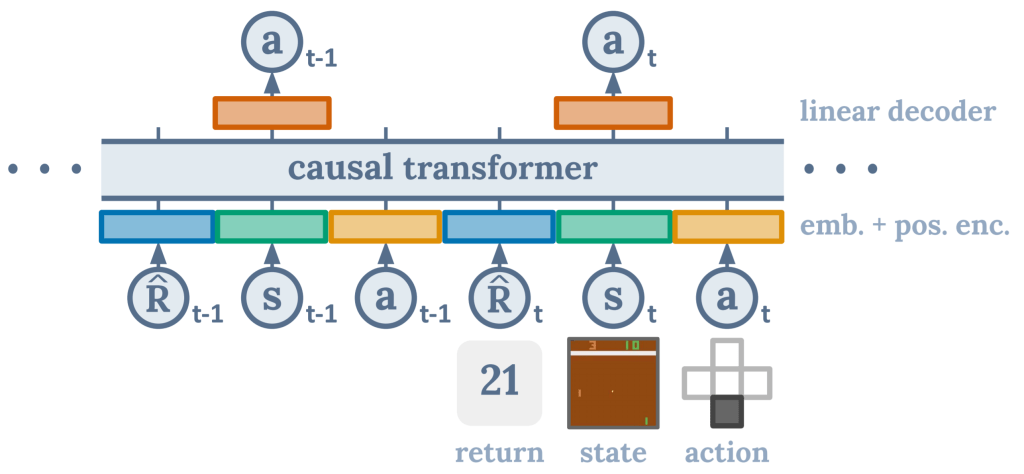
In the realm of artificial intelligence and natural language processing, the development of increasingly advanced models has been a constant journey. The Decision Transformer Model (DTM) stands as a testament to this progress, offering innovative approaches to decision-making and problem-solving that hold the potential to revolutionize various domains. In this article, we will delve into the intricacies of Decision Transformer Models, exploring their architecture, applications, and implications for the future of AI.

Understanding Decision Transformer Models

Decision Transformer Models, or DTM, are a specific class of machine learning models that aim to tackle a distinct challenge: sequential decision-making. While conventional transformers have excelled in processing and generating text or sequences, DTMs take this capability a step further by incorporating decision-making elements.

DTMs utilize a combination of reinforcement learning and deep neural networks to make decisions in a sequential manner. They integrate the ability to understand the context, generate actions, and assess their own decisions based on a given environment or task. In essence, DTMs can be thought of as transformers with built-in decision-making capabilities.

Architecture of Decision Transformer Models

The architecture of a Decision Transformer Model is rooted in its ability to process sequential data. It comprises several key components:

  1. Transformer Backbone: At the core of a DTM is a transformer-based architecture, which excels in capturing complex patterns and dependencies in sequential data. This architecture helps the model understand and contextualize the input information.
  2. Policy Network: The policy network, a crucial element of DTMs, is responsible for generating decisions or actions based on the input data. It utilizes the information processed by the transformer backbone to make choices.
  3. Value Network: In addition to generating decisions, DTMs often include a value network. This network helps the model assess the desirability of its decisions, enabling it to optimize its choices over time.
  4. Reinforcement Learning: To fine-tune its decision-making capabilities, DTMs often incorporate reinforcement learning techniques. This allows the model to learn from its own decisions and the rewards or penalties associated with them.

Applications of Decision Transformer Models

The versatility of Decision Transformer Models opens the door to a wide range of applications across different domains. Here are a few areas where DTMs are making significant strides:

  1. Natural Language Understanding: DTMs enhance natural language understanding by allowing AI systems to not only comprehend text but also generate coherent responses and take appropriate actions based on the conversation context.
  2. Robotics and Autonomous Systems: In robotics, DTMs enable more sophisticated decision-making for autonomous systems. Robots can navigate complex environments, adapt to changing conditions, and make intelligent choices in real-time.
  3. Healthcare: DTMs are being applied in healthcare for personalized treatment recommendations, disease diagnosis, and optimizing patient care plans by considering various factors and variables.
  4. Finance: In the financial sector, Decision Transformer Models are used for trading strategies, fraud detection, risk assessment, and portfolio management, where decisions need to be made sequentially in response to market dynamics.
  5. Gaming: In the world of gaming, DTMs have been used to create more dynamic and responsive non-player characters (NPCs) and enhance the player’s experience through AI-driven decision-making.

Challenges and Future Directions

While Decision Transformer Models hold tremendous promise, they also come with certain challenges. The training of DTMs can be computationally expensive, and ensuring they make ethical decisions remains a significant concern. Moreover, handling long sequences and incorporating real-world dynamics can be challenging for existing models.

The future of DTMs lies in addressing these challenges and further refining their architecture and training techniques. Ethical considerations and interpretability will continue to be at the forefront, as AI systems increasingly influence decision-making in critical domains like healthcare, finance, and autonomous systems.

Conclusion

Decision Transformer Models represent a remarkable advancement in the field of artificial intelligence, combining the strengths of transformers and reinforcement learning to make intelligent, context-aware decisions in sequential tasks. Their applications span various domains, and as research continues to evolve, we can expect Decision Transformer Models to play a pivotal role in shaping the future of AI-driven decision-making and problem-solving.

Standard

Advancing the Future: The Role of AI Development Companies

In the era of digital transformation, Artificial Intelligence (AI) is at the forefront of revolutionizing industries, solving complex problems, and shaping the future. AI has become a cornerstone of technological innovation, and behind every breakthrough lies an AI development company. These organizations are the unsung heroes of the AI world, creating solutions that have the potential to change the way we live and work. This article delves into the world of AI development companies, shedding light on their crucial role in shaping our AI-driven future.

AI Development Companies: Pioneers of Innovation

AI development companies are the architects of AI systems. They are composed of multidisciplinary teams of data scientists, machine learning engineers, software developers, and domain experts. Together, they leverage their expertise to design, develop, and implement AI solutions across various domains, including healthcare, finance, transportation, and more.

  1. Problem Solvers

These companies are dedicated to solving complex problems using AI. They work on a wide range of projects, from predictive maintenance in manufacturing to personalized healthcare recommendations. Whether it’s optimizing supply chains or enhancing customer experiences, AI development companies employ their technical prowess to develop cutting-edge solutions.

  1. Industry-Specific Expertise

AI development companies often specialize in particular industries, becoming domain experts in those fields. This expertise allows them to address industry-specific challenges effectively. For example, a company focusing on healthcare AI can develop solutions for drug discovery, medical imaging, or patient care optimization.

  1. Data-Driven Decision Making

One of the key strengths of AI development companies is their ability to harness the power of data. They design algorithms and machine learning models that can extract valuable insights from vast datasets, empowering businesses to make data-driven decisions and gain a competitive edge.

The AI Development Process

The journey from idea to a fully functional AI system is a complex one. AI development companies follow a structured process to ensure the success of their projects:

  1. Problem Definition: The first step is to define the problem to be solved. This includes understanding the client’s needs, the business context, and the data available.
  2. Data Collection: AI development companies gather and preprocess data, ensuring it is clean, relevant, and suitable for the task at hand.
  3. Model Development: Data scientists and machine learning engineers design and train AI models, fine-tuning them for accuracy and efficiency.
  4. Testing and Validation: Rigorous testing and validation are performed to ensure the AI system performs as expected, meeting predefined benchmarks and criteria.
  5. Deployment: Once the model is ready, it is deployed into the client’s infrastructure, ready to deliver value.
  6. Monitoring and Maintenance: AI development companies offer ongoing support, monitoring, and maintenance to ensure that the AI system continues to perform optimally.

Challenges Faced by AI Development Companies

While AI development companies are at the forefront of innovation, they encounter several challenges:

  1. Data Privacy and Security: Handling sensitive data requires robust security measures and compliance with data privacy regulations like GDPR.
  2. Talent Shortage: The demand for AI experts often outstrips the supply, making it challenging to hire and retain top talent.
  3. Rapid Technological Advancements: AI is an ever-evolving field. Keeping up with the latest technologies and best practices is a constant challenge.
  4. Ethical Considerations: AI development companies must address ethical concerns surrounding AI, such as bias and fairness in algorithms.

AI development companies play a vital role in driving AI innovation across various industries. They are the enablers of digital transformation, solving complex problems and turning data into valuable insights. As we continue to embrace AI’s potential, these companies will remain at the heart of technological progress, shaping the way we live and work. The future is indeed AI-driven, and AI development companies are leading the way.

Introduction to AI Chatbot Development

In today’s fast-paced digital age, businesses are constantly seeking innovative ways to engage with their customers, streamline processes, and boost efficiency. One remarkable technology that has been making waves across industries is the development of AI chatbots. These intelligent virtual agents are revolutionizing customer service, enhancing user experiences, and redefining how businesses interact with their audience. In this article, we’ll embark on a journey to understand the fundamentals of AI chatbot development services and the pivotal role they play in modern business strategies.

The AI Chatbot Revolution

Artificial Intelligence (AI) chatbots are computer programs designed to simulate human conversation, providing real-time responses to user queries. They leverage Natural Language Processing (NLP) and machine learning techniques to understand and interpret user input, enabling them to engage in meaningful dialogues. Whether it’s answering customer inquiries, assisting with online orders, or providing technical support, AI chatbots have become indispensable tools for businesses aiming to streamline communication.

Why AI Chatbots Matter to Businesses

The adoption of AI chatbots offers numerous benefits to businesses:

  1. 24/7 Availability: AI chatbots can provide round-the-clock assistance, ensuring that customers’ queries are addressed promptly, even outside regular business hours.
  2. Cost Savings: By automating routine tasks and customer interactions, businesses can significantly reduce operational costs associated with customer support and service.
  3. Scalability: AI chatbots can handle a large volume of inquiries simultaneously, making them ideal for businesses experiencing high demand.
  4. Improved User Experience: Well-designed chatbots enhance the overall user experience by providing quick and relevant responses, leading to higher customer satisfaction.

The Role of AI Chatbot Development Services

To harness the power of AI chatbots, businesses often turn to AI chatbot development services. These specialized companies possess the expertise and tools required to create and deploy chatbots tailored to specific business needs. AI chatbot development services typically encompass:

  1. Customization: Tailoring chatbots to align with a company’s branding, tone, and unique requirements.
  2. Integration: Seamlessly integrating chatbots with existing software, websites, or messaging platforms.
  3. Training: Training chatbots to understand industry-specific terminology and customer inquiries.
  4. Ongoing Maintenance: Ensuring that chatbots continue to perform effectively by regularly updating and refining their algorithms.

Chatbot Development Tools and Frameworks

When it comes to developing AI chatbots, having the right tools and frameworks at your disposal can make all the difference. In this article, we’ll explore the essential tools and frameworks that AI chatbot development companies rely on to create intelligent virtual agents that can engage with users effectively, understand their intent, and provide valuable assistance. Whether you’re an AI chatbot developer or a business looking to invest in chatbot development services, understanding these tools is crucial for success.

The Toolbox for AI Chatbot Development

AI chatbot development is a multidisciplinary field that requires expertise in various domains, including Natural Language Processing (NLP), machine learning, and software development. As such, developers rely on a diverse set of tools and frameworks to build chatbots that can mimic human-like interactions. Here are some of the key components of their toolbox:

  1. Programming Languages: Python, JavaScript, and Java are popular choices for coding chatbots. Python, in particular, is favored for its rich ecosystem of libraries and frameworks for AI and NLP.
  2. Chatbot Frameworks: Frameworks like Dialogflow, Microsoft Bot Framework, and Rasa provide a foundation for chatbot development, offering tools for intent recognition, dialog management, and integration with messaging platforms.
  3. NLP Libraries: Libraries such as NLTK (Natural Language Toolkit) and spaCy provide pre-built NLP capabilities, making it easier to implement language understanding in chatbots.
  4. Machine Learning Libraries: TensorFlow and PyTorch are widely used for building and training machine learning models that power chatbot intelligence.
  5. APIs: APIs like Google Cloud’s Natural Language API and IBM Watson provide cloud-based NLP and machine learning services that can enhance chatbot capabilities.
  6. Development Environments: IDEs (Integrated Development Environments) like Jupyter Notebook and Visual Studio Code facilitate coding and testing of chatbot applications.

Choosing the Right Tools

Selecting the appropriate tools and frameworks depends on the specific requirements of your chatbot project. Consider the following factors:

  1. Scalability: Ensure that the tools you choose can handle the expected volume of interactions and user queries.
  2. Customization: Some frameworks may offer more flexibility in customizing the chatbot’s behavior and appearance.
  3. Integration: Check if the tools seamlessly integrate with the messaging platforms or systems where your chatbot will be deployed.
  4. Community Support: A robust developer community and available resources can be valuable for troubleshooting and continuous improvement.

The Role of AI Chatbot Development Services

AI chatbot development companies often have expertise in selecting the right tools and frameworks for specific projects. They leverage their experience to ensure that chatbots are not only built efficiently but also optimized for performance and scalability. When partnering with such a company, you benefit from their knowledge of industry best practices and access to the latest advancements in AI and NLP technology.

Natural Language Processing (NLP) for Chatbots

Natural Language Processing (NLP) is the beating heart of AI chatbots, enabling them to understand, interpret, and respond to human language. In this article, we’ll explore the pivotal role of NLP in AI chatbot development services. We’ll delve into the core NLP techniques that empower chatbots to engage in meaningful dialogues, and we’ll showcase how businesses leverage this technology to create intelligent virtual agents that enhance user experiences.

Understanding Natural Language Processing (NLP)

Natural Language Processing is a subfield of artificial intelligence that focuses on the interaction between computers and human

language. NLP enables machines to read, understand, and generate human language in a way that is both meaningful and contextually relevant. For AI chatbots, NLP is the cornerstone that enables them to bridge the communication gap between humans and machines.

Key NLP Techniques in AI Chatbots

In AI chatbot development services, several NLP techniques are employed to enable chatbots to understand and respond to user input effectively:

  1. Intent Recognition: This technique helps chatbots determine the user’s intention behind a message or query. It allows chatbots to categorize user requests and respond accordingly.
  2. Entity Recognition: Entity recognition identifies specific pieces of information within user input. For example, it can identify dates, locations, product names, or any other relevant data.
  3. Sentiment Analysis: Sentiment analysis assesses the emotional tone of user messages. This helps chatbots gauge user satisfaction or frustration and tailor responses accordingly.
  4. Context Management: NLP allows chatbots to maintain context during a conversation, enabling more natural and coherent interactions.

The Importance of NLP in Chatbot Development

NLP is at the core of what makes AI chatbots powerful tools for businesses:

  1. Enhanced User Experience: NLP enables chatbots to provide natural and context-aware responses, resulting in a better user experience.
  2. Efficiency: By understanding user intent and context, chatbots can resolve queries more efficiently, reducing the need for human intervention.
  3. Scalability: NLP-powered chatbots can handle a wide range of inquiries simultaneously, making them scalable solutions for businesses with varying levels of demand.

Real-World Examples

Numerous businesses have harnessed the power of NLP in their chatbots to enhance customer service and engagement. For instance, e-commerce companies use NLP to help users find products, while healthcare providers use it to answer medical queries. In these examples, NLP not only improves user satisfaction but also streamlines internal processes.

The Role of AI Chatbot Development Services

AI chatbot development services leverage their expertise in NLP to design chatbots that excel in understanding and responding to user input. They use pre-trained NLP models, custom training data, and fine-tuning techniques to ensure that chatbots can navigate complex language scenarios and industry-specific terminology.

Designing Conversational Flows and User Experience

The success of an AI chatbot isn’t solely determined by its technical capabilities but also by the quality of the user experience it offers. In this article, we’ll explore the crucial role of designing conversational flows and user experiences in AI chatbot development services. We’ll dive into best practices for creating engaging and intuitive dialogues, maintaining context, and ensuring that users have a seamless and satisfying interaction with your chatbot.

Understanding the User Experience Challenge

Creating an exceptional user experience with a chatbot is a multifaceted challenge. It involves more than just recognizing user intents and providing accurate responses. A well-designed chatbot must:

  1. Engage the User: The chatbot should grab the user’s attention and keep them engaged throughout the conversation.
  2. Maintain Context: Users shouldn’t have to repeat information or context within the same conversation. The chatbot should remember previous interactions.
  3. Provide Value: Each interaction should offer value to the user, whether it’s answering a question, solving a problem, or assisting with a task.
  4. Converse Naturally: Conversations with the chatbot should feel natural, akin to interacting with a human.

Best Practices for Designing Conversational Flows

Creating an effective conversational flow is essential for a seamless user experience:

  1. Start with a Greeting: Begin conversations with a friendly greeting or welcome message to set a positive tone.
  2. User Intent Recognition: Quickly and accurately recognize the user’s intent to guide the conversation in the right direction.
  3. Provide Options: Offer users options or menu choices to help them navigate through the conversation.
  4. Use Short, Clear Messages: Keep responses concise and to the point, avoiding overly long or complex sentences.
  5. Contextual Understanding: Continuously refer back to the conversation’s context to avoid confusion.
  6. Error Handling: Plan for handling errors or misunderstandings gracefully, providing clear instructions or alternative paths.

The Importance of Testing and Iteration

Designing conversational flows is an iterative process. It’s essential to gather user feedback and conduct usability testing to identify areas for improvement. This allows AI chatbot development services to refine dialogues, fine-tune responses, and enhance the overall user experience over time.

Real-World Examples

Many businesses have successfully implemented user-centric chatbots that provide exceptional experiences. For instance, travel companies use chatbots to help users book flights, hotels, and car rentals seamlessly. These chatbots guide users through the booking process, answer queries, and provide personalized recommendations, all while maintaining a user-friendly conversational flow.

The Role of AI Chatbot Development Services

AI chatbot development services play a critical role in ensuring that chatbots are designed with a user-centric approach. They employ user experience (UX) designers and conversational designers who specialize in crafting engaging and effective chatbot interactions. By partnering with such services, businesses can ensure that their chatbots offer a superior user experience from the outset.

Building an AI Chatbot: Step-by-Step Guide

Creating an AI chatbot is an exciting endeavor that requires careful planning and execution. In this final article of our series, we’ll provide a comprehensive step-by-step guide to building AI chatbots using expert development services. We’ll take you through the entire journey, from the initial concept to deployment and maintenance, showcasing how AI chatbot development services can help turn your chatbot idea into a reality.

Step 1: Define Your Chatbot’s Purpose and Goals

Before diving into development, it’s essential to define your chatbot’s purpose and goals. Consider what tasks it will perform, what problems it will solve, and how it will benefit users. This step sets the foundation for the entire project.

Step 2: Data Collection and Preparation

To train your chatbot, you’ll need data. Gather relevant data sources, including FAQs, product information, and historical customer interactions. Prepare and clean the data to ensure it’s suitable for training

machine learning models.

Step 3: Choose the Right Tools and Frameworks

Select the tools and frameworks that align with your project’s requirements. Consult with AI chatbot development services to make informed choices based on scalability, customization, and integration needs.

Step 4: Model Training and Testing

Train machine learning models using your prepared data. This step involves training models for intent recognition, entity recognition, and other NLP tasks. Test the models rigorously to ensure accuracy.

Step 5: Conversational Design and Development

Design engaging conversational flows that align with your chatbot’s purpose. Develop the chatbot, integrating it with your chosen messaging platform or application.

Step 6: Deployment

Once your chatbot is ready, deploy it to the desired platforms. Ensure that it’s accessible to users and that there are clear instructions on how to engage with it.

Step 7: Continuous Improvement

Chatbot development doesn’t end with deployment. Continuously monitor the chatbot’s performance, gather user feedback, and iterate on its design and functionality to improve user satisfaction and efficiency.

The Role of AI Chatbot Development Services

Throughout this journey, AI chatbot development services play a pivotal role:

  1. Expertise: They provide the expertise needed to navigate each step of development effectively.
  2. Customization: AI chatbot development services can customize the chatbot to align with your business’s branding and requirements.
  3. Integration: They ensure seamless integration with your existing systems and platforms.
  4. Maintenance: AI chatbot development services offer ongoing maintenance and support to keep your chatbot performing at its best.

Conclusion:

In this series of articles, we’ve embarked on a journey through the fascinating world of AI chatbot development services. From understanding the fundamental concepts of AI chatbots to exploring the tools and frameworks that empower them, from diving into the intricacies of Natural Language Processing (NLP) to crafting engaging conversational experiences, and finally, from ideation to deployment, we’ve covered it all.

AI chatbots have emerged as transformative tools for businesses, offering 24/7 availability, cost savings, scalability, and improved user experiences. These intelligent virtual agents have the potential to revolutionize customer service, streamline processes, and redefine how companies engage with their audience.

In this series, we’ve emphasized the crucial role of AI chatbot development services. These specialized companies bring expertise in customization, integration, training, and ongoing maintenance, ensuring that chatbots not only meet but exceed business expectations.

As we conclude this series, we recognize that AI chatbot development is a dynamic field with limitless possibilities. It’s a field where innovation and creativity flourish, where chatbots become digital ambassadors for businesses, and where user-centric design principles lead to exceptional experiences.

Whether you’re an AI chatbot developer, a business seeking to invest in chatbot development services, or simply someone curious about the future of AI, we hope this series has provided valuable insights into the intricate and exciting world of AI chatbot development.

As technology continues to advance, AI chatbots will undoubtedly evolve further, presenting new opportunities and challenges. We encourage you to stay curious, keep learning, and explore the endless horizons of AI chatbot development. The future is bright, and the potential for innovation is boundless in this ever-evolving realm of artificial intelligence.

Standard

Revolutionary Influence: The Impact of Generative AI in Various Sectors

In the ever-evolving landscape of artificial intelligence, one subfield has been making remarkable strides, capturing the imagination of researchers, businesses, and innovators alike – Generative Artificial Intelligence, or Generative AI for short. This groundbreaking technology has the potential to reshape industries and create entirely new possibilities, with applications spanning from healthcare to manufacturing. In this article, we embark on a journey to explore the fundamentals of Generative AI, its underlying principles, and the promise it holds for diverse sectors of the economy.

The Genesis of Generative AI

Generative AI represents a significant leap forward in the realm of machine learning. At its core, Generative AI is designed to create, mimic, or generate data that is indistinguishable from data produced by humans or real-world processes. This generation can take various forms, including text, images, audio, and even video. Unlike traditional AI systems that operate on pre-defined rules and patterns, Generative AI leverages neural networks to learn patterns from existing data and generate new, original content.

The concept of Generative AI has its roots in deep learning, a subfield of machine learning that employs artificial neural networks inspired by the human brain’s structure and functioning. Deep learning algorithms, specifically Generative Adversarial Networks (GANs) and Variational Autoencoders (VAEs), play pivotal roles in enabling the generation of realistic and coherent content.

The Mechanics of Generative AI

  1. Generative Adversarial Networks (GANs): GANs consist of two neural networks, the generator and the discriminator, engaged in a continuous game. The generator attempts to produce data that is indistinguishable from real data, while the discriminator aims to differentiate between genuine and generated data. Over time, this adversarial process leads to the refinement of the generator’s capabilities until it generates highly convincing content.
  2. Variational Autoencoders (VAEs): VAEs work differently from GANs but share the goal of data generation. VAEs use a probabilistic approach to learn the underlying structure of the data, allowing them to generate new data samples by sampling from a learned distribution. This method is particularly useful for tasks involving continuous data, such as images or audio.

Generative AI Applications: A Glimpse into the Future

The potential applications of Generative AI are nothing short of awe-inspiring, and they span across numerous industries. Let’s take a brief look at how Generative AI is set to disrupt and innovate in several sectors:

Healthcare

In healthcare, Generative AI is poised to revolutionize medical imaging and diagnostics. Generative models can generate synthetic medical images for training and validation, helping to bridge the data gap in medical AI. Additionally, Generative AI can assist in drug discovery by predicting the molecular structures of potential drugs, greatly accelerating the process of bringing new medicines to market.

Telecom

The telecom industry is increasingly relying on Generative AI for network optimization. By generating synthetic network data, AI can simulate various network scenarios, helping telecom providers anticipate and proactively address potential issues. Moreover, Generative AI plays a crucial role in enhancing customer experience through the generation of personalized content and recommendations.

Finance

Generative AI is becoming a game-changer in the world of finance. Algorithmic trading algorithms powered by Generative AI can analyze market data and generate trading strategies in real-time. Furthermore, AI-driven chatbots and virtual assistants are providing personalized financial advice to customers, transforming the way individuals manage their finances.

Supply Chain

Supply chain management is embracing Generative AI to optimize operations. AI models can generate forecasts for demand, helping companies allocate resources efficiently. Additionally, AI-powered routing and logistics optimization can streamline the movement of goods, reducing costs and environmental impact.

Manufacturing

Generative AI is redefining manufacturing processes by optimizing product designs and quality control. AI-generated designs can lead to innovative products with enhanced performance. In manufacturing plants, Generative AI can predict maintenance needs, reducing downtime and increasing productivity.

The Challenges and Ethical Considerations

While the potential of Generative AI is immense, it comes with its share of challenges and ethical considerations. One significant concern is the generation of fake content, which can be used for malicious purposes, including disinformation and fraud. Additionally, the ethical use of AI-generated content raises questions about privacy, bias, and accountability.

Generative AI in Healthcare: Transforming Diagnosis and Treatment

In the previous article, we introduced generative AI and its potential applications across various industries. Now, let’s dive deeper into one of the most promising fields: healthcare. Generative AI is revolutionizing the way healthcare professionals diagnose illnesses, develop treatment plans, and improve patient care. In this article, we will explore the significant impact of generative AI in healthcare, focusing on medical image generation, drug discovery, and patient data analysis.

1. Medical Image Generation

Medical imaging plays a crucial role in diagnosing diseases and planning treatments. Generative AI has shown remarkable capabilities in generating high-quality medical images, which can be beneficial in several ways:

A. Synthetic Data Generation

Generative AI can create synthetic medical images that closely resemble real patient data. These synthetic images can be used to augment limited datasets, allowing for more extensive training of machine learning models. This leads to improved accuracy in image analysis and diagnostic tools.

B. Training Radiologists

Generative AI can assist in training radiologists and other medical professionals. It can create a vast library of diverse medical cases, including rare conditions, for educational purposes. This enables better-prepared healthcare professionals and enhances their diagnostic skills.

C. Enhancing Imaging Techniques

Generative AI can enhance existing imaging techniques. For example, it can improve the resolution and quality of magnetic resonance imaging (MRI) or computed tomography (CT) scans, leading to more precise diagnoses.

2. Drug Discovery

Discovering new drugs and treatments is a time-consuming and costly process. Generative AI has the potential to accelerate drug discovery in the following ways:

A. Compound Generation

Generative AI algorithms can design novel chemical compounds with desired properties. This can significantly speed up the drug discovery process by providing researchers with a pool of potential candidates to investigate.

B. Predicting Drug-Drug Interactions

Generative AI models can predict potential drug-drug interactions and adverse effects, helping pharmaceutical companies identify potential issues earlier in the drug development process.

C. Target Identification

Generative AI can assist in identifying new drug targets by analyzing large-scale biological data. This can lead to the development of more targeted and effective therapies.

3. Patient Data Analysis

Managing and analyzing patient data is a fundamental aspect of healthcare. Generative AI brings innovation to this domain:

A. Personalized Treatment Plans

Generative AI can analyze individual patient data, including genetic information, medical history, and lifestyle factors, to generate personalized treatment plans. This can lead to more effective and tailored healthcare interventions.

B. Predictive Analytics

Generative AI can predict disease outbreaks and patient readmissions, allowing healthcare providers to allocate resources more efficiently and intervene earlier in critical cases.

C. Natural Language Processing

Generative AI-powered natural language processing tools can extract valuable insights from unstructured clinical notes and medical literature. This aids in clinical decision support and medical research.

Challenges and Ethical Considerations

While generative AI offers immense promise in healthcare, it also comes with challenges and ethical considerations:

  1. Data Privacy: The use of patient data for training AI models raises concerns about data privacy and security. Stricter regulations and safeguards are needed to protect patient information.
  2. Bias and Fairness: AI models can inherit biases present in training data. Ensuring fairness in healthcare AI is essential to prevent disparities in diagnosis and treatment.
  3. Regulatory Compliance: Healthcare AI solutions must adhere to rigorous regulatory standards to ensure patient safety and data integrity.
  4. Interpretability: AI-generated results must be interpretable by healthcare professionals to gain their trust and acceptance.

Generative AI in Telecom: Revolutionizing Network Optimization

Generative AI, a subfield of artificial intelligence, has been making waves across various industries with its potential to automate and optimize processes. In the telecommunications sector, the application of generative AI is no exception. This article explores how generative AI is revolutionizing network optimization in the telecom industry, enhancing performance, reducing downtime, and ultimately improving the customer experience.

The Complexity of Telecom Networks

Telecommunication networks have evolved significantly over the years, transitioning from traditional landline systems to complex, interconnected infrastructures. Modern telecom networks consist of a myriad of components, including cell towers, switches, routers, and data centers. Managing and optimizing these networks is no small feat.

Challenges in Telecom Network Optimization

Network optimization in the telecom industry presents several challenges:

  1. Dynamic Traffic Patterns: Telecom networks experience dynamic and unpredictable traffic patterns, with usage surges during peak hours. Network optimization must accommodate these fluctuations.
  2. Resource Allocation: Efficiently allocating network resources, such as bandwidth and spectrum, is critical to ensure a seamless user experience.
  3. Maintenance and Fault Detection: Identifying and rectifying network faults promptly is essential to minimize downtime and service disruptions.
  4. Security: Telecom networks must be safeguarded against cyberattacks and data breaches, necessitating continuous monitoring and threat detection.

Generative AI has emerged as a powerful tool to address these challenges.

Applications of Generative AI in Telecom

  1. Predictive Maintenance: One of the key applications of generative AI in telecom is predictive maintenance. By analyzing historical data and network performance metrics, generative AI models can predict when network equipment is likely to fail. This enables telecom companies to schedule maintenance proactively, reducing downtime and service disruptions.
  2. Dynamic Resource Allocation: Generative AI can optimize the allocation of network resources in real-time. By analyzing current traffic patterns and user demand, the AI system can dynamically allocate bandwidth and spectrum to ensure efficient network usage.
  3. Anomaly Detection: Generative AI models can identify anomalies in network traffic that may indicate cyberattacks or network faults. Rapid detection of such anomalies is crucial for network security.
  4. Network Design and Planning: Generative AI can assist in the design and planning of telecom networks. By generating network layouts and configurations, AI can help telecom companies build more efficient and cost-effective networks.

Case Studies

Let’s examine a few case studies that highlight the real-world impact of generative AI in telecom network optimization:

  1. Verizon’s Predictive Maintenance: Verizon, one of the largest telecom providers in the United States, has implemented generative AI for predictive maintenance. By analyzing data from thousands of cell towers, Verizon can predict equipment failures with impressive accuracy, reducing maintenance costs and minimizing service disruptions.
  2. AT&T’s Dynamic Resource Allocation: AT&T has deployed generative AI algorithms to optimize the allocation of network resources. This has led to a significant improvement in network efficiency, particularly during peak usage hours, resulting in a better user experience for customers.
  3. Telefónica’s Anomaly Detection: Telefónica, a global telecom operator, uses generative AI for anomaly detection. By continuously monitoring network traffic, the company can quickly identify and mitigate cyber threats, ensuring the security of its network infrastructure.

Challenges and Considerations

While generative AI offers significant benefits in telecom network optimization, it is not without challenges and considerations:

  1. Data Privacy: Telecom companies handle vast amounts of user data, raising concerns about data privacy and security. Proper data handling and encryption are essential.
  2. Regulatory Compliance: The telecom industry is subject to various regulations, and AI implementations must comply with these rules, including those related to customer data and network security.
  3. Integration Complexity: Integrating generative AI into existing telecom infrastructure can be complex and require substantial investment in terms of both time and resources.

Future Outlook

The integration of generative AI into telecom network optimization is poised to continue evolving. As AI algorithms become more sophisticated and data collection methods improve, telecom companies can expect even greater benefits in terms of network efficiency, cost savings, and enhanced customer experiences.

Generative AI in Finance: Revolutionizing Investment Strategies

In the world of finance, staying ahead of the curve is paramount. Investment decisions, trading strategies, and risk management are all critical components that demand constant innovation and adaptation. Enter Generative AI, a transformative technology that is reshaping the financial landscape. In this article, we will explore how Generative AI is revolutionizing investment strategies, paving the way for more informed, data-driven decisions in the finance industry.

The Rise of Generative AI in Finance

Generative AI, a subset of artificial intelligence, is renowned for its ability to generate content that is remarkably human-like, from text and images to entire datasets. In finance, this capability is a game-changer. Financial institutions are increasingly turning to Generative AI to streamline operations, enhance customer experiences, and, most notably, optimize investment strategies.

Algorithmic Trading Enhanced

One of the most prominent applications of Generative AI in finance is within algorithmic trading. Algorithmic trading relies on complex algorithms to execute high-frequency trades at speeds beyond human capability. Generative AI takes this a step further by improving predictive models and optimizing trading strategies.

Generative AI algorithms can analyze vast datasets, identifying intricate patterns and anomalies that may elude human traders. They can adapt in real-time to market changes and news events, making it possible to execute trades with a high degree of accuracy. Moreover, Generative AI can automate the process of trading strategy development, enabling financial institutions to explore a broader range of strategies and adapt to changing market conditions swiftly.

Risk Assessment and Management

Effective risk assessment and management are fundamental in finance. Generative AI plays a pivotal role in this domain by providing more accurate risk models and predictive analytics. It can analyze historical data, market trends, and global events to assess and predict potential risks, enabling financial institutions to make better-informed decisions.

Generative AI can also simulate different market scenarios, stress testing portfolios under various conditions. This capability helps in identifying potential vulnerabilities in investment strategies and allows for the development of strategies that are more resilient to market fluctuations.

Personalized Financial Advice

For individual investors, Generative AI is ushering in a new era of personalized financial advice. Robo-advisors, powered by Generative AI, can analyze an individual’s financial situation, goals, and risk tolerance to offer tailored investment recommendations. These recommendations are continuously updated based on changing market conditions, ensuring that the advice remains relevant and aligned with the investor’s objectives.

The advantage of personalized financial advice is that it makes professional-grade investment guidance accessible to a broader audience. It also reduces the emotional bias that can affect human decision-making during market turbulence.

Fraud Detection and Prevention

Financial fraud is a persistent threat in the industry, costing billions of dollars each year. Generative AI algorithms excel at detecting fraudulent activities by analyzing vast datasets for anomalies and suspicious patterns. They can flag potentially fraudulent transactions in real-time, enabling financial institutions to take immediate action to prevent losses.

Generative AI’s ability to adapt and learn from new fraud patterns makes it a powerful tool in the ongoing battle against financial fraud. It not only detects known fraud schemes but also has the capacity to identify emerging threats that may not yet be documented.

Regulatory Compliance

The finance industry is heavily regulated, with strict compliance requirements that must be met. Generative AI can assist financial institutions in complying with regulations by automating compliance checks and ensuring accurate and timely reporting. This reduces the risk of non-compliance, which can result in severe legal and financial consequences.

Moreover, Generative AI can aid in the interpretation of complex regulatory changes by analyzing regulatory documents and providing insights into their potential impact on business operations and investment strategies.

Challenges and Ethical Considerations

While Generative AI holds immense promise in the finance industry, it also presents challenges and ethical considerations. One concern is the potential for bias in AI algorithms, which could lead to discriminatory outcomes, particularly in lending and credit decisions. Financial institutions must be vigilant in ensuring that their AI systems are fair and transparent.

Data security is another critical concern. Generative AI systems require access to sensitive financial data, making them potential targets for cyberattacks. Robust cybersecurity measures are essential to safeguard this data.

Generative AI in Supply Chain: Revolutionizing Logistics and Operations

In our ongoing series on Generative AI, we have explored how this cutting-edge technology is transforming various industries, from healthcare to finance. In this fifth installment, we turn our attention to the world of supply chain management. The supply chain is the backbone of nearly every industry, and its efficiency has a direct impact on cost savings and customer satisfaction. Generative AI is now making significant inroads into supply chain operations, promising to revolutionize logistics, demand forecasting, and overall supply chain efficiency. In this article, we will delve into the applications, benefits, and challenges of Generative AI in the supply chain.

I. The Role of Generative AI in Supply Chain

Before we dive into specific use cases, let’s first understand the role of Generative AI in supply chain management:

  1. Demand Forecasting: Generative AI can analyze historical data and market trends to generate highly accurate demand forecasts. These forecasts enable businesses to optimize inventory levels, reduce stockouts, and improve overall supply chain efficiency.
  2. Inventory Optimization: By continuously analyzing demand patterns, Generative AI can suggest optimal inventory levels and reorder points, ensuring that businesses have the right amount of stock on hand while minimizing carrying costs.
  3. Route Planning and Optimization: Generative AI algorithms can optimize transportation routes, taking into account factors like traffic conditions, delivery time windows, and fuel efficiency. This leads to cost savings and faster deliveries.
  4. Predictive Maintenance: In manufacturing and logistics, predictive maintenance powered by Generative AI can anticipate equipment failures and schedule maintenance proactively, reducing downtime and maintenance costs.
  5. Supplier Relationship Management: Generative AI can help identify potential issues with suppliers by analyzing data related to quality, lead times, and other key performance indicators, ultimately improving supplier relationships.

II. Use Cases in Supply Chain Management

Now, let’s explore specific use cases where Generative AI is making a significant impact in supply chain management:

  1. Demand Forecasting with Generative AI: We will take a deep dive into how Generative AI algorithms analyze historical sales data, external factors, and market trends to provide businesses with highly accurate demand forecasts. We’ll discuss the benefits of reducing overstock and stockouts.
  2. Inventory Optimization: This section will explore how Generative AI continuously monitors inventory levels, adjusting reorder points in real-time. We’ll discuss case studies demonstrating significant cost savings through optimized inventory management.
  3. Route Planning and Optimization: We’ll examine how Generative AI is transforming the logistics industry by optimizing delivery routes. Real-world examples of companies reducing fuel consumption and improving delivery times will be discussed.
  4. Predictive Maintenance in Supply Chain: This part will focus on how Generative AI predicts equipment failures and reduces downtime in manufacturing and distribution centers. Case studies will illustrate the substantial savings achieved through proactive maintenance.
  5. Supplier Relationship Management: We’ll explore how Generative AI is used to assess and manage supplier performance. Real-world examples will highlight how this technology helps identify and mitigate supply chain risks.

III. Benefits and Challenges

In this section, we will discuss both the advantages and potential challenges of implementing Generative AI in supply chain management:

  1. Benefits: We will highlight the potential benefits, such as cost reduction, improved customer service, and enhanced decision-making, which arise from the use of Generative AI in the supply chain.
  2. Challenges: Addressing concerns related to data privacy, cybersecurity, and the need for skilled personnel to implement and maintain Generative AI solutions in the supply chain.

IV. Case Studies and Real-World Examples

To provide concrete evidence of the impact of Generative AI in supply chain management, we will present several case studies and real-world examples from leading companies in various industries.

V. Future Trends and Outlook

As Generative AI continues to evolve, we will discuss the future trends and developments in supply chain management. Topics may include increased automation, improved integration with IoT devices, and the potential for AI-driven supply chain ecosystems.

Generative AI in Manufacturing: Revolutionizing Production and Quality Control

In the rapidly evolving landscape of manufacturing, the integration of cutting-edge technologies has become imperative for companies striving to remain competitive. Generative Artificial Intelligence (Generative AI) is one such technology that is making significant inroads into the manufacturing sector. This article explores how Generative AI is revolutionizing production and quality control processes, enhancing efficiency, and enabling unprecedented levels of customization and optimization in manufacturing.

The Role of Generative AI in Manufacturing

Generative AI, a subset of artificial intelligence that focuses on generating new content, has found numerous applications in manufacturing. Its ability to understand and replicate patterns, coupled with its capacity for creative problem-solving, makes it an ideal candidate for enhancing various aspects of the manufacturing industry.

1. Product Design Optimization

Generative AI can assist manufacturers in product design optimization. By analyzing vast datasets and design parameters, it can generate multiple design iterations, each meeting specific criteria such as cost-efficiency, durability, and manufacturability. This iterative approach accelerates the design process and helps engineers arrive at optimal solutions more quickly.

2. Quality Control and Defect Detection

Ensuring the highest product quality is a critical aspect of manufacturing. Generative AI can be employed to enhance quality control processes. Machine learning models trained on historical data can identify defects in real-time, reducing the need for manual inspection and minimizing defects in the final product.

3. Predictive Maintenance

Generative AI can predict when machinery is likely to fail, enabling proactive maintenance. By analyzing sensor data and historical maintenance records, it can generate maintenance schedules that minimize downtime and maximize equipment lifespan.

4. Supply Chain Optimization

Efficient supply chain management is essential for manufacturing success. Generative AI can optimize supply chain logistics by generating optimal routes for transporting goods, managing inventory levels, and predicting demand fluctuations.

5. Customization at Scale

Manufacturers can use Generative AI to offer customization options to customers without compromising production efficiency. By generating customized designs and production plans, manufacturers can meet the growing demand for personalized products.

6. Energy Efficiency

Reducing energy consumption is both environmentally responsible and cost-effective. Generative AI can help optimize energy usage by generating recommendations for energy-efficient manufacturing processes and equipment.

Case Studies in Generative AI Implementation

Let’s take a closer look at a few real-world examples of how manufacturers are implementing Generative AI to transform their operations.

Case Study 1: GE Aviation

GE Aviation has embraced Generative AI to improve the design of aircraft components. By using Generative Design software, the company was able to reduce the weight of a complex aircraft bracket by 84%, while maintaining structural integrity. This not only led to significant cost savings but also reduced fuel consumption, benefiting both the company and the environment.

Case Study 2: BMW

BMW utilizes Generative AI to enhance its production processes. In one instance, the company employed AI-powered robots that can adapt to variations in car models during assembly. This level of flexibility and adaptability has enabled BMW to increase its production efficiency and adapt to changing customer demands more effectively.

Challenges and Ethical Considerations

While Generative AI offers substantial benefits to the manufacturing industry, it also presents challenges and ethical considerations that must be addressed.

Data Privacy and Security

Manufacturers must handle vast amounts of sensitive data, including intellectual property and customer information. Ensuring the security and privacy of this data is paramount, especially as Generative AI systems become more integrated into manufacturing processes.

Job Displacement

The automation of tasks through Generative AI can potentially lead to concerns about job displacement. It’s crucial for manufacturers to consider the impact on the workforce and implement strategies for upskilling and reskilling employees.

Ethical AI Use

Manufacturers must use Generative AI responsibly, avoiding biased algorithms and ensuring that AI systems do not inadvertently contribute to discriminatory or harmful outcomes.

The Future of Generative AI in Manufacturing

Generative AI is poised to play an increasingly pivotal role in manufacturing. As technology continues to advance, we can expect even more innovative applications of Generative AI, further optimizing production processes and product quality.

Conclusion

Generative AI is a transformative force across diverse industries. From healthcare to manufacturing, it demonstrates remarkable potential. In healthcare, it aids diagnosis and drug discovery. In telecom, it optimizes networks and enhances customer experiences. In finance, it refines trading strategies and fraud detection. For supply chain, it streamlines logistics and forecasting. Finally, in manufacturing, it revolutionizes design, quality control, and customization. However, as with any technological advancement, ethical considerations and challenges must be addressed. The future promises further innovation, efficiency, and customization as Generative AI continues to reshape these sectors, improving our lives and businesses.

Standard

AI Unveiled: From Fundamentals to a Vision of Tomorrow

In today’s rapidly evolving business landscape, where data reigns supreme, harnessing the transformative power of Artificial Intelligence (AI) is no longer a choice but a necessity. As companies strive to gain a competitive edge, AI Consulting Services have emerged as invaluable allies on this journey toward innovation and efficiency. In this comprehensive article, we will delve into the world of AI Consulting Services, exploring what they entail, why they are essential, and how partnering with an AI Consulting Services Company can propel your organization toward unprecedented success.

The Rise of AI Consulting Services

Artificial Intelligence has evolved from a concept in science fiction to a pervasive force in our daily lives. From virtual personal assistants to advanced recommendation systems, AI has become an integral part of our digital existence. In the corporate world, businesses are increasingly realizing the potential of AI to drive growth, enhance decision-making, and optimize operations.

However, AI is not a one-size-fits-all solution. Implementing AI effectively requires a deep understanding of the technology, industry-specific knowledge, and a tailored approach. This is where AI Consulting Services come into play. These services provide organizations with the expertise and guidance needed to navigate the complex world of AI.

Defining AI Consulting Services

AI Consulting Services encompass a broad spectrum of offerings aimed at helping businesses leverage the power of AI effectively. They are designed to address the unique challenges and opportunities presented by AI in various industries. Whether you are a startup looking to integrate AI into your product or an established enterprise seeking to optimize your operations, AI Consulting Services can be customized to meet your specific needs.

The core components of AI Consulting Services include:

1. Needs Assessment: The journey begins with a comprehensive assessment of your organization’s goals, challenges, and existing data infrastructure. AI consultants work closely with your team to gain a deep understanding of your unique requirements.

2. Solution Design: Based on the assessment, AI Consulting Services Companies design AI solutions that align with your business objectives. These solutions may include custom AI algorithms, data analytics platforms, or AI-driven applications.

3. Implementation: Once the AI solutions are designed, the next step is implementation. This involves putting the proposed AI systems into action within your organization. Consultants ensure that the integration is seamless and that your team is well-equipped to manage and utilize the AI tools effectively.

4. Support and Optimization: AI Consulting Services do not end with implementation. Continuous support is provided to monitor the performance of AI systems, make necessary adjustments, and optimize their functionality. This ongoing partnership ensures that your organization continues to reap the benefits of AI over time.

Why AI Consulting Services Matter

  1. Expertise: AI is a rapidly evolving field with a myriad of technologies and methodologies. It can be overwhelming for businesses to keep up with the latest developments and best practices. AI Consulting Services bring in experts who stay at the forefront of AI trends and can guide your organization toward the most suitable solutions.
  2. Cost-Efficiency: Developing and implementing AI solutions in-house can be resource-intensive and costly. AI Consulting Services offer a cost-effective alternative by leveraging their existing expertise and resources. This allows your organization to access top-notch AI capabilities without the burden of extensive investments.
  3. Tailored Solutions: Every business is unique, and so are its AI needs. AI Consulting Services Companies understand this and provide tailor-made solutions that align with your specific goals and challenges. This ensures that you get the maximum value from your AI investments.
  4. Faster Implementation: With the guidance of AI consultants, your organization can expedite the AI implementation process. This agility is crucial in staying ahead of the competition and capitalizing on emerging opportunities.
  5. Risk Mitigation: AI projects come with their share of risks, including data security, privacy concerns, and regulatory compliance. AI Consulting Services Companies are well-versed in navigating these challenges, ensuring that your AI initiatives remain compliant and secure.

Real-World Impact of AI Consulting Services

To understand the true value of AI Consulting Services, let’s explore some real-world examples of businesses that have harnessed the power of AI to achieve remarkable success:

Case Study 1: E-Commerce Optimization

An e-commerce giant faced a challenge: increasing customer churn and declining sales. They turned to an AI Consulting Services Company for help. Through in-depth data analysis and machine learning algorithms, the consultants identified customer behavior patterns and personalized product recommendations. This led to a significant increase in sales and customer retention, resulting in a substantial ROI.

Case Study 2: Healthcare Revolution

A healthcare provider sought to improve patient care by harnessing AI. AI Consulting Services were employed to develop predictive models that could identify patients at risk of developing chronic diseases. This proactive approach allowed the provider to deliver timely interventions and reduce healthcare costs, ultimately enhancing patient outcomes.

Case Study 3: Supply Chain Optimization

A logistics company faced the challenge of optimizing its vast supply chain operations. AI Consulting Services played a crucial role in developing predictive maintenance models for their fleet, optimizing routes, and minimizing delivery delays. This resulted in substantial cost savings and improved customer satisfaction.

These real-world success stories underscore the transformative potential of AI Consulting Services across diverse industries. They demonstrate how AI can drive revenue growth, improve operational efficiency, and enhance customer experiences when implemented strategically and with expert guidance.

Looking Ahead: The Future of AI Consulting Services

As AI continues to advance, AI Consulting Services are poised to play an even more pivotal role in shaping the future of business. Several trends are likely to define the trajectory of AI Consulting Services in the coming years:

  1. AI in Healthcare: The healthcare industry will increasingly turn to AI to improve patient care, diagnostics, and drug discovery. AI Consulting Services Companies will be at the forefront of developing innovative solutions for healthcare providers and pharmaceutical companies.
  2. AI-Driven Automation: Automation powered by AI will continue to disrupt various industries, from manufacturing to finance. AI Consulting Services will guide organizations in identifying automation opportunities, implementing robotic process automation (RPA), and optimizing automated workflows.
  3. AI Ethics and Responsible AI: As AI becomes more integrated into daily life, ethical considerations become paramount. AI Consulting Services will focus on ensuring responsible AI development, addressing bias in algorithms, and adhering to data privacy regulations.
  4. AI in Edge Computing: Edge computing, combined with AI, will revolutionize real-time decision-making in sectors like autonomous vehicles and IoT. AI Consulting Services will help businesses harness the potential of edge AI for faster and more efficient data processing.
  5. AI for Sustainability: AI can play a vital role in addressing environmental and sustainability challenges. AI Consulting Services will assist organizations in leveraging AI to reduce energy consumption, optimize resource allocation, and minimize environmental impact.

The AI Consulting Process: Your Blueprint for Success

In our previous article, “Unlocking the Power of AI Consulting Services,” we explored the significance of AI Consulting Services and why they are indispensable in today’s fast-paced business landscape. Now, we delve deeper into the heart of AI Consulting Services: the AI consulting process. This comprehensive blueprint serves as a guide for organizations seeking to harness the full potential of Artificial Intelligence (AI) through strategic partnerships with AI Consulting Services Companies.

Demystifying the AI Consulting Process

The journey toward AI-driven success begins with a well-structured AI Consulting Process. This process forms the backbone of AI Consulting Services, ensuring that organizations receive tailored solutions that align with their unique needs, objectives, and challenges. Let’s break down the key phases of this process:

1. Needs Assessment: Understanding Your Organization’s Goals and Challenges

The first step in the AI consulting process is the comprehensive needs assessment. This phase is about gaining a deep understanding of your organization’s goals, challenges, and existing data infrastructure. It’s a critical foundation upon which the entire AI strategy will be built.

Why is Needs Assessment Important?

  • Tailored Solutions: By understanding your organization’s specific needs, AI consultants can design solutions that are perfectly aligned with your objectives.
  • Resource Optimization: Needs assessment helps identify existing resources and infrastructure that can be leveraged for AI implementation, reducing unnecessary costs.
  • Risk Mitigation: It allows consultants to identify potential challenges and risks early in the process, enabling proactive solutions.

During the needs assessment phase, you can expect:

  • Data Audit: A thorough examination of your data sources, quality, and availability.
  • Stakeholder Interviews: Conversations with key personnel to understand their pain points and objectives.
  • Business Analysis: A review of your business processes and operations to identify areas where AI can make the most impact.

2. Solution Design: Crafting Tailor-Made AI Solutions

Once the needs assessment is complete, AI Consulting Services Companies transition to the solution design phase. This is where the blueprint for your AI solutions is crafted. The goal is to develop AI systems that not only address your current challenges but also align with your long-term objectives.

Why is Solution Design Important?

  • Alignment with Objectives: A well-designed solution ensures that AI initiatives are closely aligned with your organization’s strategic goals.
  • Efficiency: It minimizes the risk of wasting resources on poorly conceived AI projects that do not deliver value.
  • Scalability: A thoughtful design considers future scalability and adaptability as your organization evolves.

During the solution design phase, you can expect:

  • Algorithm Development: Crafting custom algorithms or selecting pre-existing ones that suit your needs.
  • Technology Stack Selection: Choosing the right technologies and tools to implement the AI solutions.
  • Prototyping: Creating prototypes and proof-of-concepts to validate the solution’s feasibility.

3. Implementation: Bringing AI Solutions to Life

With the blueprint in place, it’s time to put the proposed AI systems into action. Implementation is where theory meets reality, and AI Consulting Services Companies work diligently to ensure that the integration is seamless.

Why is Implementation Important?

  • Timely Deployment: Efficient implementation ensures that AI solutions are deployed within expected timelines.
  • User Training: It includes training your team to work with AI tools effectively, maximizing their utility.
  • Performance Monitoring: Continuous monitoring during implementation helps identify issues and bottlenecks early.

During the implementation phase, you can expect:

  • Data Integration: Connecting AI systems to your data sources, ensuring data flows smoothly.
  • Software Development: Building AI-driven applications, platforms, or tools as per the design.
  • Testing and Quality Assurance: Rigorous testing to ensure the reliability and functionality of the AI solutions.
  • User Training: Training your team to use AI tools effectively.

4. Support and Optimization: Continuous Improvement for Maximum Impact

AI Consulting Services do not end with implementation. The support and optimization phase is a crucial part of the process that ensures your organization continues to reap the benefits of AI over time.

Why is Support and Optimization Important?

  • Performance Improvement: Regular optimization enhances the performance and efficiency of AI systems.
  • Adaptation: It allows AI solutions to adapt to changing business needs and technological advancements.
  • Issue Resolution: Quick identification and resolution of any problems that may arise.

During the support and optimization phase, you can expect:

  • Monitoring and Analysis: Continuous monitoring of AI system performance and data analysis to identify areas for improvement.
  • Model Tuning: Fine-tuning AI models to improve accuracy and efficiency.
  • Security and Compliance Updates: Ensuring that AI systems remain secure and compliant with relevant regulations.
  • Feedback Loop: Collecting feedback from users and stakeholders to make iterative improvements.

Key Principles of Successful AI Consulting

The AI consulting process thrives on certain key principles that underpin its success:

1. Collaboration: Successful AI consulting relies on strong collaboration between the consulting team and the client organization. It’s a partnership built on open communication and shared objectives.

2. Flexibility: The process is flexible to adapt to the unique needs of each organization. There is no one-size-fits-all solution in AI consulting.

3. Data-Centric Approach: Data is at the core of AI. A data-centric approach ensures that AI solutions are built on a solid foundation of high-quality data.

4. Transparency: Transparency in the process, from needs assessment to implementation and beyond, is essential. Clients should have a clear understanding of what to expect at each stage.

5. Ethical Considerations: Ethical considerations, including fairness and privacy, are paramount. AI Consulting Services Companies must uphold the highest ethical standards.

Realizing the Potential: Case Studies in AI Consulting Success

To understand how the AI consulting process translates into real-world success, let’s explore a few case studies:

Case Study 1: Financial Forecasting

A financial institution sought to improve its financial forecasting accuracy. AI Consulting Services were employed to design a predictive analytics model that factored in market conditions, economic indicators, and historical data. The implementation of this AI-driven forecasting system resulted in more accurate predictions, enabling the institution to make better investment decisions and reduce financial risks.

Case Study 2: Customer Personalization

An e-commerce company wanted to enhance its customer experience by offering personalized product recommendations. AI Consulting Services Companies developed a recommendation engine that analyzed user behavior and preferences. This led to a significant increase in sales and customer satisfaction, as customers received tailored product suggestions, resulting in higher conversion rates.

Case Study 3: Supply Chain Optimization

A manufacturing company faced challenges in its supply chain, including inefficiencies in inventory management and logistics. AI Consulting Services were engaged to optimize the supply chain. Through predictive analytics and route optimization algorithms, the company achieved cost savings and streamlined its operations, ensuring timely delivery to customers.

These case studies highlight how the AI consulting process, from needs assessment to implementation and ongoing optimization, can drive tangible results for organizations across various industries. The key is a systematic approach, a deep understanding of client needs, and a commitment to excellence.

Conclusion: The Path to AI Success

The AI consulting process is not a one-time event; it’s an ongoing journey toward AI-driven success. It encompasses a series of well-defined phases, each crucial in its own right. Through needs assessment, solution design, implementation, and ongoing support and optimization, organizations can harness the full potential of AI to transform their operations, drive innovation.

Standard

Introduction to AI chatbot development companies

In a world where technology continues to evolve at an unprecedented pace, AI chatbots have emerged as powerful tools for businesses looking to enhance customer service, automate routine tasks, and provide a more personalized user experience. AI chatbot development companies are at the forefront of this revolution, offering expertise and solutions that bridge the gap between businesses and cutting-edge AI technology. In this article, we will take you on a journey into the realm of AI chatbot development, exploring what it entails, why it’s essential, the role of AI developers, and an overview of top AI chatbot development companies.

The Rise of AI Chatbots

Before we delve into the world of AI chatbot development companies, it’s essential to understand the significance of chatbots in the modern business landscape. Chatbots are software applications programmed to conduct conversations with users, typically in a natural language. They can be integrated into various communication channels, such as websites, messaging apps, and even voice-activated devices like smart speakers.

The rise of AI chatbots can be attributed to several factors:

  1. Customer Expectations: Today’s consumers demand quick and efficient support. AI chatbots can provide instant responses to user queries, reducing response times and improving overall customer satisfaction.
  2. Cost Savings: Automating routine tasks through chatbots can lead to significant cost savings for businesses. They can handle a wide range of inquiries without the need for human intervention.
  3. Scalability: Chatbots can scale to handle a high volume of interactions simultaneously, making them ideal for businesses experiencing growth or seasonal spikes in activity.
  4. Personalization: Advanced AI chatbots can analyze user data and provide personalized recommendations or responses, creating a more tailored user experience.
  5. 24/7 Availability: Chatbots operate round the clock, ensuring that businesses are accessible to their customers at any time.

AI Chatbot Development: A Complex Endeavor

Building an AI chatbot that can understand user input, process it, and generate contextually relevant responses is a complex endeavor. This is where AI chatbot development companies come into play. These companies are specialized in creating, fine-tuning, and deploying chatbots that leverage artificial intelligence and machine learning techniques to perform tasks that traditionally required human intervention.

The Role of AI Developers in Chatbot Development

At the heart of AI chatbot development are AI developers. They are the architects of chatbot intelligence, responsible for creating algorithms, designing conversational flows, and ensuring that the chatbot can adapt and learn from interactions. AI developers are at the forefront of innovation in this field, continuously improving chatbot capabilities.

Here are some key responsibilities and skills of AI developers in chatbot development:

  1. Natural Language Processing (NLP): AI developers must have expertise in NLP, which enables chatbots to understand and generate human-like text. They work with libraries and frameworks like spaCy, NLTK, and BERT to enhance language understanding.
  2. Machine Learning: Machine learning algorithms are integral to chatbot development. AI developers use techniques like supervised learning and reinforcement learning to train chatbots to improve their responses over time.
  3. Conversational Design: Crafting a seamless and natural conversation is an art. AI developers design the chatbot’s dialogue structure, including greetings, prompts, and responses, to ensure a user-friendly experience.
  4. Integration: Chatbots often need to integrate with other systems and databases to provide users with relevant information. AI developers handle the technical aspects of these integrations.
  5. Testing and Optimization: After deployment, AI developers continuously monitor the chatbot’s performance, analyze user interactions, and make improvements to enhance its effectiveness.
  6. Ethical Considerations: AI developers must also consider ethical and privacy concerns, ensuring that chatbots respect user privacy and adhere to legal and ethical guidelines.

Top AI Chatbot Development Companies

Now that we’ve explored the importance of AI chatbot development and the role of AI developers, let’s take a closer look at some of the top AI chatbot development companies that are making waves in the industry.

  1. IBM Watson: IBM Watson is renowned for its AI-powered chatbot development platform. It offers robust natural language understanding capabilities and has been used by various industries, including healthcare, finance, and customer support.
  2. Dialogflow (Google Cloud): Dialogflow, a Google Cloud service, provides a user-friendly environment for building chatbots. It offers integration with various messaging platforms and supports multiple languages.
  3. Amazon Lex: Amazon Lex is part of Amazon Web Services (AWS) and provides developers with the tools needed to build chatbots for voice and text interactions. It’s commonly used for creating chatbots for Amazon Alexa devices.
  4. Microsoft Bot Framework: Microsoft’s Bot Framework allows developers to create chatbots that work seamlessly with Microsoft products and services. It offers strong developer tools and integration options.
  5. Rasa: Rasa is an open-source chatbot development framework that empowers developers to build highly customizable chatbots. It offers flexibility and control over the chatbot’s behavior.
  6. Chatfuel: Chatfuel is a user-friendly platform for creating chatbots on Facebook Messenger. It’s suitable for businesses looking to engage with customers on social media.
  7. Twilio Autopilot: Twilio Autopilot provides tools for building AI-powered chatbots for multiple channels, including SMS, voice, and chat. It’s known for its flexibility and scalability.
  8. SAP Conversational AI: SAP’s Conversational AI platform enables businesses to create chatbots that integrate seamlessly with SAP systems, making it valuable for enterprises.

These companies offer a wide range of solutions, from simple rule-based chatbots to sophisticated AI-driven virtual assistants. When selecting an AI chatbot development company, businesses should consider their specific needs, budget, and integration requirements.

AI chatbot development companies are instrumental in bringing the potential of AI chatbots to life. They play a crucial role in helping businesses automate tasks, enhance customer experiences, and stay competitive in today’s fast-paced digital landscape. As AI continues to advance, the capabilities of chatbots will only grow, making it an exciting and transformative field for businesses and AI developers alike.

Enterprise AI Chatbot Development Companies: Pioneering the Future of Customer Engagement

In the age of digital transformation, enterprises are constantly seeking innovative solutions to enhance customer engagement, streamline operations, and gain a competitive edge. Among the most promising tools in their arsenal are AI-powered chatbots. These intelligent virtual assistants, capable of handling complex tasks and interactions, have the potential to revolutionize how large organizations interact with customers. In this article, we will explore the realm of Enterprise AI Chatbot Development Companies, their significance, the unique challenges they address, and how they are pioneering the future of customer engagement.

The Power of Enterprise AI Chatbots

Enterprise AI chatbots are not your run-of-the-mill chatbots. They are sophisticated, scalable, and tailored to meet the specific needs of large organizations. These chatbots are designed to handle high volumes of interactions, provide secure data handling, and seamlessly integrate with existing systems and databases. They serve multiple functions, including customer support, sales assistance, and internal process automation.

The key advantages of enterprise AI chatbots include:

  1. Improved Customer Support: AI chatbots can provide instant responses to customer queries, guiding them through troubleshooting processes, and escalating complex issues to human agents when necessary. This results in quicker problem resolution and enhanced customer satisfaction.
  2. Scalability: Enterprise AI chatbots can efficiently handle a large number of simultaneous interactions, ensuring that customer service remains responsive even during peak periods.
  3. Cost Savings: By automating routine tasks and inquiries, enterprises can significantly reduce operational costs associated with customer support and other processes.
  4. Data-Driven Insights: Enterprise AI chatbots collect and analyze vast amounts of data from interactions, providing valuable insights that can inform business decisions, improve processes, and identify areas for optimization.
  5. Consistency: AI chatbots deliver consistent responses and adhere to predefined business rules, reducing the likelihood of errors or miscommunication.

Unique Challenges of Enterprise AI Chatbot Development

While the potential benefits are substantial, developing and implementing AI chatbots at an enterprise scale come with unique challenges. This is where Enterprise AI Chatbot Development Companies shine. They possess the expertise and experience to address these challenges effectively:

  1. Complexity: Enterprise processes are often intricate and require chatbots capable of handling multifaceted interactions. These chatbots need to understand context, use case-specific language, and integrate with various systems.
  2. Integration: Enterprise chatbots must seamlessly integrate with a wide array of internal and external systems, databases, and APIs. This is essential for providing users with real-time and accurate information.
  3. Security: Enterprises handle sensitive data, and chatbots must adhere to strict security standards and regulations to protect customer information and maintain data privacy.
  4. Scalability: As enterprises grow, their chatbots must scale accordingly to meet increasing demand while maintaining performance and responsiveness.
  5. Customization: One-size-fits-all solutions won’t cut it in the enterprise world. These chatbots must be highly customizable to adapt to the unique needs and branding of each organization.

Leading Enterprise AI Chatbot Development Companies

Several AI chatbot development companies specialize in providing tailored solutions for enterprises. Let’s take a closer look at a few of them:

  1. IBM Watson: IBM Watson is a prominent player in the enterprise AI chatbot development space. It offers a robust set of tools and APIs for building sophisticated chatbots that can handle complex interactions, understand natural language, and integrate with various enterprise systems.
  2. Nuance Communications: Nuance specializes in conversational AI solutions for healthcare, financial services, and customer service. They offer highly customizable chatbots that can provide secure, personalized interactions in sensitive industries.
  3. Inbenta: Inbenta focuses on AI-powered search and chatbot solutions. Their enterprise chatbots excel at understanding user intent and context, delivering relevant responses across multiple channels.
  4. Conversica: Conversica provides AI-powered virtual assistants for sales and marketing. Their chatbots engage with leads, follow up on inquiries, and nurture prospects, helping organizations boost sales conversion rates.
  5. Genesys (formerly Bold360 by LogMeIn): Genesys offers AI-driven customer engagement solutions, including chatbots and virtual assistants. Their platform enables enterprises to provide omnichannel customer support with AI-driven automation.
  6. SAP Conversational AI: SAP’s Conversational AI platform focuses on enabling enterprises to build chatbots that seamlessly integrate with SAP systems, making it particularly valuable for organizations using SAP software.

These companies offer not just technology but also expertise in deploying AI chatbots in complex enterprise environments. They work closely with clients to understand their unique needs and design chatbots that align with their business objectives.

Selecting the Right Enterprise AI Chatbot Development Partner

Choosing the right Enterprise AI Chatbot Development Company is a critical decision for any organization. Here are some key considerations when evaluating potential partners:

  1. Industry Expertise: Look for a partner with experience in your industry, as they will understand the specific challenges and requirements unique to your business.
  2. Customization: Ensure that the chatbot development company can create a solution that aligns with your brand and addresses your specific use cases.
  3. Integration Capabilities: Check their ability to integrate with your existing systems, databases, and APIs to ensure seamless data exchange.
  4. Scalability: Evaluate their track record in scaling chatbots to handle increasing volumes of interactions as your business grows.
  5. Security and Compliance: Verify that the chatbot development company can meet your security and compliance requirements, especially if you handle sensitive customer data.
  6. Support and Maintenance: Inquire about ongoing support and maintenance services to ensure that your chatbot remains up-to-date and continues to perform optimally.

The Future of Enterprise AI Chatbots

As technology continues to advance, enterprise AI chatbots will play an increasingly pivotal role in transforming customer engagement and business processes. The ability to provide instant, personalized, and efficient support across multiple channels will be a competitive advantage for organizations of all sizes.

Moreover, as AI and machine learning algorithms become more sophisticated, chatbots will become even smarter and more context-aware. They will anticipate user needs, proactively provide information, and assist in complex decision-making processes.

Ethical considerations and responsible AI will also play a significant role in the future of enterprise chatbots. Ensuring that these virtual assistants respect user privacy, adhere to ethical guidelines, and provide transparent and accountable interactions will be crucial.

In conclusion, Enterprise AI Chatbot Development Companies are at the forefront of driving innovation in customer engagement and process automation for large organizations. With their expertise, they enable businesses to harness the full potential of AI-powered chatbots, providing customers with exceptional experiences and helping organizations stay agile and competitive in the digital age. The journey of AI chatbot development is an exciting one, filled with promise and potential for the enterprises of tomorrow.

AI Developers and Their Crucial Role in Chatbot Development

In the realm of artificial intelligence (AI) and conversational AI, there exists a group of unsung heroes—the AI developers. These skilled individuals play a pivotal role in the development, deployment, and continuous improvement of AI-powered chatbots. In this article, we will delve into the multifaceted world of AI developers, exploring their roles, responsibilities, the skills they bring to the table, and their vital contributions to chatbot development.

The Architects of Chatbot Intelligence

At the core of every successful chatbot is a team of AI developers who meticulously craft its intelligence. These developers are responsible for transforming chatbots from mere lines of code into intelligent virtual assistants capable of understanding and responding to user queries effectively. Their work involves a complex blend of computer science, linguistics, machine learning, and problem-solving.

Key Responsibilities of AI Developers in Chatbot Development

AI developers wear many hats throughout the lifecycle of a chatbot project. Their responsibilities encompass various aspects of chatbot development, including:

  1. Natural Language Processing (NLP): NLP is the foundation of chatbot intelligence. AI developers leverage NLP techniques to enable chatbots to understand and generate human-like text. This involves tasks like entity recognition, sentiment analysis, and language translation.
  2. Machine Learning Algorithms: Machine learning is a critical component of chatbot development. AI developers employ supervised and unsupervised learning techniques to train chatbots to understand user input and provide contextually relevant responses. Reinforcement learning is used to improve chatbot performance over time.
  3. Conversational Design: Crafting a seamless and natural conversation flow is an art. AI developers design the chatbot’s dialogue structure, including greetings, prompts, and responses, to ensure a user-friendly experience. They also create conversational branching logic to handle different scenarios.
  4. Integration: Chatbots often need to integrate with various systems, databases, and external APIs to provide users with real-time and accurate information. AI developers handle the technical aspects of these integrations, ensuring that data flows smoothly between systems.
  5. Testing and Optimization: After deployment, AI developers continuously monitor the chatbot’s performance. They analyze user interactions, track key performance indicators (KPIs), and make improvements to enhance the chatbot’s effectiveness. This iterative process is essential for chatbot optimization.
  6. Ethical Considerations: AI developers must consider ethical and privacy concerns when designing chatbots. They ensure that chatbots respect user privacy, handle sensitive data responsibly, and adhere to legal and ethical guidelines.
AI (artificial intelligence) concept.

Skills and Qualifications of AI Developers

AI developers are a unique breed of professionals with a diverse skill set. To excel in chatbot development, they typically possess the following qualifications and skills:

  1. Programming Proficiency: AI developers are proficient in programming languages such as Python, Java, or C++, which are commonly used in AI and machine learning.
  2. Mathematics and Statistics: They have a strong foundation in mathematics and statistics, as these are the building blocks of machine learning algorithms.
  3. Machine Learning Expertise: AI developers are well-versed in machine learning concepts and libraries, including scikit-learn, TensorFlow, PyTorch, and Keras.
  4. Natural Language Processing: They have expertise in natural language processing techniques, including tokenization, part-of-speech tagging, and syntactic parsing.
  5. Deep Learning: AI developers often work with deep learning models such as recurrent neural networks (RNNs) and transformer models like BERT for advanced NLP tasks.
  6. Problem-Solving Skills: They excel in problem-solving and have the ability to break down complex issues into manageable tasks.
  7. Communication Skills: Effective communication is crucial, as AI developers need to collaborate with cross-functional teams, including designers, project managers, and subject matter experts.
  8. Continuous Learning: AI is a rapidly evolving field, and AI developers are committed to staying up-to-date with the latest advancements and techniques.

AI Developers and AI Chatbot Development Companies

AI developers are an integral part of AI chatbot development companies. These companies rely on the expertise of AI developers to create chatbots that meet their clients’ specific needs. Whether it’s designing a chatbot for customer support, sales, or internal processes, AI developers play a central role in bringing these virtual assistants to life.

AI chatbot development companies provide the infrastructure, tools, and resources that AI developers need to excel in their work. They foster an environment of innovation and collaboration, enabling developers to explore cutting-edge AI techniques and push the boundaries of what chatbots can achieve.

The Future of AI Developers in Chatbot Development

The role of AI developers in chatbot development is only set to become more significant in the future. As technology continues to advance, chatbots will evolve to become smarter, more context-aware, and capable of handling increasingly complex tasks. AI developers will be at the forefront of driving these advancements.

Emerging trends in chatbot development, such as explainable AI, ethics in AI, and AI for sustainability, will also shape the future of AI developers’ work. They will need to navigate these challenges while continuing to deliver chatbots that provide value and meet the evolving needs of businesses and users.

AI developers are the unsung heroes behind the scenes of the AI chatbot revolution. Their expertise, skills, and dedication are the driving force behind the success of chatbots in various industries, from customer support to healthcare and finance. As AI continues to advance, the role of AI developers in chatbot development will only become more critical.

Generative AI Development: Crafting the Future of Chatbots

In the fast-paced world of artificial intelligence, a groundbreaking technology is gaining prominence and reshaping the landscape of chatbot development: generative AI. These advanced systems are capable of generating human-like text and responses, bringing a new dimension to chatbot interactions. In this article, we’ll explore the exciting world of generative AI development within chatbots, its applications, challenges, ethical considerations, and how it’s revolutionizing the field.

The Emergence of Generative AI

Generative AI, a subset of artificial intelligence, has garnered significant attention in recent years due to its ability to generate coherent and contextually relevant text. Unlike traditional rule-based chatbots that rely on predefined responses, generative AI chatbots have the capacity to understand user input and generate human-like responses on the fly.

This transformative technology has numerous applications across various industries, including customer support, content creation, storytelling, and more. Generative AI chatbots can engage users in dynamic and natural conversations, making them a powerful tool for businesses and organizations.

Applications of Generative AI in Chatbots

Generative AI chatbots offer a wide range of applications that go beyond the capabilities of rule-based systems. Here are some key areas where generative AI is making a significant impact:

  1. Content Creation: Generative AI can assist content creators by generating blog posts, product descriptions, marketing copy, and more. It can save time and reduce the burden of manual content generation.
  2. Customer Support: Generative AI chatbots can provide more natural and context-aware responses to customer queries. They excel in handling complex issues and offering personalized assistance.
  3. Storytelling: Chatbots powered by generative AI can craft engaging and interactive stories for entertainment or educational purposes. This is particularly useful in gaming and e-learning industries.
  4. Language Translation: Generative AI can assist in real-time language translation, enabling chatbots to engage with users in multiple languages effectively.
  5. Assistive Technology: Generative AI chatbots are instrumental in creating assistive technology for individuals with disabilities, such as chatbots that provide text-to-speech or speech-to-text services.
  6. Creative Writing: Some generative AI chatbots are designed for creative writing, helping authors and screenwriters generate ideas, dialogues, and plotlines.

Challenges in Generative AI Development

While generative AI brings immense potential, it also presents unique challenges that developers must address:

  1. Quality Control: Ensuring that generative AI outputs high-quality and contextually relevant text can be challenging. Developers must fine-tune models and implement quality control mechanisms.
  2. Bias and Fairness: Generative AI models can inadvertently amplify biases present in training data. Developers need to take steps to mitigate bias and ensure fair and ethical responses.
  3. Content Moderation: Chatbots powered by generative AI may generate inappropriate or harmful content. Implementing effective content moderation is crucial, especially in platforms where user-generated content is prominent.
  4. Data Privacy: Handling user data in chatbot interactions requires robust data privacy measures to protect sensitive information.
  5. Model Size and Resource Consumption: Some generative AI models can be large and resource-intensive, which may limit their deployment on certain platforms or devices.
  6. Explainability: The inner workings of generative AI models can be complex, making it challenging to explain how a particular response was generated. Explainability is crucial, especially in critical applications like healthcare and legal services.

Generative AI Development Frameworks and Models

Several generative AI development frameworks and models have gained popularity in recent years. Here are some notable examples:

  1. OpenAI’s GPT (Generative Pre-trained Transformer) Models: GPT-2 and GPT-3 are among the most famous generative AI models. They are known for their ability to generate coherent and contextually relevant text across a wide range of topics.
  2. Google’s BERT (Bidirectional Encoder Representations from Transformers): BERT is designed for understanding context in natural language. While not a pure generative model, it has been instrumental in improving the performance of chatbots.
  3. Microsoft’s DialoGPT: DialoGPT is an extension of OpenAI’s GPT model, fine-tuned for more engaging and coherent dialogues. It is commonly used in chatbot development.
  4. Facebook’s BlenderBot: BlenderBot is a generative AI chatbot developed by Facebook that aims to have more engaging and context-aware conversations with users.
  5. Hugging Face’s Transformers Library: Hugging Face offers a wide range of pre-trained generative AI models and tools for chatbot development, making it accessible to developers and researchers.

Ethical Considerations in Generative AI Development

As generative AI technology advances, it raises important ethical considerations:

  1. Bias Mitigation: Developers must actively work to reduce bias in generative AI models, ensuring that they do not propagate harmful stereotypes or discriminatory behavior.
  2. Content Moderation: Effective content moderation is essential to prevent the dissemination of inappropriate or harmful content generated by chatbots.
  3. Privacy: Protecting user data and ensuring data privacy is paramount. Developers must implement robust security measures and comply with data protection regulations.
  4. Transparency and Accountability: It’s crucial to make generative AI models transparent and accountable for their responses. Explainability tools and mechanisms for user reporting should be implemented.
  5. User Consent: Users should be informed about the use of generative AI in chatbot interactions and have the option to opt in or out.

The Future of Generative AI in Chatbot Development

The future of generative AI in chatbot development is incredibly promising. As the technology matures, we can expect to see:

  1. Enhanced User Experiences: Generative AI chatbots will provide more natural and engaging interactions, improving user satisfaction.
  2. Wider Adoption: Generative AI will become a standard feature in chatbot development, powering applications in diverse industries.
  3. Industry-Specific Solutions: Generative AI chatbots will cater to industry-specific needs, such as healthcare, finance, education, and entertainment.
  4. Advanced Content Creation: Content creators will benefit from generative AI for generating high-quality content efficiently.
  5. Real-time Translation: Generative AI will facilitate seamless real-time language translation in chatbot interactions, breaking down language barriers.

In conclusion, generative AI development is a game-changer in the world of chatbots. It introduces a new level of sophistication and human-like interaction that holds immense potential across various domains. While challenges remain, developers are actively addressing them to ensure that generative AI-driven chatbots are not just technologically advanced but also ethically responsible and user-friendly. The future of chatbot development is undoubtedly intertwined with the continued evolution of generative AI.

AI Consulting Services: Empowering Businesses with Intelligent Solutions

Artificial Intelligence (AI) has emerged as a transformative force in the business world, offering organizations the potential to optimize processes, make data-driven decisions, and enhance customer experiences. To harness the full power of AI, many companies turn to AI consulting services. In this comprehensive article, we will explore the realm of AI consulting, its significance, the services it offers, the process of AI implementation, real-world use cases, and the future of AI consulting.

The Significance of AI Consulting Services

AI consulting services have become indispensable for businesses in today’s data-driven and highly competitive landscape. These services offer the expertise, guidance, and technical know-how required to leverage AI effectively. Here’s why AI consulting services are significant:

  1. Expertise: AI consultants are experts in the field, possessing deep knowledge of AI technologies, algorithms, and best practices. They keep up with the latest advancements in AI and understand how to apply them to various business domains.
  2. Custom Solutions: AI consultants tailor their solutions to meet the specific needs and goals of each business. Whether it’s optimizing operations, improving customer service, or enhancing decision-making, AI consulting services offer customized strategies.
  3. Cost Savings: By working with AI consultants, businesses can avoid costly trial-and-error approaches to AI implementation. Consultants help identify the most cost-effective and efficient AI solutions.
  4. Accelerated Implementation: AI consulting services streamline the AI adoption process, helping companies deploy AI solutions faster and with fewer roadblocks.
  5. Competitive Advantage: In a digital age, staying ahead of the competition is crucial. AI consultants provide insights and technologies that can give businesses a competitive edge.

Services Offered by AI Consulting Firms

AI consulting services encompass a wide range of offerings, tailored to address specific business challenges. Here are some key services provided by AI consulting firms:

  1. AI Strategy Development: Consultants help businesses define their AI objectives and create a strategic roadmap for AI adoption. This includes identifying AI use cases, setting goals, and establishing metrics for success.
  2. Data Analytics: AI consultants assist in collecting, cleaning, and analyzing data to extract valuable insights. They use data analytics to inform AI models and algorithms.
  3. Machine Learning and Deep Learning: AI consultants have expertise in developing machine learning and deep learning models. They design and implement algorithms to solve complex business problems.
  4. Natural Language Processing (NLP): For applications involving text and language, consultants employ NLP techniques to enable AI systems to understand, interpret, and generate human-like text.
  5. Computer Vision: In cases where visual data is involved, AI consultants develop computer vision models to process and interpret images and videos. This has applications in industries like healthcare, retail, and manufacturing.
  6. AI Integration: Consultants ensure seamless integration of AI solutions with existing systems and databases. This includes API development and compatibility testing.
  7. AI Training and Knowledge Transfer: AI consulting firms provide training and knowledge transfer to enable businesses to maintain and expand their AI capabilities in-house.

The AI Implementation Process

AI consulting services follow a structured implementation process to ensure successful integration. The process typically includes the following stages:

  1. Assessment and Planning: Consultants assess the client’s current systems, data, and business goals. They work closely with stakeholders to define the scope of the AI project and establish key performance indicators (KPIs).
  2. Data Preparation: Data is the foundation of AI. Consultants clean, preprocess, and prepare the data to ensure its quality and suitability for AI model training.
  3. Model Development: This stage involves creating machine learning or deep learning models based on the project’s requirements. AI consultants experiment with different algorithms and approaches to find the most effective solution.
  4. Testing and Validation: Models undergo rigorous testing and validation to ensure they perform accurately and reliably. Consultants use various testing methodologies and validation techniques.
  5. Deployment: Once the AI model is ready, consultants deploy it into the client’s production environment. This includes integrating the model with existing systems and ensuring it operates smoothly.
  6. Monitoring and Maintenance: AI consulting firms offer ongoing monitoring and maintenance to ensure the AI solution continues to perform optimally. They also provide updates and improvements as needed.

Real-World Use Cases of AI Consulting Services

AI consulting services have made a significant impact across various industries. Here are some real-world use cases that showcase the versatility and effectiveness of AI in different domains:

  1. Healthcare: AI consultants have helped healthcare providers implement predictive analytics models to forecast patient admission rates, optimize resource allocation, and improve patient outcomes.
  2. Retail: In the retail sector, AI consulting services have enabled businesses to personalize customer recommendations, optimize inventory management, and implement cashier-less stores using computer vision.
  3. Financial Services: AI consultants assist financial institutions in fraud detection, algorithmic trading, risk assessment, and customer service automation through chatbots.
  4. Manufacturing: AI-powered predictive maintenance has become a game-changer in manufacturing. Consultants help factories reduce downtime by predicting equipment failures and scheduling maintenance.
  5. Marketing: AI consulting services have been instrumental in marketing by providing businesses with predictive analytics for customer behavior, automating email marketing campaigns, and optimizing ad spend.
  6. Energy and Utilities: Consultants work with energy companies to develop AI solutions that enhance grid management, optimize energy consumption, and predict equipment failures.
  7. Agriculture: AI consultants help farmers implement precision agriculture techniques, leveraging AI to optimize crop yields, monitor soil health, and automate farm machinery.

The Future of AI Consulting Services

The future of AI consulting services is bright, with several trends and developments on the horizon:

  1. AI Democratization: AI consulting services will become more accessible to businesses of all sizes, thanks to cloud-based AI platforms and pre-built AI models.
  2. AI Ethics and Governance: Consultants will play a crucial role in ensuring that AI implementations adhere to ethical guidelines, privacy regulations, and responsible AI practices.
  3. AI in Edge Computing: As AI becomes more embedded in everyday devices, consultants will work on AI solutions optimized for edge computing, enabling real-time processing on IoT devices.
  4. AI for Sustainability: AI consulting services will contribute to sustainability efforts by optimizing resource usage, reducing waste, and enhancing environmental monitoring.
  5. AI in Healthcare Innovation: Consultants will
Standard

Customized ChatGPT App: Revolutionizing Industries

In recent years, artificial intelligence (AI) has been making significant strides in various industries, and healthcare is no exception. One of the most promising AI applications in healthcare is ChatGPT, a language model developed by OpenAI. ChatGPT, powered by the GPT-3.5 architecture, has the potential to transform the way healthcare professionals engage with patients and streamline various aspects of healthcare delivery.

The Power of Natural Language Processing in Healthcare

Before delving into the role of ChatGPT in healthcare, it’s essential to understand the fundamental concept behind this AI technology – natural language processing (NLP). NLP enables computers to understand and generate human language, making it a valuable tool for communication between machines and humans.

ChatGPT takes NLP to the next level. It can comprehend and generate text with remarkable fluency and coherence, allowing it to engage in meaningful conversations. This capability opens up numerous possibilities for improving patient engagement in healthcare settings.

Enhancing Patient Communication

1. Empathetic Virtual Assistants

In healthcare, effective communication is key to delivering high-quality care. ChatGPT can act as empathetic virtual assistants, providing patients with 24/7 support and information. Whether it’s answering common medical questions, scheduling appointments, or offering reminders for medication, ChatGPT can enhance patient experience and satisfaction.

2. Multilingual Support

One of the standout features of ChatGPT is its multilingual capabilities. It can communicate with patients in their preferred language, breaking down language barriers and ensuring that healthcare information is accessible to a broader audience. This is particularly valuable in diverse healthcare environments.

Telemedicine Revolutionized

3. Telehealth Consultations

The rise of telemedicine has been accelerated by ChatGPT. Healthcare providers can leverage this technology to conduct virtual consultations with patients. ChatGPT can assist in gathering patient history, symptom assessment, and even suggesting preliminary diagnoses based on the information provided.

4. Reducing Administrative Burden

Administrative tasks often consume a significant portion of healthcare professionals’ time. ChatGPT can automate appointment scheduling, insurance verification, and billing inquiries, allowing healthcare staff to focus more on patient care.

Real-World Success Stories

5. Case Study: Mayo Clinic’s Virtual Health Assistant

The Mayo Clinic, a renowned healthcare institution, has adopted ChatGPT as a virtual health assistant. Patients can interact with the AI-powered assistant through the clinic’s website or mobile app, asking questions about their health, scheduling appointments, and receiving personalized health tips. This has not only improved patient engagement but also reduced call center volumes, freeing up staff for more critical tasks.

Ethical Considerations and Challenges

As promising as ChatGPT is in healthcare, it is not without its challenges and ethical considerations. Ensuring patient data privacy and maintaining the highest standards of medical ethics are paramount. Additionally, there is the risk of overreliance on AI, potentially sidelining the human element of care.

The Future of ChatGPT in Healthcare

The healthcare industry is on the cusp of a significant transformation, thanks to ChatGPT and similar AI technologies. As the technology continues to evolve, we can expect even more advanced applications, such as predictive analytics for disease prevention, personalized treatment plans, and improved patient outcomes.

ChatGPT for Retail: Personalizing the Shopping Experience

The retail industry is undergoing a digital revolution, and artificial intelligence (AI) is at the forefront of this transformation. ChatGPT, an AI language model developed by OpenAI, is playing a pivotal role in reshaping the retail landscape. In this article, we explore how ChatGPT is being leveraged to personalize the shopping experience for consumers, ultimately driving increased engagement and sales.

Understanding the Power of ChatGPT in Retail

Before we dive into the applications of ChatGPT in retail, it’s essential to grasp the core capabilities that make this AI model a game-changer for the industry.

1. Conversational AI

ChatGPT is a conversational AI model, which means it excels in understanding and generating human-like text. It can engage in natural conversations, making it an ideal tool for interacting with customers.

2. Scalability

Unlike human customer service representatives, ChatGPT can handle a large volume of inquiries simultaneously. This scalability makes it an efficient solution for retail businesses, especially during peak shopping seasons.

Personalization Through ChatGPT

3. Tailored Product Recommendations

One of the most significant advantages of ChatGPT in retail is its ability to provide personalized product recommendations. By analyzing a customer’s browsing history and preferences, ChatGPT can suggest products that align with their tastes, increasing the likelihood of a purchase.

4. Enhanced Customer Support

ChatGPT can offer immediate assistance to customers, answering their questions about products, store hours, and return policies. This real-time support not only improves the customer experience but also boosts customer confidence in the brand.

ChatGPT-Powered Virtual Shopping Assistants

5. 24/7 Shopping Assistance

ChatGPT-powered virtual shopping assistants are available around the clock, providing customers with assistance whenever they need it. This convenience is particularly valuable for e-commerce businesses.

6. Interactive Shopping Experience

Customers can engage in interactive conversations with virtual shopping assistants, making the online shopping experience more engaging and enjoyable. This interactivity can also help in reducing cart abandonment rates.

Real-World Success Stories

7. Case Study: Amazon’s Personal Shopper

Amazon, one of the world’s largest e-commerce platforms, has harnessed the power of ChatGPT to create “Amazon Personal Shopper.” This service uses ChatGPT to curate personalized fashion recommendations for customers based on their style preferences and browsing history. By doing so, Amazon has significantly increased its fashion sales and customer loyalty.

Ethical Considerations and Challenges

While ChatGPT offers tremendous potential in retail, it’s not without its challenges. Ensuring data privacy and security is crucial, as AI-driven personalization relies on collecting and analyzing customer data. Striking the right balance between personalization and privacy is an ongoing concern.

The Future of Retail with ChatGPT

The integration of ChatGPT in the retail sector is still in its early stages. However, the future holds exciting possibilities.

8. Hyper-Personalization

As ChatGPT and AI algorithms become more sophisticated, retailers can achieve hyper-personalization. This means every aspect of the customer journey, from product discovery to checkout, can be tailored to individual preferences.

9. Augmented Reality (AR) Shopping

ChatGPT can be integrated into AR shopping experiences, providing users with a virtual shopping assistant that can guide them through virtual stores, answer questions, and suggest products as they explore the virtual space.

ChatGPT for Legal Business: Enhancing Legal Services

The legal industry, traditionally known for its reliance on human expertise and documentation, is experiencing a significant transformation through the integration of artificial intelligence (AI). In this article, we explore how ChatGPT, a powerful AI language model developed by OpenAI, is being employed to streamline legal processes, improve efficiency, and enhance legal services.

The Rise of AI in the Legal Field

As AI technology evolves, the legal sector is recognizing the potential benefits of incorporating AI-driven tools into its workflows. ChatGPT, with its natural language understanding and generation capabilities, is at the forefront of this technological revolution.

1. Understanding ChatGPT’s Role in Legal Business

Before diving into specific applications, it’s essential to grasp how ChatGPT can contribute to legal businesses.

2. Natural Language Understanding

ChatGPT’s advanced natural language understanding allows it to comprehend complex legal documents, contracts, and regulations. This capability is a game-changer for legal professionals.

Transforming Legal Document Review

3. Automated Document Analysis

ChatGPT can be employed to automate the review of vast volumes of legal documents, expediting due diligence processes and reducing the risk of human error.

4. Contract Analysis and Generation

Legal professionals can use ChatGPT to analyze contracts, identifying potential issues or discrepancies. Moreover, ChatGPT can assist in generating standard legal documents, saving valuable time for lawyers.

ChatGPT as a Legal Research Assistant

5. Legal Research and Case Law Analysis

One of the most time-consuming tasks for legal professionals is legal research. ChatGPT can assist in researching case law, statutes, and precedents, providing lawyers with quick and accurate information.

6. Legal Knowledge Repository

Law firms can create a comprehensive legal knowledge repository using ChatGPT, making it easier for attorneys to access relevant legal information quickly.

Real-World Success Stories

7. Case Study: LegalScribe

LegalScribe, a legal tech startup, has integrated ChatGPT into its platform to automate the summarization of depositions, hearings, and client meetings. This innovation has significantly reduced the time lawyers spend on documentation and improved the accuracy of legal transcripts.

Ethical Considerations and Challenges

While the benefits of ChatGPT in legal business are evident, several ethical considerations and challenges must be addressed. These include concerns related to data privacy, the potential for algorithmic bias, and the need for rigorous quality control in legal AI systems.

The Future of Legal Services with ChatGPT

The integration of ChatGPT in the legal sector is poised to continue evolving, with several exciting developments on the horizon.

8. Predictive Legal Analytics

Advanced AI models like ChatGPT can be used to predict legal outcomes, helping lawyers make informed decisions and strategize more effectively.

9. Enhanced Client Interaction

ChatGPT can serve as a virtual legal assistant, offering clients immediate answers to their legal questions, scheduling appointments, and providing updates on case progress.

ChatGPT for Media: Revolutionizing Content Creation

The media industry is no stranger to the disruptive influence of technology, and artificial intelligence (AI) is rapidly becoming a driving force behind innovation. In this article, we explore how ChatGPT, a powerful AI language model developed by OpenAI, is revolutionizing content creation in the media sector, ushering in a new era of efficiency and creativity.

The Power of ChatGPT in Media

Before delving into the applications of ChatGPT in the media industry, it’s crucial to understand the foundational capabilities that make this AI model a game-changer.

1. Natural Language Generation

ChatGPT’s advanced natural language generation capabilities allow it to create human-like text, making it an ideal tool for generating content.

2. Content Consistency and Scalability

ChatGPT can produce content consistently across a wide range of topics and in various styles. This scalability is particularly advantageous in the media industry, where content volume is high.

Content Creation Augmented by ChatGPT

3. Automated News Reporting

Media organizations are utilizing ChatGPT to automate news reporting. ChatGPT can sift through vast amounts of data, summarize information, and even generate news articles in real-time, reducing the time and effort required by human journalists.

4. Content Personalization

ChatGPT can analyze user data to personalize content recommendations, ensuring that readers and viewers receive content tailored to their interests and preferences.

ChatGPT-Powered Creative Collaboration

5. Idea Generation

Content creators and writers can use ChatGPT as an idea generation tool, helping overcome writer’s block and sparking creativity for new stories and articles.

6. Editing Assistance

ChatGPT can assist in the editing process by suggesting improvements to grammar, style, and clarity, ensuring that the final content meets high editorial standards.

Real-World Success Stories

7. Case Study: The Washington Post’s Heliograf

The Washington Post’s Heliograf, powered by ChatGPT technology, has been instrumental in automating the coverage of sports events, elections, and local news. This innovation has allowed the media outlet to provide timely and comprehensive coverage to its readers.

Ethical Considerations and Challenges

While ChatGPT offers substantial benefits to the media industry, it is not without ethical considerations and challenges. Maintaining editorial integrity, ensuring content accuracy, and addressing the potential for AI-generated misinformation are ongoing concerns.

The Future of Media with ChatGPT

The media landscape is evolving rapidly, and ChatGPT is poised to play an even more significant role in shaping its future.

8. Hyper-Personalization of Content

With ChatGPT’s ability to understand and predict user preferences, media companies can create hyper-personalized content experiences, leading to increased reader engagement and loyalty.

9. Multimodal Content Generation

ChatGPT’s capabilities can be extended to create not only text but also images, audio, and video content. This opens up new possibilities for multimedia storytelling and interactive content experiences.

ChatGPT for Consumer Goods: Optimizing Supply Chains

The consumer goods industry is characterized by fast-paced demand, intricate supply chains, and the constant pursuit of efficiency. In recent years, artificial intelligence (AI) has emerged as a powerful tool to navigate this complex landscape. Among the AI solutions, ChatGPT, developed by OpenAI, is playing a significant role in optimizing supply chains within the consumer goods sector. In this article, we delve into the ways ChatGPT is transforming supply chain management for consumer goods companies.

The Power of ChatGPT in Consumer Goods

Before we explore its applications, let’s understand why ChatGPT is a game-changer for consumer goods businesses.

1. Natural Language Processing (NLP) Capabilities

ChatGPT’s advanced NLP capabilities enable it to understand and generate human-like text, making it an ideal tool for communication between machines and humans.

2. Scalability

ChatGPT can handle a high volume of inquiries and tasks simultaneously, providing scalability for consumer goods companies dealing with diverse supply chain challenges.

Enhancing Supply Chain Efficiency

3. Demand Forecasting

ChatGPT can analyze historical data and market trends to predict consumer demand more accurately. This leads to optimized production schedules, reduced overstocking, and minimized wastage.

4. Inventory Management

Efficient inventory management is crucial in consumer goods. ChatGPT can provide real-time insights into inventory levels, helping businesses avoid stockouts and excess inventory, ultimately reducing costs.

Streamlining Supplier Relations

5. Supplier Communication

ChatGPT can facilitate seamless communication with suppliers, automating order placements, tracking shipments, and resolving supply chain disruptions in real-time.

6. Supplier Performance Analysis

Using ChatGPT, consumer goods companies can analyze supplier performance data and identify areas for improvement. This fosters better collaboration and negotiation with suppliers.

Real-World Success Stories

7. Case Study: Procter & Gamble

Procter & Gamble (P&G), a multinational consumer goods corporation, has adopted ChatGPT to optimize its supply chain operations. By leveraging ChatGPT for demand forecasting and inventory management, P&G reduced excess inventory costs by 10% and improved on-time delivery rates.

Ethical Considerations and Challenges

While ChatGPT offers significant advantages in supply chain optimization, it also presents ethical considerations and challenges. These include data privacy concerns, algorithmic bias, and the need for transparency in AI-driven decision-making.

The Future of Supply Chains with ChatGPT

The integration of ChatGPT into supply chain management is poised to continue evolving, with several exciting possibilities on the horizon.

8. Autonomous Supply Chain Decision-Making

As AI models like ChatGPT become more advanced, they can autonomously make critical supply chain decisions, reducing human intervention and response time.

9. Sustainability Integration

ChatGPT can also assist in integrating sustainability measures into supply chain management. This includes optimizing transportation routes to reduce emissions and minimizing environmental impact.

Conclusion

In this series of articles, we’ve uncovered how ChatGPT is revolutionizing various industries. In healthcare, it enhances patient engagement and telemedicine. In retail, it personalizes shopping experiences and boosts customer support. For legal businesses, it streamlines document review and research. In the media, ChatGPT aids content creation and audience engagement. Lastly, in consumer goods, it optimizes supply chains and enhances efficiency. Across these sectors, ChatGPT demonstrates its versatility, improving processes, and offering new possibilities. As AI continues to evolve, the integration of ChatGPT in these industries signifies a promising future of enhanced services, efficiency, and engagement for both businesses and consumers alike.

Standard