Action Transformer Services: Revolutionizing Workflow Automation

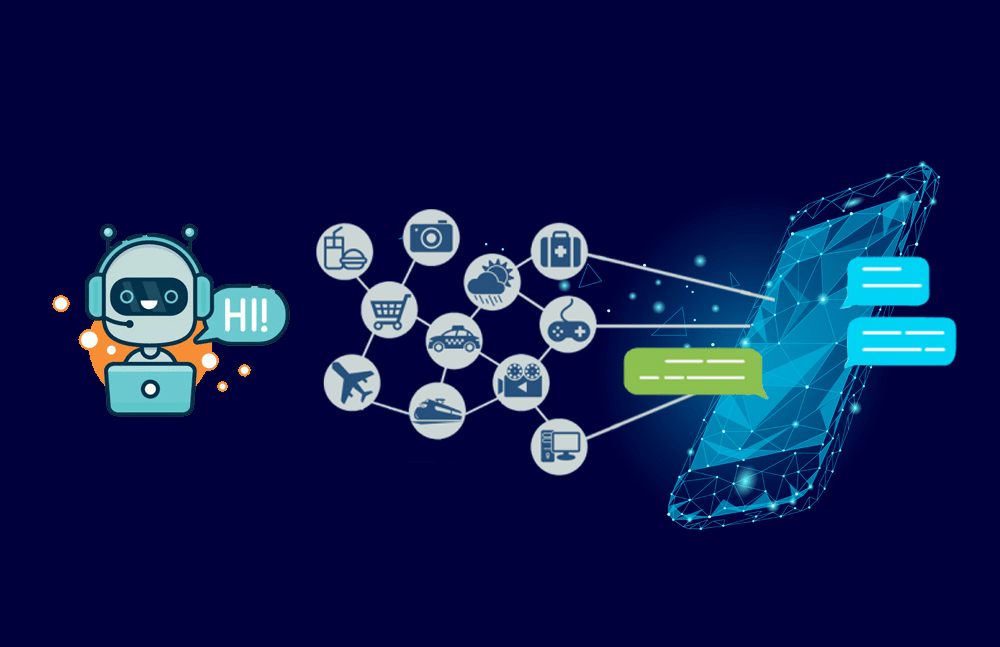
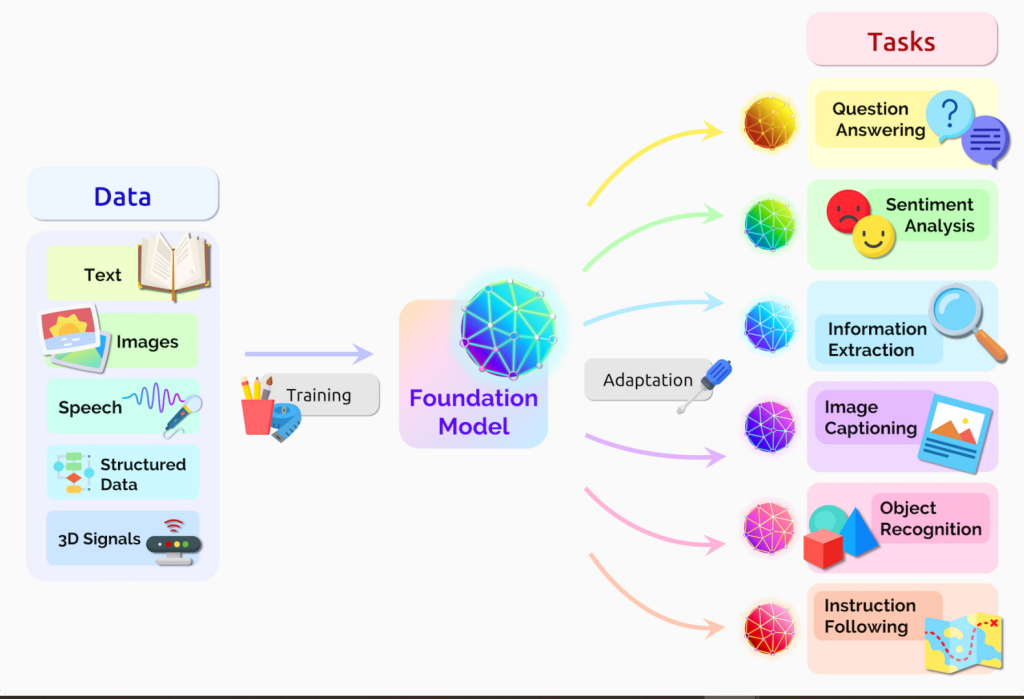
In today’s fast-paced and technology-driven world, businesses are constantly seeking innovative ways to streamline their operations, increase efficiency, and improve productivity. One emerging solution that is making waves in the industry is Action Transformer Services. This cutting-edge technology combines the power of artificial intelligence (AI) and workflow automation to transform the way businesses handle repetitive and time-consuming tasks. In this article, we will explore the concept of Action Transformer Services and delve into its benefits and applications.
1. What are Action Transformer Services?

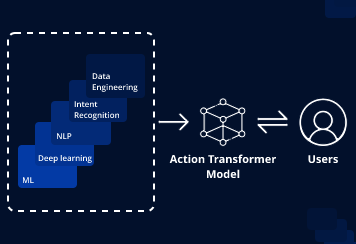
  • Action Transformer Services are advanced AI-powered tools that automate manual processes, enabling businesses to optimize their workflows.
  • They use natural language processing (NLP) and machine learning algorithms to understand and interpret human instructions.
  • By automating tasks, businesses can reduce human error, save time, and allocate resources more efficiently.

2. How do Action Transformer Services work?

  • Action Transformer Services employ a combination of NLP, machine learning, and robotic process automation (RPA) technologies.
  • They analyze input data, identify patterns, and extract relevant information to perform specific actions.
  • These services can integrate with existing systems, applications, and databases to seamlessly execute tasks.

3. Key benefits of Action Transformer Services:

  • Increased productivity: By automating repetitive tasks, employees can focus on more strategic and value-added activities, leading to higher productivity levels.
  • Enhanced accuracy: Action Transformer Services minimize the risk of human error, resulting in improved data quality and reduced operational risks.
  • Cost savings: Automation reduces the need for manual labor, leading to significant cost savings for businesses.
  • Scalability: These services can handle a large volume of tasks simultaneously, allowing businesses to scale their operations efficiently.
  • Improved customer experience: By streamlining processes, businesses can deliver faster and more accurate services to their customers, enhancing overall satisfaction.

4. Applications of Action Transformer Services:

  • Data entry and processing: Action Transformer Services can automate data entry tasks, such as extracting information from invoices, forms, and documents, reducing manual effort and improving data accuracy.
  • Customer support: These services can be used to automate responses to customer queries and provide personalized support, improving response times and customer satisfaction.
  • Financial operations: Action Transformer Services can automate financial tasks like invoice processing, payment reconciliation, and financial reporting, enabling businesses to streamline their financial operations.
  • Supply chain management: Automation can help optimize supply chain processes, such as inventory management, order processing, and logistics coordination, resulting in faster and more efficient operations.
  • HR and employee management: Action Transformer Services can automate various HR tasks, including employee onboarding, leave management, and performance evaluations, freeing up HR teams to focus on strategic initiatives.

5. Challenges and considerations:

  • Integration complexity: Integrating Action Transformer Services with existing systems and processes may require technical expertise and careful planning.
  • Data security: Businesses must ensure that sensitive data is handled securely and that access controls are in place to prevent unauthorized access.
  • Change management: Organizations need to prepare employees for the transition to automation and provide adequate training and support to mitigate resistance to change.

In conclusion, Action Transformer Services represent a significant advancement in workflow automation. By harnessing the power of AI and automation, businesses can optimize their operations, improve efficiency, and achieve greater productivity. As this technology continues to evolve, businesses that embrace Action Transformer Services are likely to gain a competitive edge in the marketplace, reaping the rewards of streamlined processes and enhanced customer experiences.

To Learn More:- https://www.leewayhertz.com/hire-action-transformer-developers/
Standard

MLOps Consulting Services: Streamlining Machine Learning Operations

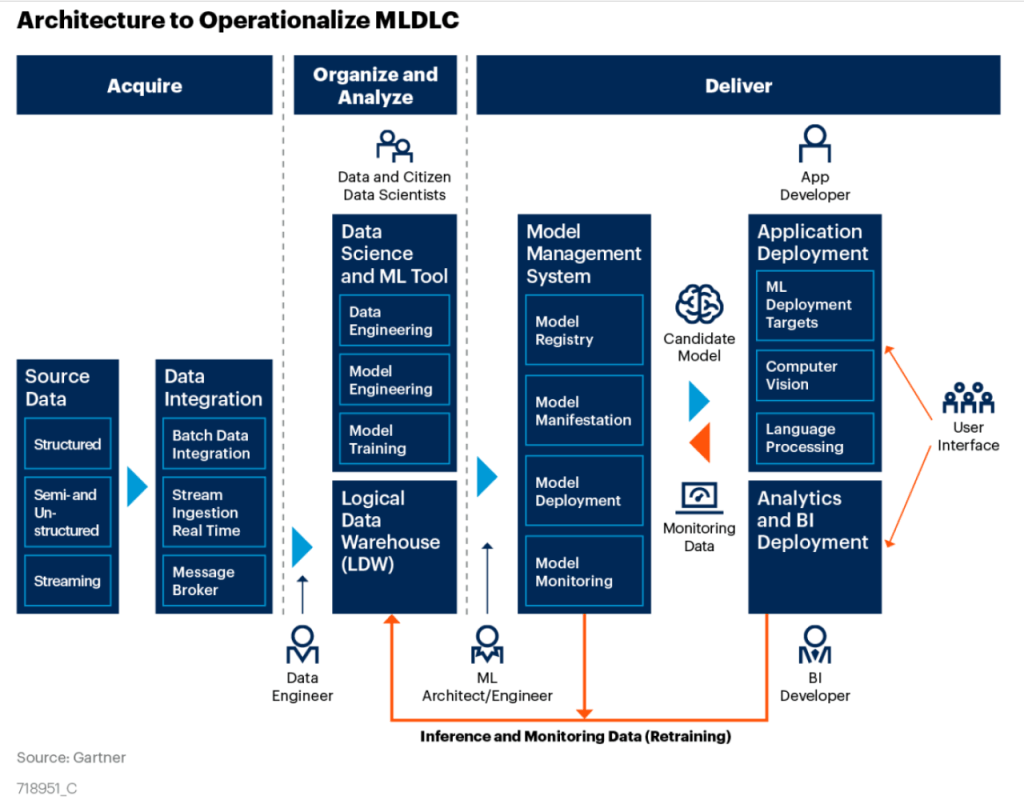
Machine Learning Operations, or MLOps, refers to the practices and techniques used to streamline and manage the lifecycle of machine learning models in production environments. MLOps Consulting Services are specialized services offered by professional consultants to help organizations implement and optimize their MLOps processes. In this article, we will explore the key aspects and benefits of MLOps consulting services in a point-wise manner.

  1. Introduction to MLOps: MLOps combines machine learning, software engineering, and operations to enable efficient deployment and management of machine learning models. MLOps consultants provide organizations with the expertise to design and implement robust MLOps frameworks.
  2. MLOps Strategy Development: MLOps consultants assist organizations in defining a comprehensive strategy that aligns with their business goals. They analyze the existing infrastructure, data pipelines, and model deployment processes to identify gaps and recommend improvements.
  3. Infrastructure Optimization: MLOps consulting services include evaluating the existing infrastructure and recommending optimizations to ensure scalability, reliability, and performance. This may involve selecting appropriate cloud platforms, containerization technologies, and infrastructure orchestration tools.
  4. Data Management: MLOps heavily relies on high-quality data. Consultants help organizations establish efficient data pipelines, data versioning, and data quality monitoring processes. They ensure that the data used for training and inference is consistent, clean, and well-documented.
  5. Model Training and Deployment: MLOps consultants assist in setting up automated workflows for model training and deployment. They help organizations leverage technologies like continuous integration and continuous deployment (CI/CD) to ensure efficient and reliable model deployment processes.
  6. Model Monitoring and Performance Optimization: MLOps consultants design and implement monitoring systems to track the performance of deployed models. They help organizations set up alerts for model failures, drift detection, and data inconsistencies. Consultants also work on optimizing model performance and resource utilization.
  7. Governance and Compliance: MLOps consultants ensure that organizations adhere to regulatory and compliance requirements related to data privacy, security, and ethical AI practices. They help implement processes for model explainability, fairness, and transparency.
  8. Security and Risk Management: MLOps consulting services include evaluating the security risks associated with machine learning models and providing recommendations to mitigate those risks. Consultants help organizations establish secure model deployment processes, access controls, and encryption mechanisms.
  9. Team Collaboration and Skill Development: MLOps consultants facilitate collaboration between data scientists, software engineers, and operations teams. They provide training and knowledge transfer to help teams adopt best practices in MLOps and enable a smooth transition to new processes and technologies.
  10. Continuous Improvement: MLOps consulting services focus on establishing a culture of continuous improvement. Consultants help organizations set up feedback loops, performance tracking mechanisms, and regular model retraining cycles to ensure that deployed models remain accurate and up-to-date.
  11. Cost Optimization: MLOps consultants assist organizations in optimizing costs associated with machine learning infrastructure and operations. They identify opportunities to reduce resource wastage, improve scalability, and optimize model performance, leading to cost savings in the long run.
  12. Competitive Advantage: By leveraging MLOps consulting services, organizations gain a competitive edge in the market. They can accelerate the development and deployment of machine learning models, enhance operational efficiency, and deliver innovative solutions to customers.

In conclusion, MLOps consulting services play a vital role in helping organizations streamline their machine learning operations. By leveraging the expertise of MLOps consultants, organizations can implement robust strategies, optimize infrastructure, manage data effectively, ensure model performance and compliance, and foster a culture of continuous improvement. With the right MLOps framework in place, organizations can unlock the full potential of their machine learning initiatives and drive business success in the rapidly evolving world of AI.

To Learn More:- https://www.leewayhertz.com/mlops-consulting-services/

Standard

Benefits and Services Provided by Customized ChatGPT App

In today’s fast-paced digital era, businesses are constantly seeking innovative ways to enhance customer engagement and streamline their operations. One such advancement is the development of customized ChatGPT (Generative Pre-trained Transformer) applications. These AI-powered chatbots are tailored to meet specific business needs, and they offer a plethora of benefits and services. Let’s explore some of the key advantages provided by these customized chatbot applications:

  1. Enhanced Customer Experience: Customized ChatGPT apps provide businesses with an opportunity to deliver exceptional customer experiences. These chatbots can engage with customers in real-time, providing instant responses to their queries and concerns. By simulating human-like conversations, the chatbots offer personalized interactions, making customers feel valued and understood.
  2. 24/7 Availability: Unlike human customer support agents who have limitations in terms of working hours, customized ChatGPT apps can operate round the clock. This 24/7 availability ensures that customers can access support whenever they need it, irrespective of time zones or geographical locations. It leads to improved customer satisfaction and retention rates.
  3. Scalability and Cost Efficiency: As businesses grow, the demand for customer support services increases. Customized ChatGPT apps can efficiently handle large volumes of inquiries without the need for additional staff. This scalability feature helps businesses save costs by reducing the need for hiring and training additional support agents. Furthermore, chatbots can handle multiple conversations simultaneously, ensuring faster response times and efficient resolution of customer issues.
  4. Quick and Accurate Information: With access to vast amounts of data and information, customized ChatGPT apps can provide accurate answers to customer queries. These chatbots are trained on comprehensive knowledge bases and can retrieve relevant information instantly, ensuring accurate and consistent responses. Customers benefit from quick access to the information they need, resulting in improved efficiency and reduced frustration.
  5. Language Support: In a global marketplace, language barriers can hinder effective communication with customers. Customized ChatGPT apps can be programmed to support multiple languages, breaking down language barriers and catering to a diverse customer base. This feature enables businesses to reach a wider audience and provide support in the customers’ preferred language, fostering better customer relationships.
  6. Lead Generation and Sales Support: Customized ChatGPT apps can be integrated into sales funnels to capture leads and provide sales support. By engaging with potential customers, the chatbots can gather valuable information and guide them through the purchasing process. These chatbots can provide product recommendations, offer personalized discounts, and address concerns, ultimately boosting sales conversion rates.
  7. Data Analysis and Insights: Customized ChatGPT apps can generate valuable insights by analyzing customer interactions. By analyzing patterns and trends in customer queries, businesses can identify common pain points and optimize their products or services accordingly. These insights help in making data-driven decisions, improving overall business performance.
  8. Seamless Integration with Existing Systems: Customized ChatGPT apps can seamlessly integrate with existing business systems and platforms. They can be integrated with customer relationship management (CRM) software, helpdesk systems, and other tools, ensuring a unified customer support experience. This integration streamlines workflows, enhances efficiency, and provides a holistic view of customer interactions.
  9. Continuous Learning and Improvement: Customized ChatGPT apps can continuously learn and improve based on customer interactions. By analyzing user feedback, chatbots can identify areas for improvement and refine their responses. This iterative learning process ensures that the chatbots become increasingly accurate and effective over time, delivering better customer experiences.
  10. Brand Consistency: Customized ChatGPT apps can be trained to reflect a brand’s tone, personality, and values. By adhering to brand guidelines, these chatbots maintain consistency in their interactions with customers, reinforcing brand loyalty. This consistency helps in building a strong brand identity and fostering trust among customers.

In conclusion, customized ChatGPT apps offer numerous benefits and services that can revolutionize customer support and enhance business operations. From enhanced customer experiences to cost efficiency and data-driven insights, these chatbots have the potential to transform businesses across various industries. Embracing AI-powered chatbot technology can provide a competitive edge in today’s dynamic marketplace, where customer satisfaction and engagement are paramount.

To Learn More:- https://www.leewayhertz.com/customized-chatgpt-app/

Standard

AI Chatbot Development Services: Revolutionizing Customer Engagement

In the era of digital transformation, businesses are constantly looking for innovative ways to enhance customer experiences and streamline their operations. One such technology that has gained immense popularity is AI chatbots. These intelligent virtual assistants have revolutionized the way businesses interact with their customers, providing personalized and efficient support around the clock. AI chatbot development services have become a cornerstone of modern customer engagement strategies, helping organizations deliver exceptional service while reducing costs. Let’s explore the key points highlighting the significance of AI chatbot development services:

  1. Enhanced Customer Support: AI chatbots provide instant and accurate responses to customer queries, eliminating the need for long wait times and frustrating interactions. With natural language processing capabilities, chatbots can understand and interpret customer requests, providing relevant information and solutions promptly.
  2. 24/7 Availability: Unlike human agents who have limitations in terms of working hours and capacity, AI chatbots are available round the clock. This ensures that customers can receive assistance and support at any time, enhancing customer satisfaction and loyalty.
  3. Cost Savings: Implementing AI chatbots can significantly reduce operational costs for businesses. As chatbots handle a large volume of routine inquiries, companies can allocate human resources to more complex tasks, optimizing workforce efficiency and reducing labor costs.
  4. Scalability: AI chatbots can seamlessly handle multiple conversations simultaneously, ensuring scalability as businesses grow and face increased customer interactions. This scalability allows companies to maintain high-quality customer service without compromising efficiency.
  5. Personalization: Through machine learning algorithms, AI chatbots can gather and analyze customer data, enabling personalized interactions. Chatbots can remember customer preferences, purchase history, and previous interactions, providing tailored recommendations and suggestions, enhancing the overall customer experience.
  6. Lead Generation and Sales Support: AI chatbots can play a crucial role in lead generation and sales support. By engaging with customers in real-time, chatbots can gather information about their needs and preferences, qualifying leads and providing relevant product or service information to support the sales process.
  7. Improved Efficiency: Chatbots can automate repetitive tasks such as answering frequently asked questions, making appointments, or providing shipping updates. By automating these processes, companies can streamline their operations, reduce manual errors, and increase overall efficiency.
  8. Multilingual Support: With the ability to communicate in multiple languages, AI chatbots can cater to a diverse customer base. This feature enables businesses to engage with customers from different regions and countries, expanding their global reach.
  9. Analytics and Insights: AI chatbots can collect valuable data about customer interactions, allowing businesses to gain insights into customer behavior, preferences, and pain points. This data can be used to optimize marketing strategies, improve products or services, and enhance overall business performance.
  10. Integration and Customization: AI chatbot development services offer the flexibility to integrate chatbots with existing business systems such as CRM or support ticketing tools. Moreover, chatbots can be customized to align with the brand’s voice and personality, ensuring a consistent and cohesive customer experience.

In conclusion, AI chatbot development services have emerged as a game-changer for businesses, transforming customer engagement and support. With their ability to provide instant responses, 24/7 availability, cost savings, scalability, and personalization, chatbots have become an indispensable tool for enhancing customer experiences. By leveraging AI chatbot technology, businesses can improve efficiency, generate leads, gain valuable insights, and deliver exceptional service. As the demand for seamless customer interactions continues to rise, investing in AI chatbot development services becomes an essential strategy for businesses looking to stay ahead in the competitive market.

To Learn More:- https://www.leewayhertz.com/ai-chatbot-development-company/

Standard

Exploring the Transformer Model Development Services

The Transformer model has emerged as a groundbreaking approach in natural language processing (NLP) and has revolutionized the field of machine learning. With its ability to process sequential data efficiently and capture long-range dependencies, the Transformer has paved the way for significant advancements in various NLP tasks. In this article, we will explore seven notable developments in Transformer model development.

  1. Transformer Architecture: The original Transformer model introduced the self-attention mechanism, allowing the model to weigh the importance of different words in a sentence while processing it. The architecture comprised multiple self-attention layers and position-wise feed-forward networks, enabling effective representation learning for sequential data.
  2. BERT (Bidirectional Encoder Representations from Transformers): BERT, introduced by Google AI, marked a significant milestone in NLP. It leveraged the Transformer model to pretrain a language model on a large corpus of unlabeled text and then fine-tuned it for specific downstream tasks. BERT achieved state-of-the-art results on various benchmarks, showcasing the power of the Transformer.
  3. GPT (Generative Pre-trained Transformer): OpenAI’s GPT took the concept of pretraining and fine-tuning to the next level. By training a Transformer model on a massive corpus of text and introducing a language modeling objective, GPT demonstrated impressive generation capabilities. It produced coherent and contextually relevant text, leading to applications like automated writing assistance and dialogue systems.
  4. Transformer-XL: One limitation of the original Transformer was its inability to handle long-range dependencies effectively. Transformer-XL, proposed by Google Brain, introduced a recurrence mechanism within the Transformer model, allowing it to capture dependencies beyond a fixed context window. This development enhanced the model’s ability to process longer sequences and led to better performance on tasks involving longer texts.
  5. XLNet: XLNet addressed the limitations of traditional autoregressive language models like GPT by introducing a permutation-based training scheme. By considering all possible permutations of words during pretraining, XLNet overcame the limitation of unidirectional context while maintaining the benefits of autoregressive models. This approach achieved state-of-the-art results on several language understanding benchmarks.
  6. T5 (Text-To-Text Transfer Transformer): T5, developed by Google Research, introduced a unified framework for NLP tasks. It demonstrated that a single Transformer model could be trained to perform various tasks, including text classification, machine translation, and summarization. T5’s approach of casting different tasks as text-to-text transformations showcased the versatility of the Transformer model.
  7. Efficient Transformers: Given the computational demands of Transformer models, researchers focused on developing more efficient variants. Approaches like Sparse Transformers and Performer reduced the memory and computational requirements of Transformers, making them more accessible for deployment on resource-constrained devices. These developments opened doors for real-time and on-device applications of Transformer models.

In conclusion, the development of Transformer models has transformed the landscape of NLP. From the original Transformer architecture to advancements like BERT, GPT, and various efficient variants, these models have significantly improved the state-of-the-art across a wide range of NLP tasks. With ongoing research and innovation, we can expect further exciting developments in the field of Transformer model development, enabling even more powerful and efficient natural language processing systems.

To Learn More:- https://www.leewayhertz.com/transformer-model-development-services/

Standard

Exploring the Enterprise AI Development Services

Artificial Intelligence (AI) has emerged as a transformative technology in the business world, empowering enterprises to automate processes, gain valuable insights, and make data-driven decisions. As AI continues to advance, numerous AI development services have been introduced to meet the growing demand for enterprise AI solutions. In this article, we will explore seven essential AI development services that are revolutionizing the way businesses operate.

  1. Natural Language Processing (NLP):
    NLP enables machines to understand, interpret, and respond to human language. Enterprises can leverage NLP to build chatbots, virtual assistants, and sentiment analysis tools. NLP also aids in automating customer support, analyzing feedback, and extracting valuable information from unstructured data sources like social media and customer reviews.
  2. Machine Learning (ML):
    Machine Learning is at the core of AI development. It allows systems to learn from data and improve performance over time. Enterprises can utilize ML algorithms to solve complex business problems, such as predictive analytics, demand forecasting, fraud detection, and recommendation engines. ML models can be trained on large datasets to make accurate predictions and drive business growth.
  3. Computer Vision:
    Computer Vision involves teaching machines to interpret and understand visual content, such as images and videos. Enterprises can leverage computer vision to build applications for object detection, image recognition, facial recognition, and automated quality control. Industries like healthcare, manufacturing, and retail are benefitting from computer vision technology to streamline operations and enhance customer experiences.
  4. Robotic Process Automation (RPA):
    RPA combines AI with automation to perform repetitive and rule-based tasks. Enterprises can deploy RPA to automate data entry, document processing, and back-office operations. By implementing RPA, businesses can free up human resources from mundane tasks, reduce errors, and improve operational efficiency.
  5. Predictive Analytics:
    Predictive analytics uses historical data and statistical algorithms to forecast future events and trends. Enterprises can employ predictive analytics to optimize sales and marketing strategies, prevent equipment failure through predictive maintenance, and anticipate customer behavior. By leveraging predictive analytics, organizations can make proactive decisions and stay ahead of the competition.
  6. Cognitive Computing:
    Cognitive computing mimics human intelligence by understanding, reasoning, and learning from data. Enterprises can utilize cognitive computing to build advanced systems capable of complex tasks like sentiment analysis, recommendation systems, and personalized user experiences. Cognitive computing enables businesses to unlock valuable insights from vast amounts of data and make informed decisions.
  7. Cloud-Based AI Services:
    Cloud-based AI services provide enterprises with access to AI capabilities without the need for extensive infrastructure or technical expertise. Cloud platforms offer pre-built AI models, APIs, and development tools, enabling businesses to develop AI applications rapidly and at scale. These services allow organizations to focus on leveraging AI to solve business challenges without worrying about the underlying infrastructure.

In conclusion, AI development services are transforming the enterprise landscape by enabling businesses to harness the power of AI for automation, analysis, and decision-making. From Natural Language Processing to Cloud-Based AI Services, these offerings provide organizations with the tools and technologies necessary to drive innovation, improve efficiency, and gain a competitive edge. Embracing AI development services can unlock new opportunities for enterprises to optimize operations, enhance customer experiences, and achieve long-term success in an increasingly AI-driven world.

To Learn More:- https://www.leewayhertz.com/enterprise-ai-development-company/

Standard

Blockchain Consulting Services: What You Need to Know

Blockchain technology has been a buzzword in the tech industry for quite some time now. It is a distributed ledger system that allows secure and transparent transactions without the need for intermediaries. This technology has the potential to revolutionize various industries by reducing costs, improving transparency, and enhancing security.

However, despite its immense potential, blockchain technology can be quite complex to understand and implement. This is where blockchain consulting services come in. In this post, we will discuss what blockchain consulting services are, what they entail, and why they are essential for businesses looking to leverage blockchain technology.

What are Blockchain Consulting Services?

Blockchain consulting services refer to the expertise provided by professionals to individuals or businesses seeking to understand and implement blockchain technology. These services cover a wide range of areas, including technical development, business strategy, risk management, and regulatory compliance.

Blockchain consulting services providers offer guidance on how to leverage blockchain technology to achieve specific business goals. They also help clients assess the feasibility of blockchain solutions, design and implement blockchain-based applications, and provide ongoing support to ensure smooth operations.

Why are Blockchain Consulting Services Important?

Implementing blockchain technology is not an easy feat. It requires technical expertise, extensive research, and careful planning to ensure that the technology works as intended. Blockchain consulting services are essential because they help businesses navigate the complexities of blockchain technology and make informed decisions.

Consultants can help businesses identify areas where blockchain can be applied to enhance their operations, design and develop blockchain-based applications that align with the organization’s needs, and provide ongoing support to ensure that the technology works as intended.

Moreover, blockchain consulting services can help businesses overcome regulatory challenges associated with blockchain technology. Blockchain consultants stay up-to-date with the latest regulations and compliance requirements, ensuring that businesses do not run afoul of the law.

Conclusion

Blockchain technology has the potential to transform various industries. However, businesses must understand the intricacies of the technology to leverage its full potential. Blockchain consulting services can provide the expertise needed to navigate the complexities of blockchain technology, design and implement effective solutions, and ensure regulatory compliance.

Standard

The Metaverse Gaming Space: Development and Advancement

Since the early days of consoles and arcade games, the gaming industry has made great strides. The metaverse gaming industry has seen a boom in recent years thanks to high-speed internet access and powerful hardware. The metaverse, a virtual reality environment, is quickly becoming one of the most dynamic and exciting parts of the gaming industry. We will explore the evolution and impact of the metaverse gaming area and how it is changing our interaction with and play with games.

Definition of the Metaverse

Metaverse is a virtual world accessible from anywhere via the internet. The virtual world mimics the real world to provide an immersive gaming experience. Metaverse lets players interact with one another and the virtual world in real time, creating a sense community and connectedness.

The Evolution of the Metaverse

Although the metaverse concept has been around for decades in science fiction, it has only recently become a reality. Although the initial metaverse gaming experiences were somewhat limited and cumbersome, as software and hardware have improved, the metaverse has become more accessible.

The introduction of virtual reality technology (VR) has been a key development in the metaverse. Virtual reality (VR) allows users to experience the metaverse in a new way. This technology has revolutionized gaming and made the metaverse one the most dynamic and exciting parts of the industry.

The rise of blockchain technology is another important development in the metaverse. The creation of virtual economies decentralized by blockchain technology has enabled players to trade virtual currency and goods with one another. This has allowed for a new level in depth and complexity in metaverse and opened up new opportunities to players to interact with virtual world.

The Meta Gaming Experience

The metaverse gaming experience offers a unique gaming experience. The metaverse is rich and detailed with immersive virtual worlds. The players can interact in real time with the virtual world and each other, creating a sense community and connectedness. The metaverse provides a deeper and more complex gaming experience, and allows players to have a more dynamic and engaging experience.

The metaverse allows players to escape from the real world and enter an exciting new environment. The virtual world mimics the real world and allows players to interact with it in a way that is real and immersive. This creates a gaming experience unlike any other.

The Future of the Metaverse

Although the metaverse is still very much in its early stages, it is quickly becoming one of most dynamic and exciting parts of the gaming industry. The metaverse will become more immersive and interactive as technology advances. New VR and AR technologies will be available, along with the integration of blockchain technology and other advanced technologies.

Gaming industry also has great potential for the future thanks to the metaverse. The metaverse holds the potential to bring new and innovative experiences and games that are unrivalled by anything else. It has the potential for a revolution in the way we interact with and play games, creating an immersive and more connected gaming experience for everyone.

Conclusion

The gaming industry’s metaverse is a dynamic and exciting area that is constantly changing. The metaverse is becoming increasingly immersive and engaging thanks to technological advancements, which offers gamers a new level in depth and complexity.

Standard

Metaverse Application Development: The Future of Virtual Reality

The idea of a Metaverse that is a virtual universe in which people participate in a myriad of things, is in the news for many years. As technology advances and the advancement of metaverse-related apps is becoming an actuality and the possibilities for this new kind that is virtual reality seems limitless.

As the world is becoming more and more digital, businesses and people alike are looking at ways to harness the advantages of the metaverse. From entertainment and education to socializing and commerce the possibilities are endless. What does metaverse development mean and how can you be involved?

What is Metaverse Application Development?

Metaverse application development involves developing applications that operate within an imaginary world. The applications could range from basic games to complicated social platforms. They are used to serve a range of functions.

The most important factor in success in developing applications for the metaverse is to be aware of the particular challenges and opportunities that arise from developing for a virtual universe. This includes taking into consideration elements such as user experience, engagement, as well as data security.

Benefits of Metaverse Application Development

There are numerous benefits in developing applications for the metaverse, such as:

More engagement: Metaverse applications provide users with an enhanced and immersive experience. This could result in increased engagement and more frequent sessions with users.

Revenue streams that are new: Through developing applications that utilize the metaverse, companies and individuals can develop new revenue streams via virtual products and services.

Access to a worldwide audience: Metaverse is a global network, this means that applications are accessible to users around the globe.

Better collaboration: Metaverse applications can facilitate collaboration and communications with users through ways before not feasible.

Steps to Get Involved in Metaverse Application Development

If you’re interested in becoming involved in the metaverse development process Here are some ways to start:

Get a better knowledge of the metaverse and its potential: This involves studying the different online worlds as well as platforms in use as well as gaining an understanding of specific challenges as well as possibilities of creating the virtual world.

Create a solid team: You’ll require an experienced team of designers, developers and content creators help you realize your ideas.

Select the appropriate platform: There are a variety of digital worlds as well as platforms available to select from, therefore it’s crucial to pick the right one for your particular project.

Develop a clear plan: It is essential to develop an outline of your project, which includes the timeline, budget, and milestones.

Begin building Your team: With your team assembled and your plan in place now is the time to begin creating your metaverse application.

The Future of Metaverse Application Development

The potential for metaverse applications development is huge and we’re just getting started with what’s feasible. As technology advances and improve, we will experience more sophisticated virtual worlds and apps that provide more thrilling and enjoyable experiences for the users.

From entertainment and education to commerce and socializing the possibilities for metaverse application development are limitless. If you’re a company looking to increase your reach or someone looking to develop an additional revenue stream this is the ideal opportunity to join this exciting and fast-growing field.

Standard

NFT Marketplace Development Company

Because of its potential to disrupt a wide range of industries, NFT development has been gaining traction swiftly. As a result, many businesses are looking for NFT development help. NFT coins, which are based on blockchain technology, assist in the creation of smart contracts, but they don’t end there. Developers of NFT are always exploring new and creative methods to apply the technology. One of these inventions that have attracted a lot of attention because to its potential is an NFT marketplace.

A non-fungible token, or NFT, is a HiTech product that may be traded on a non-fungible token exchange. The advent of NFT marketplaces has resulted in the emergence of an NFT business model, according to some. Although some details need to be worked out, NFT marketplaces are opening up a slew of new opportunities for NFT development and the digital products that go with it.

This article defines NFT tokens and, more crucially, NFT marketplaces, as well as the factors to consider while developing an NFT marketplace platform. If you wish to create your own NFT marketplace, keep the following tips in mind.

Development of NFT

The NFT market is a fast-paced environment. Because the NFT market has become quite appealing to many in the art world, app development for NFTs is rapidly developing. Non-fungible tokens can be used to verify the validity of both physical and digital artwork. They are being used as a type of digital asset, similar to what is happening with cryptocurrencies. Some argue that the NFT market will never go beyond this use case, but it opens up a whole new universe of possibilities for others.

Those who perceive potential have sparked significant demand for NFT development services. Despite the fact that this technology has not yet reached its full potential, many businesses are looking for NFT development services to help them create the next great thing. It’s a risky bet, but one that could transform the game.

NFT marketplace platforms are fast gathering pace to become the first step in the forthcoming evolution of blockchain technology, despite the fact that the signals are still unfolding and the market has yet to realize the true potential of NFTs. This is critical for any company that wants to use NFT tokens as the backbone of its operations.

A fully working NFT marketplace platform is required for any NFT business where NFTs can be traded, saved, or exhibited. NFT coins can even be created directly on the NFT marketplace in some situations. This feature makes marketplaces appealing for a variety of reasons, even though there is still a lot of work to be done before this technology reaches a tipping point. But before we go any further, let’s define what an NFT is.

What Is a Non-Fungible Token (NFT)?

NFT stands for non-fungible token, as previously stated. They were created with the help of blockchain technology. To put it another way, non-fungible tokens are one-of-a-kind. We may better comprehend what a non-fungible token is by using a simple analogy.

Assume you have a single $1. You could simply exchange this dollar for another and still end up with a dollar. Because dollars are fungible, another of the same sort can be used in their place. NFT tokens, on the other hand, are not fungible. Non-fungible tokens can be exchanged, but you will not receive the same value in return.

Let’s say a friend recommends you swap non-fungible tokens. There is nothing stopping you, but whatever you get will not be the same as the one you had. Keep in mind that each non-fungible token is one-of-a-kind.

Non-fungible tokens are thus a means to have something digital while also being one-of-a-kind. Digital uniqueness may appear insignificant, but in a world where everything digital can be quickly reproduced, having something that is both digital and unique can represent a significant paradigm shift. It’s a different way of looking at digital worth.

How Is an NFT Created?

Many people conceive of an NFT as a type of digital asset or a mechanism to administer a smart contract, which is understandable. After all, because this technology is based on a blockchain, it is extremely popular among cryptocurrency enthusiasts.

To produce a non-fungible token, users must first have a cryptocurrency wallet. You’ll also need a cryptocurrency that supports non-fungible tokens, such as Ethereum. Although Ethereum is the most prominent NFT platform, other cryptocurrencies can also be used to run them.

NFT management is simple on an NFT marketplace, making it a compelling option for anyone wishing to conduct transactions using a non-fungible token. Any qualified NFT development company should be able to create your NFT marketplace according to your specifications.

To learn more – https://www.leewayhertz.com/create-nfts-on-cardano/

Standard