Exploring the Diverse Landscape: An In-Depth Look at Types of Data Integration

Data integration, a fundamental process in modern businesses, encompasses various methodologies and approaches tailored to the complexities of merging diverse data sources. Understanding the different types of data integration is crucial for organizations seeking to harness the power of unified data. This comprehensive guide navigates through the landscape of data integration, exploring its types, methodologies, and the significance each holds in today’s data-driven world.

1. Traditional Batch Data Integration

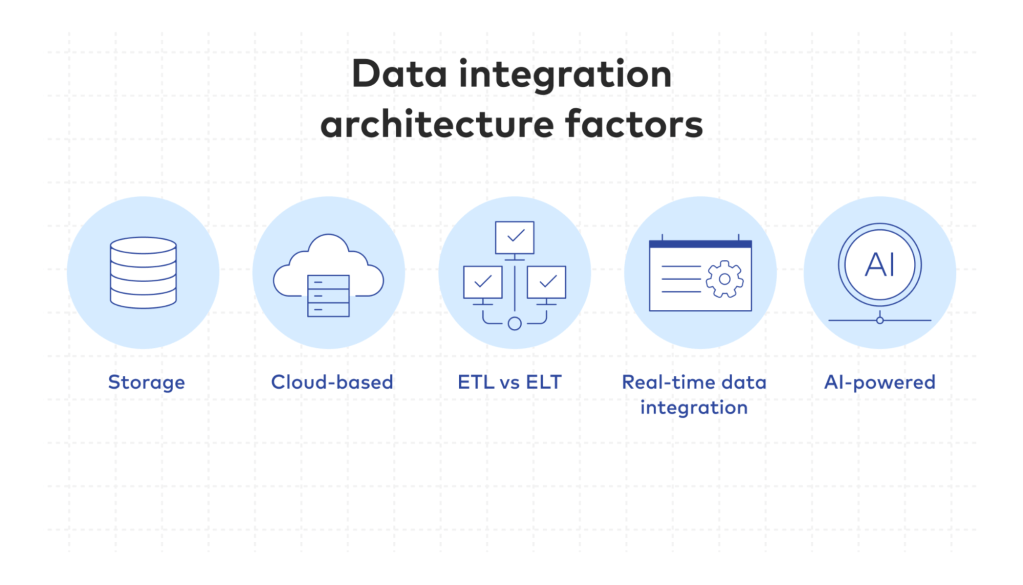
This method involves periodic extraction, transformation, and loading (ETL) of data from multiple sources into a centralized repository or data warehouse. Batch processing occurs at scheduled intervals, allowing for large volumes of data to be integrated in batches. It’s effective for structured data and is ideal for historical analysis and reporting purposes.

2. Real-Time Data Integration

In contrast to batch processing, real-time data integration focuses on immediate and continuous data delivery. It ensures that changes made in source systems are reflected instantaneously in the target systems or data warehouses. This approach enables organizations to access up-to-the-moment data for critical decision-making, often employed in scenarios requiring real-time analytics and operational insights.

3. Data Federation or Virtual Integration

Data federation creates a virtual view of disparate data sources without physically moving or replicating the data. It enables unified access to distributed data in real-time, allowing users to query and access information seamlessly across various sources. This approach minimizes data duplication and latency, offering agility and flexibility in accessing heterogeneous data.

4. Enterprise Application Integration (EAI)

EAI integrates disparate applications within an organization, ensuring seamless communication and data exchange between different software systems. It involves middleware technologies and interfaces to enable data flow between systems, enabling functionalities like messaging, event-driven architecture, and service-oriented architectures (SOA).

5. Cloud-Based Data Integration

With the proliferation of cloud computing, this type of integration focuses on integrating data residing in cloud-based applications, platforms, or services. It involves leveraging cloud-based tools and services to connect and synchronize data across various cloud environments or between on-premises and cloud systems.

6. Bi-Directional Data Integration

Bi-directional integration facilitates the exchange of data between systems in both directions—allowing data updates or changes made in one system to be reflected in another and vice versa. This type of integration ensures data consistency across multiple systems and enables synchronization between them.

7. Data Warehousing

Data warehousing involves integrating data from multiple sources into a centralized repository optimized for analytics, reporting, and business intelligence purposes. It focuses on structuring and storing data in a format conducive to analysis and decision-making.

Choosing the Right Data Integration Approach

  1. Data Volume and Frequency: Consider the volume of data and the required frequency of updates or access—batch processing suits large volumes while real-time integration is suitable for immediate needs.
  2. Data Variety and Complexity: Evaluate the complexity and variety of data sources—structured, unstructured, or semi-structured data—and choose an approach that accommodates diverse formats.
  3. Business Objectives: Align integration strategies with specific business objectives—whether it’s real-time analytics, operational efficiency, or improving customer experience.
  4. Infrastructure and Technology Stack: Assess the existing infrastructure and technology stack to determine compatibility and select an approach that integrates seamlessly.

The Impact of Data Integration

Efficient data integration brings forth a multitude of benefits:

  1. Improved Decision-Making: Access to unified and timely data empowers organizations to make informed decisions swiftly.
  2. Enhanced Efficiency: Streamlining data access and integration processes boosts operational efficiency and agility.
  3. Better Customer Insights: Integrated customer data enables personalized experiences, leading to improved customer satisfaction and loyalty.
  4. Competitive Advantage: Leveraging integrated data fosters innovation and positions businesses ahead in a competitive landscape.

Conclusion

The world of data integration is multifaceted, offering a spectrum of methodologies to suit diverse business needs. Selecting the right type of integration involves a strategic assessment of data requirements, technology capabilities, and business objectives. As organizations continue to leverage data as a strategic asset, embracing the appropriate data integration approach becomes integral in unlocking the full potential of disparate data sources, driving innovation, and ensuring a competitive edge in the digital era.
Standard

Understanding the Essence of Data Integration: A Comprehensive Overview

In today’s data-driven world, the abundance of information generated from disparate sources has become both a boon and a challenge for organizations. Amidst this wealth of data, the need to extract meaningful insights and drive informed decision-making has led to the emergence of data integration as a critical process. This comprehensive guide aims to unravel the essence of data integration, exploring its significance, methodologies, and the transformative impact it has on businesses.

Defining Data Integration

Data integration refers to the process of combining, transforming, and harmonizing data from various sources into a unified and coherent view. It involves merging data from disparate systems, databases, applications, or sources—irrespective of their format, structure, or location—into a single, cohesive dataset that can be analyzed, interpreted, and utilized effectively.

The Significance of Data Integration

  1. Holistic View of Information: Integrating data from diverse sources provides a comprehensive and holistic view of an organization’s operations, customers, and processes, enabling better insights and informed decision-making.
  2. Enhanced Data Accuracy and Consistency: By consolidating data, discrepancies and redundancies are minimized, leading to improved accuracy, consistency, and reliability of information.
  3. Improved Business Intelligence and Analytics: Integrated data serves as a foundation for robust business intelligence (BI) and analytics, enabling organizations to derive actionable insights and make data-driven decisions.
  4. Streamlined Operations and Efficiency: Access to integrated data streamlines processes, enhances collaboration, and boosts operational efficiency by providing a unified view across departments.
  5. Facilitating Innovation and Agility: Integrated data fosters innovation by empowering organizations to respond quickly to changing market trends, customer demands, and emerging opportunities.

Methodologies and Approaches to Data Integration

  1. ETL (Extract, Transform, Load): This approach involves extracting data from multiple sources, transforming it into a standardized format, and loading it into a target system or data warehouse.
  2. ELT (Extract, Load, Transform): In ELT, data is extracted and loaded into a target system first, and transformation occurs within the destination system or data warehouse. This approach is often used for big data processing.
  3. Data Virtualization: This technique creates a virtualized view of data from disparate sources without physically moving or replicating it. It enables real-time access to data and minimizes data duplication.
  4. API Integration: Application Programming Interfaces (APIs) facilitate direct connections between systems, allowing data to be exchanged and integrated in real time.

Challenges and Considerations in Data Integration

  1. Data Quality and Consistency: Maintaining data quality and consistency across diverse sources remains a challenge, requiring data cleansing and standardization processes.
  2. Data Security and Privacy: Integrating sensitive data raises concerns regarding security, compliance with regulations, and ensuring data privacy throughout the integration process.
  3. Complexity and Scalability: As data volumes and sources increase, managing the complexity of integration and ensuring scalability becomes a crucial consideration.
  4. Technological Heterogeneity: Dealing with different data formats, structures, and systems requires compatibility and interoperability between diverse technologies.

Impact of Data Integration on Businesses

  1. Improved Decision-Making: Access to integrated data empowers businesses to make informed decisions swiftly, based on accurate, real-time insights.
  2. Enhanced Customer Experience: A unified view of customer data allows for personalized and seamless experiences across various touchpoints.
  3. Operational Efficiency and Cost Savings: Streamlined processes and access to consolidated data contribute to operational efficiency and cost savings by eliminating redundancies and inefficiencies.
  4. Innovation and Competitive Edge: Harnessing integrated data fuels innovation, enabling businesses to stay agile, adapt to market changes, and maintain a competitive edge.

Conclusion

Data integration stands as a cornerstone in today’s data-centric landscape, bridging the gap between disparate data sources and unlocking the full potential of information. The ability to seamlessly merge, transform, and utilize data from various sources is pivotal in empowering organizations to thrive in a rapidly evolving business environment.

As businesses continue to recognize the transformative power of integrated data, the strategic implementation of robust data integration processes becomes imperative. Leveraging advanced methodologies, technologies, and a meticulous approach to handling challenges can empower organizations to harness the true value of their data, driving growth, innovation, and success in the digital age.

Standard