Title: Revolutionizing Inventory Management with AI Development Services

In today’s dynamic business landscape, efficient inventory management plays a crucial role in the success of any organization. Traditional methods of inventory control are becoming outdated, and businesses are turning towards cutting-edge technologies to streamline their operations. One such technology that has garnered significant attention is Artificial Intelligence (AI). AI, coupled with advanced development services, is transforming the way companies handle their inventory, bringing about unparalleled accuracy, speed, and cost-effectiveness.

AI in Inventory Management:

  1. Demand Forecasting:
    AI algorithms analyze historical data, market trends, and other relevant factors to predict future demand accurately. This enables businesses to optimize their stock levels, reducing excess inventory and minimizing stockouts.
  2. Real-time Monitoring:
    AI-powered sensors and devices continuously monitor inventory levels, providing real-time insights. This helps businesses to respond promptly to fluctuations in demand, preventing overstocking or stockouts.
  3. Order Management:
    AI streamlines the order fulfillment process by automating tasks such as order processing and routing. This leads to faster order deliveries, improved customer satisfaction, and reduced manual errors.
  4. Optimization of Supply Chain:
    AI algorithms optimize the entire supply chain by identifying inefficiencies and suggesting improvements. This results in reduced lead times, lower operational costs, and an overall improvement in supply chain performance.
  5. Predictive Maintenance:
    AI can predict when equipment or machinery used in the inventory management process is likely to fail. This enables businesses to schedule maintenance proactively, minimizing downtime and avoiding disruptions in operations.

AI Development Services:

To harness the power of AI in inventory management, businesses often seek the assistance of AI development services. These services offer:

  1. Custom AI Solutions:
    Tailored AI solutions to meet the specific needs of each business. Whether it’s demand forecasting, real-time monitoring, or predictive maintenance, AI development services create solutions that align with organizational goals.
  2. Integration with Existing Systems:
    Seamless integration of AI into existing inventory management systems. This ensures a smooth transition without disrupting ongoing operations and allows businesses to leverage AI without overhauling their entire infrastructure.
  3. Data Security and Compliance:
    Robust data security measures and compliance with industry regulations. AI development services prioritize the protection of sensitive data and ensure that the implemented solutions adhere to relevant legal standards.
  4. Continuous Monitoring and Support:
    Ongoing monitoring of AI systems and prompt support in case of any issues. This ensures the reliability and effectiveness of AI applications over time.

Conclusion:

The integration of AI in inventory management, supported by AI development services, is revolutionizing how businesses handle their stock. By improving accuracy, efficiency, and responsiveness, AI is helping organizations stay competitive in an increasingly fast-paced market. As technology continues to advance, the synergy between AI and inventory management will likely play an even more significant role in shaping the future of supply chain operations. Businesses that embrace these innovations are well-positioned to thrive in the evolving landscape of modern commerce.

Keywords: AI in inventory management, AI development services, demand forecasting, real-time monitoring, order management, supply chain optimization, predictive maintenance, custom AI solutions, data security, compliance, continuous monitoring.
Standard

Navigating Innovation: The Comprehensive Guide to Custom Blockchain Software Development Processes

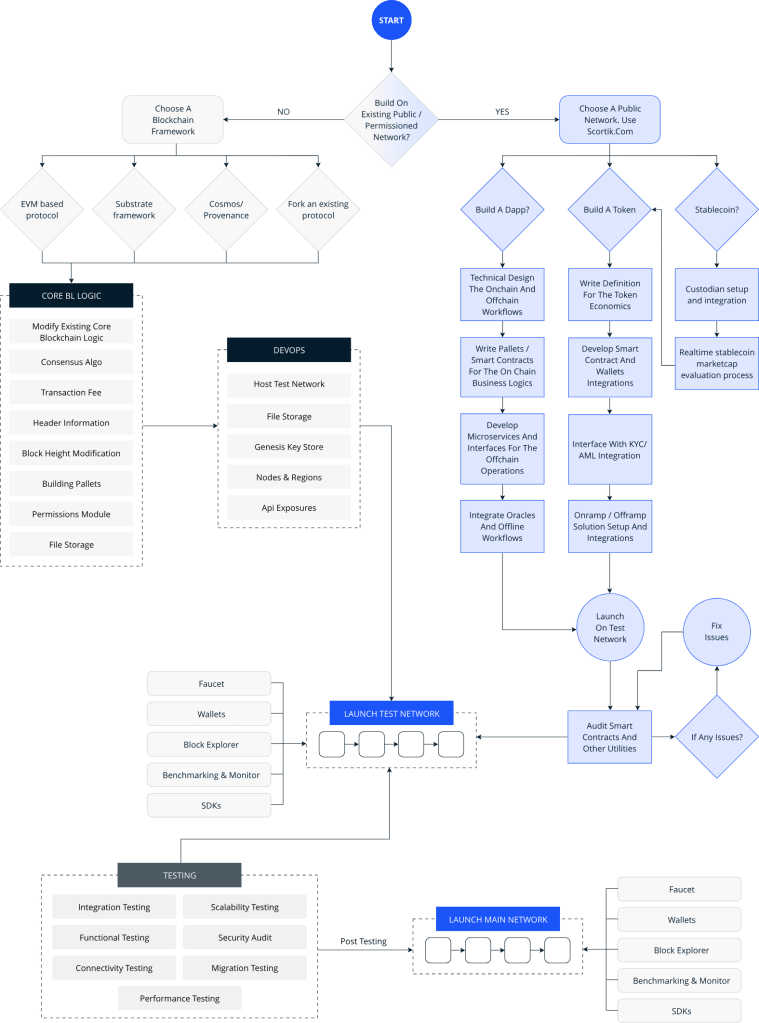
Blockchain technology has transcended its initial association with cryptocurrencies to emerge as a transformative force across industries. As businesses seek to leverage the potential of blockchain, the demand for custom blockchain software solutions tailored to specific needs has surged. Understanding the intricacies of the custom blockchain software development process is pivotal in navigating this innovative landscape. In this comprehensive guide, we delve into the essential stages and considerations that define the creation of bespoke blockchain solutions.

Understanding Custom Blockchain Software Development

Custom blockchain software development involves the creation of tailored solutions leveraging blockchain technology to address specific business challenges or capitalize on opportunities. These solutions can range from decentralized applications (dApps) to custom blockchain networks, smart contracts, and more, designed to meet the unique requirements of diverse industries.

Key Stages in Custom Blockchain Software Development

  1. Discovery and Requirement Analysis: This initial phase involves understanding the client’s business objectives, challenges, and identifying the specific use case for blockchain. Detailed requirements are gathered to define the project scope.
  2. Design and Architecture: In this stage, the development team designs the architecture of the blockchain solution. Decisions regarding the type of blockchain (public, private, or consortium), consensus mechanisms, data structure, and user interface are made.
  3. Development and Prototyping: Skilled developers begin coding the solution according to the outlined architecture. Prototypes or minimum viable products (MVPs) may be created to validate concepts and functionalities.
  4. Testing and Quality Assurance: Rigorous testing of the developed solution is conducted to ensure its functionality, security, performance, and compliance with predefined requirements. Any issues or bugs are identified and addressed.
  5. Deployment and Integration: Once the solution passes testing, it is deployed either on-premises or on a cloud-based infrastructure. Integration with existing systems or applications may also occur during this phase.
  6. Maintenance and Support: Post-deployment, ongoing maintenance and support are provided to ensure the solution operates smoothly. Updates, enhancements, and troubleshooting are part of this continuous support process.

Considerations and Best Practices

  1. Blockchain Platform Selection: Choose the most suitable blockchain platform (Ethereum, Hyperledger, Corda, etc.) based on scalability, consensus mechanisms, smart contract capabilities, and industry relevance.
  2. Security Measures: Implement robust security protocols, encryption standards, and consensus mechanisms to safeguard data integrity and protect against potential threats.
  3. Scalability and Performance Optimization: Anticipate future scalability requirements and design the solution to handle increasing transaction volumes without compromising performance.
  4. Regulatory Compliance: Ensure adherence to relevant regulatory frameworks and industry standards, especially in sectors like finance, healthcare, and supply chain.
  5. User Experience (UX): Design an intuitive and user-friendly interface to enhance user adoption and acceptance of the blockchain solution.

Benefits of Custom Blockchain Software Development

  1. Tailored Solutions: Address specific business needs and challenges with bespoke blockchain solutions that align precisely with organizational goals.
  2. Enhanced Security: Utilize blockchain’s immutable and decentralized nature to secure data and transactions, reducing the risk of fraud or tampering.
  3. Increased Efficiency: Streamline processes, eliminate intermediaries, and automate tasks, leading to improved operational efficiency and cost savings.
  4. Transparency and Trust: Foster transparency through immutable records and decentralized consensus, enhancing trust among stakeholders.

Conclusion

Custom blockchain software development represents a pathway to innovation and competitive advantage for businesses across diverse sectors. By embracing tailored solutions that leverage blockchain technology, organizations can unlock new opportunities, streamline operations, and establish a foundation for a decentralized future.

Navigating the complexities of this process requires a deep understanding of business requirements, meticulous planning, technical expertise, and a commitment to continuous improvement. As industries continue to evolve, the strategic adoption of custom blockchain software development processes stands as a testament to an organization’s readiness to embrace the future of technology and innovation.

Standard