The Evolution of Programming: AI-Assisted Coding

In the ever-evolving landscape of technology, the role of Artificial Intelligence (AI) has transcended its traditional boundaries, reaching into the very heart of programming itself. AI-assisted coding, an innovation poised to revolutionize the way developers write, understand, and optimize code, stands as a testament to the transformative power of AI in the realm of software development.

  • AI-assisted coding involves the use of machine learning algorithms, natural language processing, and predictive analytics to assist programmers in various stages of the development process.
  • This technology is designed to enhance efficiency, accuracy, and overall productivity in software development tasks, empowering both seasoned developers and novices alike.
  • One of the most significant advantages of AI-assisted coding is its ability to augment human capabilities. These AI tools can analyze vast repositories of code, identifying patterns, suggesting optimizations, and even generating code snippets to expedite development.
  • By leveraging historical data and best practices, these systems help programmers make informed decisions and write higher quality code.
  • One of the key applications of AI in coding is code completion. AI-powered autocomplete tools, integrated into popular Integrated Development Environments (IDEs), offer predictive suggestions as developers type, reducing keystrokes and potential errors.

These tools, trained on extensive codebases, learn from context and provide tailored recommendations, significantly speeding up the coding process.

Additionally, AI-assisted debugging has emerged as a valuable asset for developers. By analyzing runtime behavior and error patterns, AI can pinpoint potential bugs, suggesting solutions or highlighting problematic code sections. This proactive approach to debugging streamlines the troubleshooting process, leading to more robust and reliable software.

Moreover, AI-driven code reviews have become instrumental in ensuring code quality and adherence to best practices. These systems analyze code against established guidelines, identifying potential vulnerabilities, performance issues, or compliance concerns. By automating this process, developers receive timely feedback, enabling them to rectify issues early in the development cycle.

Furthermore, AI is making strides in enabling natural language interfaces for programming. Through conversational AI interfaces, developers can interact with code in a more intuitive manner, expressing their intent in plain language and receiving suggestions or code transformations in response. This bridges the gap for individuals with varying levels of programming expertise, democratizing access to software development.

However, while AI-assisted coding brings numerous benefits, it is not without challenges. Concerns about biases in training data, over-reliance on AI suggestions, and the need for continuous learning and adaptation persist. Developers must exercise caution and critical thinking when incorporating AI-generated code or suggestions into their projects, ensuring the integrity and security of their software.

Conclusion

AI-assisted coding represents a paradigm shift in software development, empowering developers with tools to enhance productivity, code quality, and collaboration. As AI continues to evolve, its integration into the coding workflow will likely become more seamless and indispensable, ushering in an era of innovation and efficiency in programming. Embracing this technology while being mindful of its limitations will pave the way for a future where humans and machines collaborate harmoniously to create exceptional software solutions.
Standard

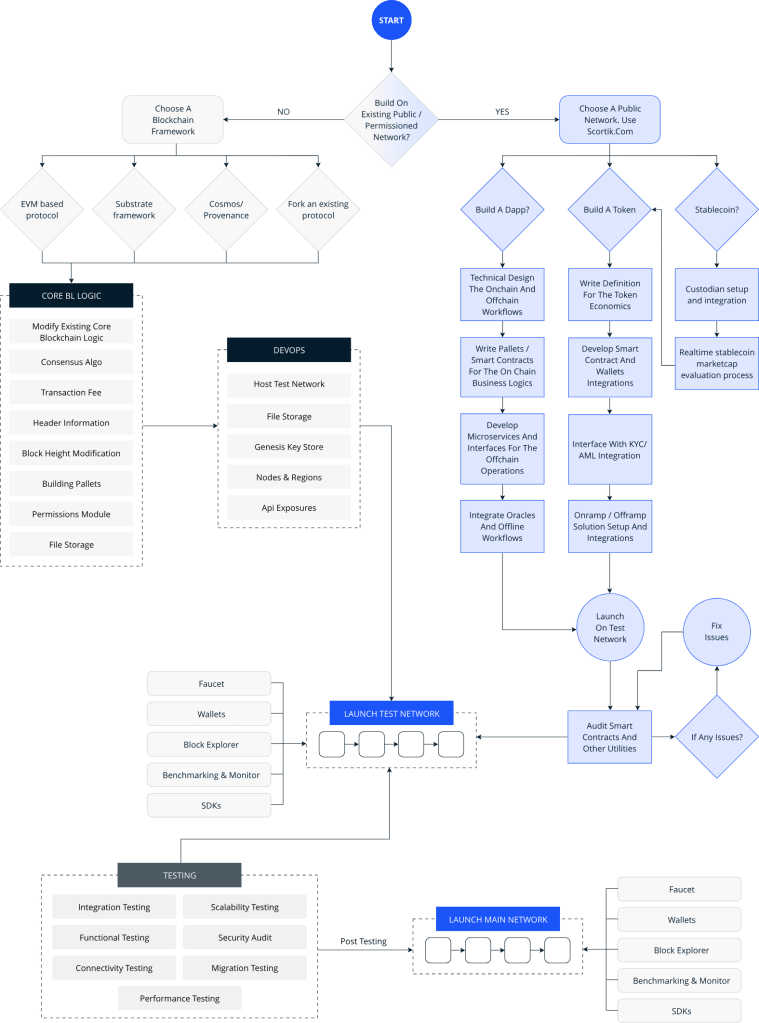
Navigating Innovation: The Comprehensive Guide to Custom Blockchain Software Development Processes

Blockchain technology has transcended its initial association with cryptocurrencies to emerge as a transformative force across industries. As businesses seek to leverage the potential of blockchain, the demand for custom blockchain software solutions tailored to specific needs has surged. Understanding the intricacies of the custom blockchain software development process is pivotal in navigating this innovative landscape. In this comprehensive guide, we delve into the essential stages and considerations that define the creation of bespoke blockchain solutions.

Understanding Custom Blockchain Software Development

Custom blockchain software development involves the creation of tailored solutions leveraging blockchain technology to address specific business challenges or capitalize on opportunities. These solutions can range from decentralized applications (dApps) to custom blockchain networks, smart contracts, and more, designed to meet the unique requirements of diverse industries.

Key Stages in Custom Blockchain Software Development

  1. Discovery and Requirement Analysis: This initial phase involves understanding the client’s business objectives, challenges, and identifying the specific use case for blockchain. Detailed requirements are gathered to define the project scope.
  2. Design and Architecture: In this stage, the development team designs the architecture of the blockchain solution. Decisions regarding the type of blockchain (public, private, or consortium), consensus mechanisms, data structure, and user interface are made.
  3. Development and Prototyping: Skilled developers begin coding the solution according to the outlined architecture. Prototypes or minimum viable products (MVPs) may be created to validate concepts and functionalities.
  4. Testing and Quality Assurance: Rigorous testing of the developed solution is conducted to ensure its functionality, security, performance, and compliance with predefined requirements. Any issues or bugs are identified and addressed.
  5. Deployment and Integration: Once the solution passes testing, it is deployed either on-premises or on a cloud-based infrastructure. Integration with existing systems or applications may also occur during this phase.
  6. Maintenance and Support: Post-deployment, ongoing maintenance and support are provided to ensure the solution operates smoothly. Updates, enhancements, and troubleshooting are part of this continuous support process.

Considerations and Best Practices

  1. Blockchain Platform Selection: Choose the most suitable blockchain platform (Ethereum, Hyperledger, Corda, etc.) based on scalability, consensus mechanisms, smart contract capabilities, and industry relevance.
  2. Security Measures: Implement robust security protocols, encryption standards, and consensus mechanisms to safeguard data integrity and protect against potential threats.
  3. Scalability and Performance Optimization: Anticipate future scalability requirements and design the solution to handle increasing transaction volumes without compromising performance.
  4. Regulatory Compliance: Ensure adherence to relevant regulatory frameworks and industry standards, especially in sectors like finance, healthcare, and supply chain.
  5. User Experience (UX): Design an intuitive and user-friendly interface to enhance user adoption and acceptance of the blockchain solution.

Benefits of Custom Blockchain Software Development

  1. Tailored Solutions: Address specific business needs and challenges with bespoke blockchain solutions that align precisely with organizational goals.
  2. Enhanced Security: Utilize blockchain’s immutable and decentralized nature to secure data and transactions, reducing the risk of fraud or tampering.
  3. Increased Efficiency: Streamline processes, eliminate intermediaries, and automate tasks, leading to improved operational efficiency and cost savings.
  4. Transparency and Trust: Foster transparency through immutable records and decentralized consensus, enhancing trust among stakeholders.

Conclusion

Custom blockchain software development represents a pathway to innovation and competitive advantage for businesses across diverse sectors. By embracing tailored solutions that leverage blockchain technology, organizations can unlock new opportunities, streamline operations, and establish a foundation for a decentralized future.

Navigating the complexities of this process requires a deep understanding of business requirements, meticulous planning, technical expertise, and a commitment to continuous improvement. As industries continue to evolve, the strategic adoption of custom blockchain software development processes stands as a testament to an organization’s readiness to embrace the future of technology and innovation.

Standard